Commercial Display Certification: How to Verify a Compliant Supplier in 2026
Commercial Display Certification: How to Verify a Compliant Supplier in 2026
When sourcing commercial displays for international projects, procurement professionals face a critical challenge: ensuring the products meet all required safety, electromagnetic compatibility, and environmental standards. With increasing regulatory scrutiny in the EU, China, Middle East, and North America, commercial display certification has become a non-negotiable factor in supplier selection. This guide explains what certifications matter, how to verify them, and why working with a certified manufacturer like GZKEDRO reduces risk and ensures long-term reliability.
What Is Commercial Display Certification?
Commercial display certification refers to the formal verification that a display product complies with specific regulatory standards for safety (LVD), electromagnetic compatibility (EMC), hazardous substances (RoHS), and quality management (ISO 9001). Common certifications include CE marking (EU), CCC (China), FCC (USA), and RoHS. Certificates are issued by accredited third-party testing laboratories and are valid for defined periods.
Why Certification Matters for Global Buyers
- Market Access: Products without CE or CCC cannot be legally sold in the EU or China.
- Risk Reduction: Non-compliant products may be seized, fined, or cause liability claims.
- Brand Reputation: Certified products demonstrate quality commitment and reduce customer complaints.
- Project Approval: Large tenders and government projects require verified certifications.
Who Uses Certified Commercial Displays?
Procurement managers, system integrators, advertising agencies, retail chains, educational institutions, and smart city project owners all require certified displays to meet local regulations and ensure safe, reliable operation in demanding environments such as outdoor billboards, transport hubs, and corporate meeting rooms.
Key Certification Standards for Commercial Displays
| Certification | Market | Scope | Typical Standards |
|---|---|---|---|
| CE (EMC + LVD) | European Union | Safety & electromagnetic compatibility | EN 55032, EN 62368-1 |
| RoHS 2.0 | European Union | Hazardous substance restriction | IEC 62321, (EU) 2015/863 |
| CCC (China Compulsory Certification) | China | Safety & EMC for domestic sale | GB4943.1, GB17625.1 |
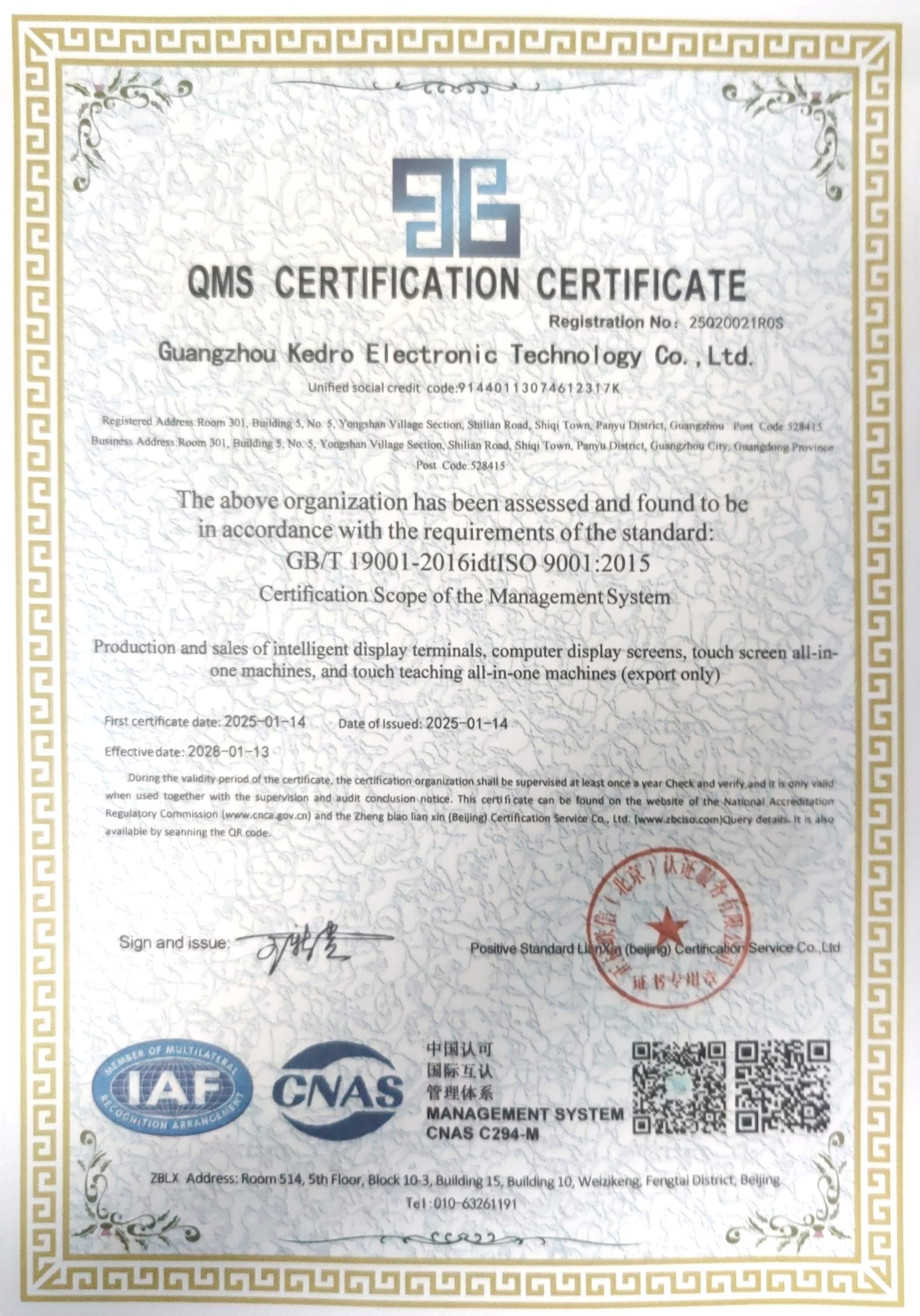
| ISO 9001 | Global | Quality management system | ISO 9001:2015 |
| FCC | United States | Radio frequency interference | FCC Part 15 |
How Commercial Display Certification Works: A Practical Verification Process
To ensure your supplier holds valid certifications, follow these six steps:
- Identify target market requirements – EU needs CE; China needs CCC; international projects often accept CE + RoHS.
- Request certificate copies – Ask for the official certificate including product model number, standards, issue date, and issuing body.
- Verify certificate authenticity – Contact the testing laboratory (e.g., TMC Testing Services, CQC) or check their online database.
- Confirm product coverage – Ensure the certificate explicitly lists your model series (e.g., KD-EA Series).
- Check validity – Most certificates expire; request updated versions if needed.
- Consider customized products – If you need OEM modifications, confirm whether the base certification covers the custom variant.
Case Study: GZKEDRO’s Certified Commercial Display Portfolio
Guangzhou Kedro Electronics Technology Co., Ltd. (GZKEDRO) has invested heavily in obtaining comprehensive certifications for its product lines. Below is a summary of key certifications applicable to specific models:
| Product | Model | Certifications | Issuing Body | Market |
|---|---|---|---|---|
| Elevator Advertising Machine | KD-EA Series | LVD (EN IEC 62368-1), EMC (EN 55032), RoHS 2.0 | TMC Testing Services (Shenzhen) | EU |
| Interactive Slider Screen | KD-ISS Series | ISO 9001:2015, Credit Cultivation Enterprise | Beijing Zhengbiao Lianxin / National Enterprise Credit Info DB | Global / China |
| Outdoor Advertising Display | KD-OD Series | China Compulsory Certification (CCC) | China Quality Certification Center (CQC) | China |
| Video Wall Display | KD-VW Series | Computer Software Copyright; 2024 Innovation Technology Award | National Copyright Administration; Guangzhou Sign Industry Assoc. | China |
| Advertising Display (Indoor) | KD-AD Series | CE, FCC, RoHS, ISO 9001 | Various accredited bodies | Global |
Step-by-Step: How GZKEDRO Ensures Certification Compliance
- Product design phase: Engineers incorporate required safety margins and component selections per target market standards.
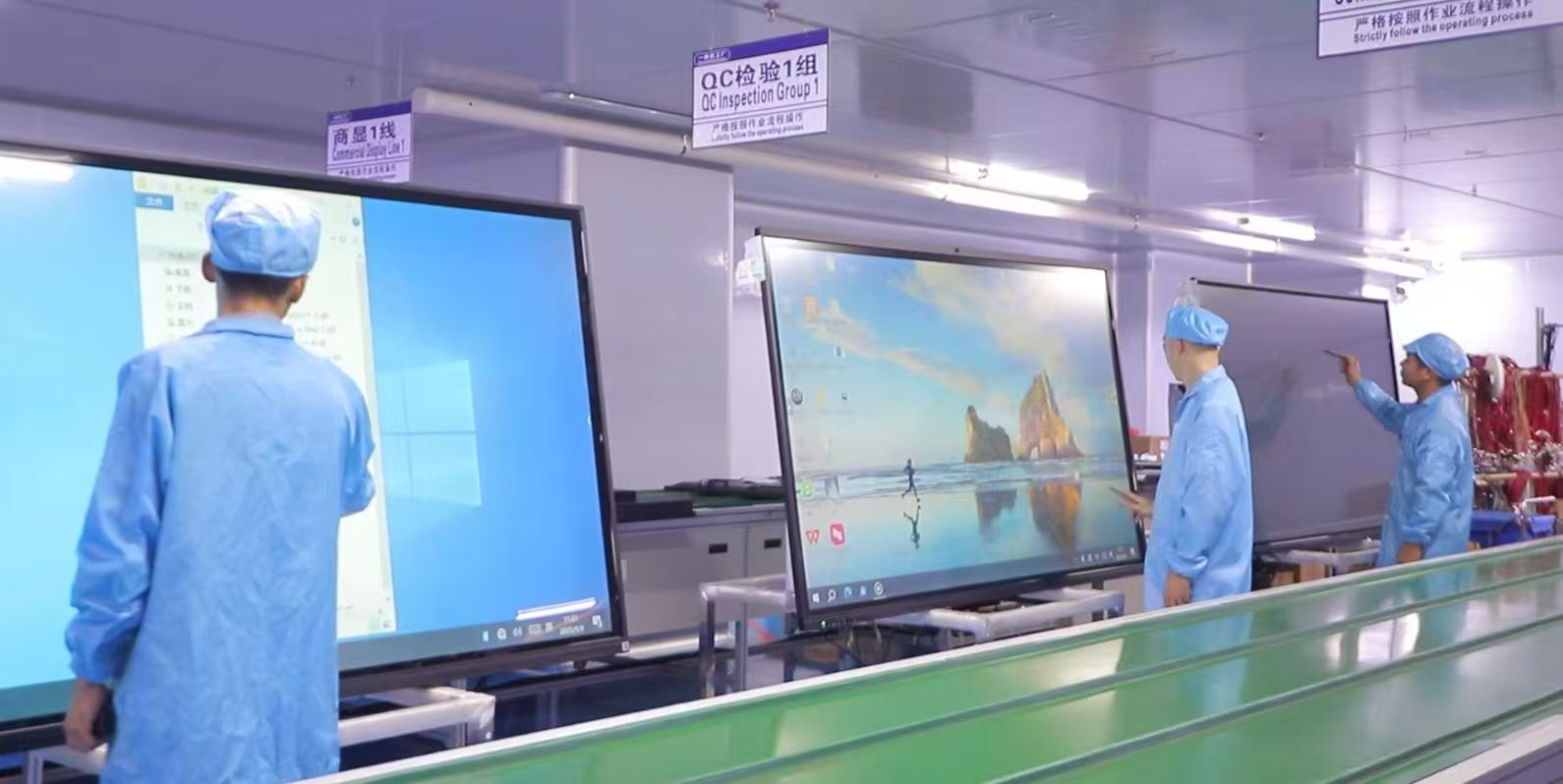
- Pre-compliance testing: In-house testing for EMC, brightness, temperature, and touch functionality before sending to accredited labs.
- Third-party certification: Samples are submitted to laboratories like TMC Testing Services (Shenzhen) for formal testing.
- Continuous monitoring: The quality management system (ISO 9001 certified) ensures production consistency and periodic re-certification.
- Documentation: Certificates, test reports, and declarations of conformity are provided to customers upon request.
Common Buyer Concerns About Certification
1. Is the certificate valid for all models in a series?
Most certificates list specific model numbers. Always verify that your exact model is covered. GZKEDRO can provide model-specific certificates for the KD-EA, KD-OD, KD-ISS, and other series.
2. What if my target market requires additional certifications?
GZKEDRO’s testing partners can perform additional tests for markets like the US (FCC), UK (UKCA), or Middle East (SASO). Custom certification projects can be arranged with a lead time of 4–8 weeks.
3. How often do certificates expire?
EU CE certificates typically do not expire but the supporting test reports may need updating if standards are revised. China CCC certificates require annual factory inspections and renewal every 5 years. GZKEDRO maintains active validations.
4. Can I trust certificates from a Chinese manufacturer?
Yes, if the certificates are issued by internationally recognized bodies such as TMC Testing Services, CQC, or SGS. GZKEDRO provides verifiable certificate numbers for cross-checking with the issuing authorities.
Benefits of Choosing a Certified Commercial Display Supplier
- Faster customs clearance and market entry
- Lower total cost of ownership through reliable product quality
- Enhanced trust with end customers and project stakeholders
- Access to remote cloud control platforms and 24/7 technical support
- Flexible MOQ (2–5 units) with full customization including logo, software, and packaging
Conclusion
In the competitive landscape of commercial display procurement, certification is not just a regulatory requirement—it is a mark of quality and reliability. By choosing a manufacturer like GZKEDRO that holds valid CE, RoHS, CCC, and ISO 9001 certifications for its products, buyers can reduce risk, accelerate project timelines, and ensure long-term performance. Always request and verify certificate details before placing large orders.
For a complete overview of GZKEDRO’s certified product range, download the official product catalog below.
📘 Download the GZKEDRO Product Catalog (English Edition)
Includes full specifications, certification details, and customization options for all commercial display models.
Download Now
Contact GZKEDRO
Email: gzkedro@gmail.com | Phone: +86 189-2950-0788
WhatsApp: Mike: +86 18929513439 | Luna: +86 18925015694 | Lisa: +86 18929500788
Address: Unit 103, Building 3, No. 5, Yongshan Village, Shiqi Town, Panyu District, Guangzhou, China
Website: www.gzkedro.com
Have Questions or Need More Details?
Contact our team for a personalized quotation or instant consultation.
Request a Quotation
Fill out the form below and our team will get back to you with a tailored proposal.
WhatsApp Direct Chat
Prefer to chat in real-time? Message us on WhatsApp for instant assistance & quick answers.
- Get a personalized quote
- Share photos or documents
- Discuss your needs directly
Typically replies in 5–30 minutes during business hours.