
Commercial Display Selection by Project Scene: A Practical Guide for 2026 Buyers
Commercial Display Selection by Project Scene: A Practical 2026 Guide
Choosing the right commercial display is not just about picking a screen size or resolution. The real question is whether the display can survive the physical environment, run the required content workflow, and deliver the intended experience for years. This guide walks through the most common project scenes in 2026, explains what technical specifications matter in each scene, and shows how to match them with concrete display types.
Why Scene-Based Selection Matters in Commercial Display Projects
A commercial display is a long-term investment. It operates in environments that differ widely: a hotel lobby, a busy transport hub, a luxury retail window, a conference room, or an outdoor smart city site. Each environment imposes different requirements for brightness, waterproofing, heat dissipation, interactivity, and content management.
The global commercial display market was estimated at USD 53.65 billion in 2024, with digital signage accounting for more than 53.73% of revenue share, according to Grand View Research. This scale means that buyers are increasingly selecting from a broad range of product categories, not just a single screen type. Understanding the scene first, then the product, is the most reliable way to avoid specification mismatches.
The Core Problem: When Display Specs Do Not Match the Environment
Most commercial display failures are not caused by low-quality panels. They come from a mismatch between the product specification and the actual working condition. Common examples include:
- Indoor displays installed outdoors, where sunlight reduces visibility and moisture damages the housing.
- Displays without adequate cooling running continuously in high-temperature environments, causing thermal shutdown or reduced lifespan.
- Content loops that require scheduled playback, split-screen management, or remote control, but the display does not support the required CMS workflow.
- Interactive projects that need touch, gesture, or multi-user input, but the selected display only supports one-way playback.
These problems are preventable when the buyer translates the project scene into measurable technical requirements before contacting a supplier.
Industry Context: How Project Scenes Are Changing in 2026
Several trends are reshaping the commercial display market in 2026. First, outdoor advertising is shifting toward higher-brightness and waterproof displays that can run 24/7. Second, retail and brand environments are adopting transparent and holographic display formats to create stronger visual engagement. Third, interactive displays are becoming standard not only in education and meetings, but also in public information systems and self-service kiosks.
The holographic display market is projected to grow from USD 5.42 billion in 2026 to USD 33.36 billion by 2034, at a CAGR of 25.52%, according to Fortune Business Insights. This growth signals that digital human and holographic presentation formats are moving from novelty to mainstream consideration in commercial projects.
For buyers, this means the selection process must now include not just current needs, but also whether the display format can be updated, customized, or integrated into a larger system.
A Scene-Based Selection Framework
The following framework maps common project types to the key technical requirements that should drive product selection.
| Project Scene | Key Working Conditions | Critical Specs | Recommended Display Types |
|---|---|---|---|
| Outdoor Advertising | 24/7 operation, sunlight, rain, dust, high temperature | High brightness (2000 cd/m² or higher), IP55 or IP65 waterproofing, air-cooled heat dissipation | Outdoor Advertising Display, Dual-Screen Outdoor Advertising Machine, LED Display |
| Retail & Brand Showcase | Indoor controlled climate, visual engagement, premium appearance | High resolution, transparent or holographic effect, high contrast | Transparent Cabinet Display, Holographic Digital Human, Wall Mounted Display |
| Conference & Office | Meeting room, collaboration, multi-user interaction | Multi-touch support, wireless sharing, high response speed | Smart Conference Display, Wall Mounted Display |
| Exhibition & Event | Large visual impact, dynamic content, flexible installation | Seamless display, 4K resolution, large format, interactive options | Video Wall Display, Interactive Slider Screen, Holographic Digital Human |
| Public Information & Self-Service | Continuous operation, touch interaction, environment monitoring | Touch sensor reliability, stable processor, anti-glare, durability | Self Service Kiosk, Advertising Display, Elevator Advertising Machine |
| Industrial Control & Monitoring | Stable operation, real-time data, anti-interference | Industrial-grade stability, flexible interface support, continuous operation | Video Wall Display, Wall Mounted Display |
Detailed Product Scene Matching
Below is a step-by-step breakdown of how specific GZKEDRO display models map to different project scenes.
Outdoor Advertising and Smart City Projects
Outdoor displays operate under special requirements including IP65 waterproof, high brightness, high temperature, outdoor exposure, and 24/7 continuous operation. They also need remote CMS playback for centralized content management.
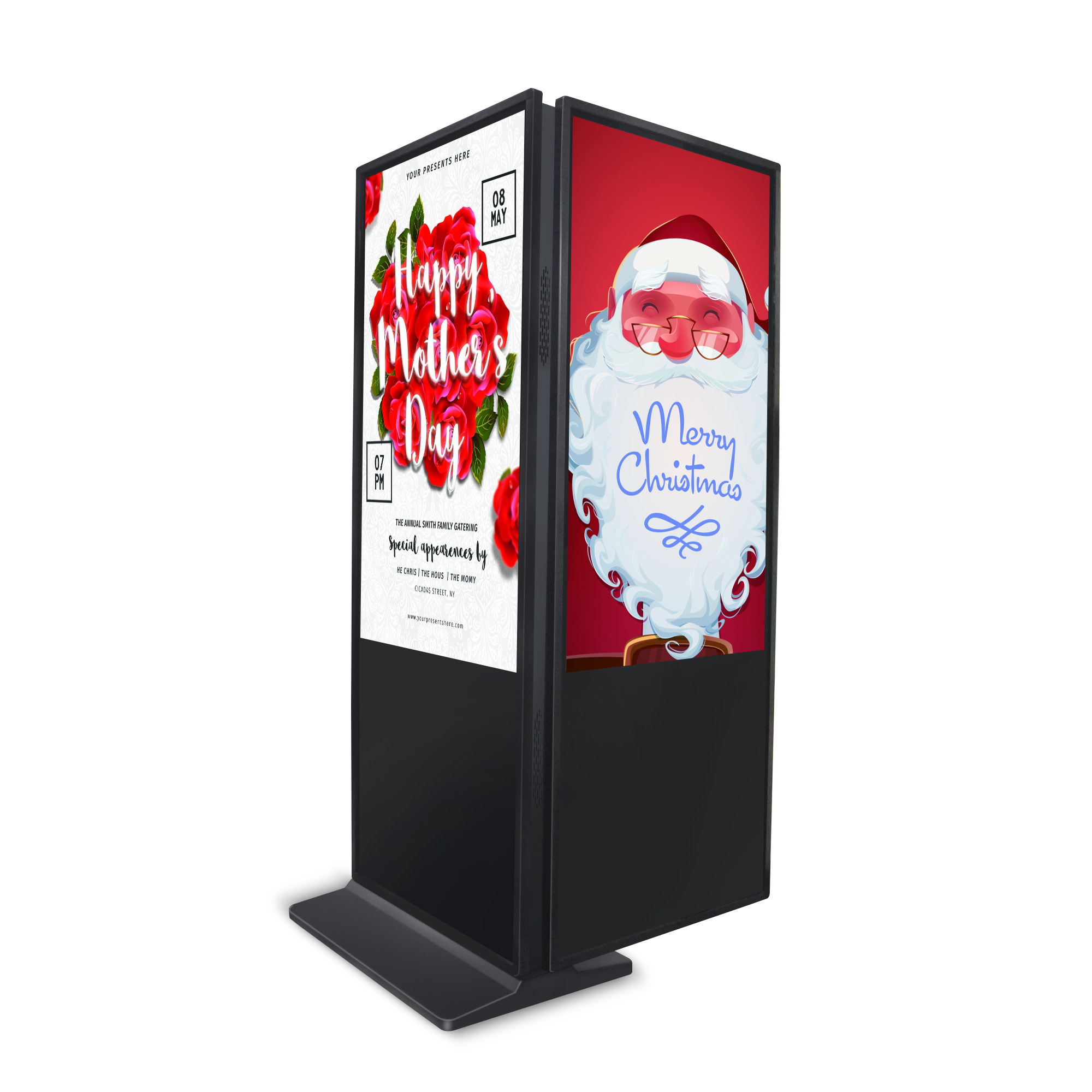
The Outdoor Advertising Display (KD-OD Series) is designed for transport hubs, commercial districts, and smart city projects. It features 2000 cd/m² brightness, IP55 protection, an air-cooled heat dissipation system, and a resolution of 1080 × 1920. The Dual-Screen Outdoor Advertising Machine (KD-DSA Series) adds a second screen for more flexible advertising layouts in the same type of environment.
For projects that require extremely high brightness in direct sunlight, the LED Display (KD-LED Series) offers white balance brightness of at least 4500 cd/m², a refresh rate of at least 3840 Hz, and a pixel density of 160,000 dots per square meter. It is best suited for outdoor media and billboards where viewing distance is longer.
Retail, Luxury Branding, and Product Showcase
Retail projects increasingly use displays to create a premium visual atmosphere. A transparent display allows the customer to see the product while watching digital branding content. The Transparent Cabinet Display (KD-TP Series) has 95% transparency, 1920 × 1080 resolution, and a contrast ratio of 3000:1, making it suitable for luxury retail stores and hotel lobbies.
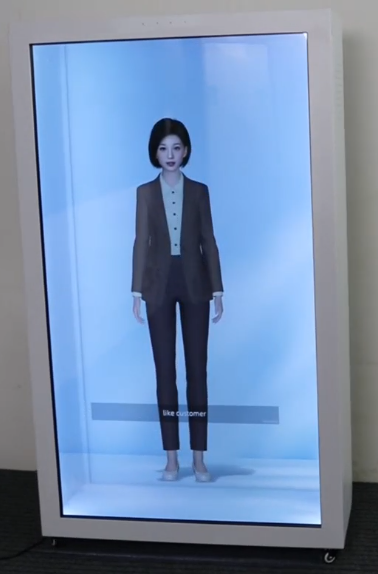
For high-impact brand experiences, the Holographic Digital Human (KD-DH Series) delivers a 4K resolution of 3840 × 2160, 1300 cd/m² brightness, HDR1000 support, and an 8-array microphone. It is designed for exhibition centers, hotel lobbies, commercial districts, education, and healthcare. This format is effective for digital human assistants, product storytelling, and interactive brand experiences.
Conference and Corporate Collaboration
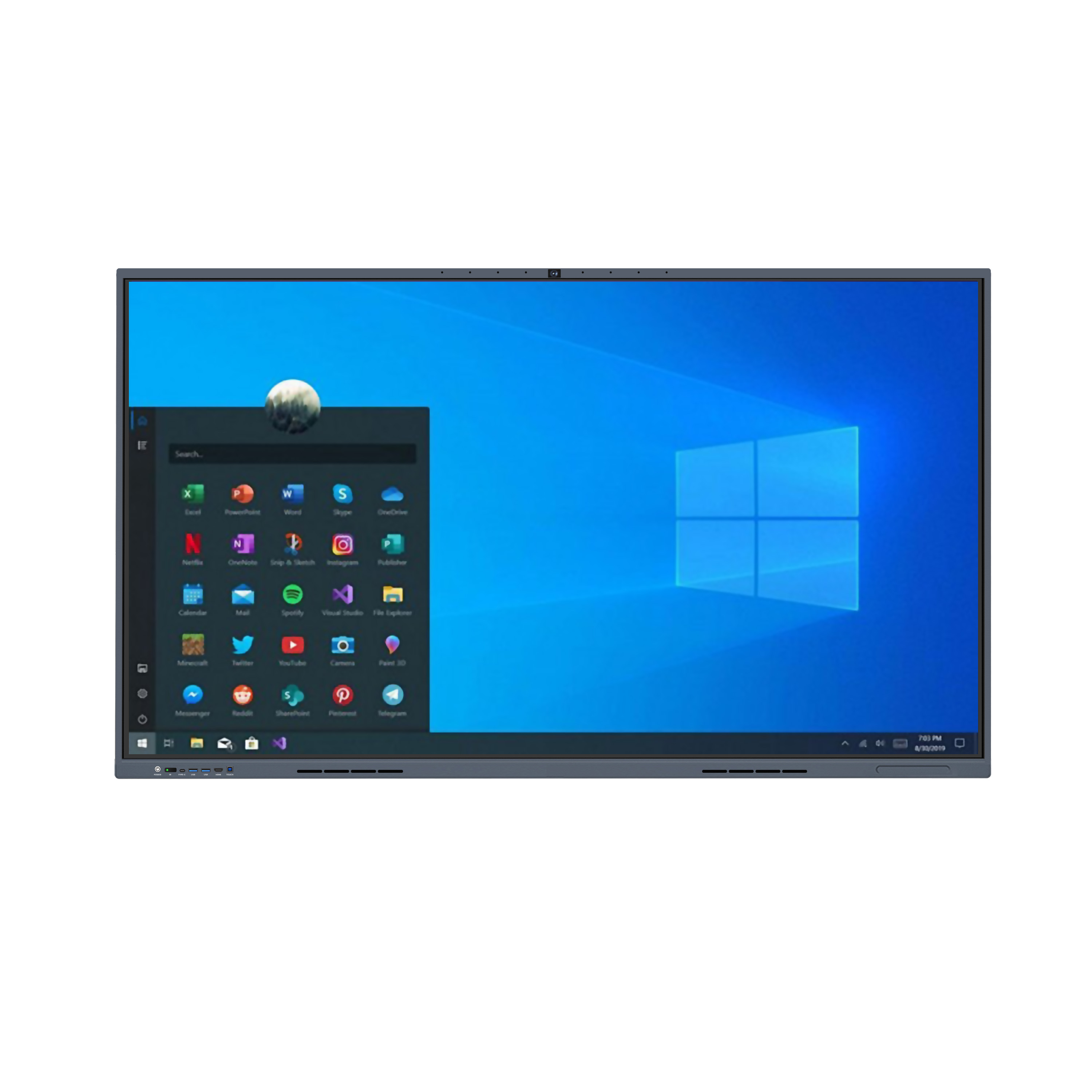
Meeting rooms and training spaces need displays that support annotation, screen projection, and multi-touch interaction. The Smart Conference Display (KD-IFPD Series) supports up to 40 multi-touch points, runs on Android 14.0 with an Amlogic T982 processor, and has a rated power consumption of no more than 250 W. It is designed for corporate offices, educational institutes, training centers, and government offices.
For lighter corporate signage needs, the Wall Mounted Display (KD-WM Series) offers both 1920 × 1080 and optional 3840 × 2160 resolution, 350 cd/m² brightness, and Android 14.0 operating system support.
Exhibitions, Events, and Large Visual Projects
Exhibitions and events often require a large visual surface or a dynamic installation that attracts attention. The Video Wall Display (KD-VW Series) uses 55-inch LCD panels with a 3.5mm sealing gap, 500 cd/m² brightness, and support for DVI, HDMI, and VGA inputs. It is suitable for monitoring centers, exhibitions, government spaces, and shopping malls.
The Interactive Slider Screen (KD-ISS Series) combines a sliding mechanism with a 1920 × 1080 display at 1500 cd/m² brightness and IP55 protection. It is designed for exhibition centers, hotel lobbies, and commercial districts, and is often used for product reveal walls or interactive storytelling.
Public Information and Self-Service Systems
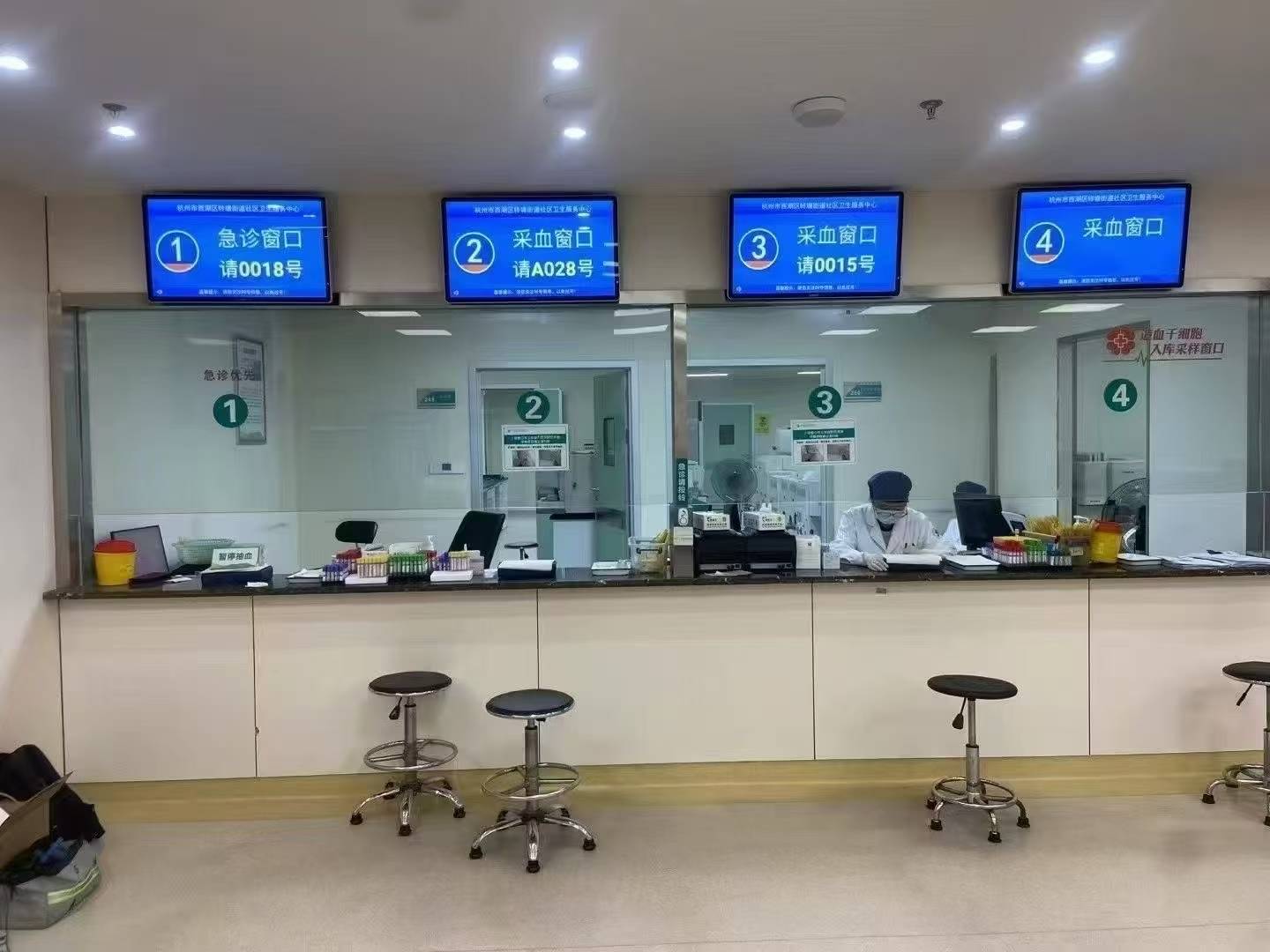
Hospitals, banks, airports, railway stations, government service centers, and shopping malls need self-service kiosks that are stable, touch-responsive, and easy to maintain. The Self Service Kiosk (KD-SSK Series) uses a 21.5-inch touch screen, a 10th-generation Intel Core i5 processor, 8GB RAM, and a 256GB SSD. It can be configured for inquiry, printing, and transaction applications.
The Advertising Display (KD-AD Series) is an indoor digital signage solution with an RK3566 motherboard, 1920 × 1080 resolution, 450 cd/m² brightness, and power consumption no greater than 140 W. It is suitable for commercial districts, airports, railway stations, shopping malls, and hotels.
The Elevator Advertising Machine (KD-EA Series) is a compact indoor display with a 1920 × 1080 resolution, 250 cd/m² brightness, and 4mm fully toughened high explosion-proof glass. It is designed for elevator environments and transport hubs.
Industrial Control and Monitoring
Industrial environments demand displays that can operate reliably for long periods, sometimes in higher temperatures or with less ventilation. The industrial display market was estimated at USD 5.90 billion in 2024, driven by IIoT and HMI device penetration, according to Grand View Research. For these projects, buyers should prioritize displays with stable industrial-grade panels, interface flexibility, and continuous operation capability.
For control rooms and monitoring centers, the Video Wall Display with its 4000:1 contrast ratio and multi-interface support is a strong candidate. The Wall Mounted Display, with operating temperature range of -10 to +50°C, also suits industrial control environments.
How to Evaluate a Supplier for Scene-Specific Projects
Once the display type is matched to the project scene, the next step is verifying that the supplier can deliver the right configuration, quality control, and long-term support.
Customization Capability
Scene-specific projects often require more than a standard product. Customization may include logo, color, software, UI interface, packaging, voltage, screen size, brightness, housing, and system configuration. A supplier that offers OEM and ODM support can adapt the display to the project rather than forcing the project to adapt to the product.
Quality Control and Testing
Reliability in continuous operation depends on the factory's quality control process. Reputable suppliers perform 100% aging tests and functional inspections before shipment, including brightness tests, waterproof tests, touch tests, temperature tests, and continuous operation testing. When evaluating a supplier, ask which tests are performed on every unit and which are performed on a sampling basis.
Production Capacity and Lead Time
For large projects, the supplier must be able to deliver consistent quality at scale. A supplier with a monthly capacity of 2000-5000 units and a lead time of 15-30 days can support both pilot orders and large rollouts. A flexible MOQ of 2-5 units, depending on product size, is also useful for project-based purchasing.
After-Sales Support
Commercial displays often run for years, so remote technical support and online guidance matter after the order is delivered. Suppliers that offer 24/7 technical assistance and professional engineering support reduce the risk of downtime in the buyer's project.
Scene Application Cases and Typical Results
Across global markets, commercial displays are used in advertising media companies, education institutions, retail chain stores, outdoor advertising contractors, exhibition and event companies, system integrators, corporate offices, luxury retail brands, government and smart city projects, and OEM and ODM display buyers.
Typical results reported in these projects include stable 24/7 advertising operation, improved interactive teaching efficiency, increased customer engagement, stable outdoor operation, high visual impact performance, and long-term stable performance. These outcomes depend on matching the right product to the right scene.
Comparison: GZKEDRO Display Families for Different Scenes
| Scene | Display Family | Key Specs | Typical Application |
|---|---|---|---|
| Outdoor Media | KD-OD / KD-DSA / KD-LED | 2000-4500+ cd/m², IP55, air cooling | Transport hubs, smart city, outdoor billboards |
| Retail & Brand | KD-TP / KD-DH | 4K HDR, 95% transparency, interactive | Luxury stores, hotel lobbies, exhibitions |
| Conference & Office | KD-IFPD / KD-WM | 40-point touch, Android 14.0, 4K optional | Meeting rooms, training centers, offices |
| Exhibition & Event | KD-VW / KD-ISS | 3.5mm bezel, 1500 cd/m², sliding | Control rooms, product reveal walls |
| Public Service | KD-SSK / KD-AD / KD-EA | Touch, i5 processor, compact | Airports, banks, hospitals, elevators |
| Industrial Monitoring | KD-VW / KD-WM | 4000:1 contrast, wide temp range | Control rooms, industrial facilities |
FAQ
How do I know if my project needs an outdoor waterproof commercial display?
If the display will be installed where it is exposed to direct sunlight, rain, dust, or high outdoor temperatures, it should be designed for outdoor use. Key specifications to look for include high brightness (around 2000 cd/m² or higher), an IP55 or IP65 waterproof rating, and an air-cooled heat dissipation system for continuous operation. Indoor displays without these protections will have shorter lifespans and poor visibility under sunlight.
Can the same display family support different project scenes?
Some display families are flexible across scenes. The Wall Mounted Display, for example, can be used in shopping malls, hotels, commercial districts, airports, and railway stations. However, each scene has different operating conditions, and the specification must be matched to the environment. A wall-mounted display used outdoors still needs outdoor-grade brightness and waterproofing, which the standard indoor version does not provide.
What customization options are available for a project-specific commercial display?
Customization can cover logo, color, software, UI interface, packaging, voltage, screen size, brightness, housing, and system configuration. For projects with deeper integration needs, OEM and ODM support is available. Buyers should define which parameters are non-negotiable for the project scene before discussing customization with the supplier.
What is the typical lead time for a scene-specific display order?
Typical lead time is 15-30 days, with a maximum of 30 days for most orders. The exact time depends on product size, customization complexity, and order quantity. For projects with a tight schedule, it is recommended to share the target date and project scene requirements early with the supplier.
How can I get a recommendation or sample for my specific project scene?
Send the project scene, working conditions, and display requirements to the supplier. This includes whether the installation is indoor or outdoor, expected operating hours, brightness needs, content management requirements, and any special certifications. Based on this information, the supplier can recommend a display model suited to the scene. You can request product samples or a catalog to start the evaluation.
Conclusion
Selecting a commercial display by project scene is the most practical way to ensure long-term performance, visual impact, and cost efficiency. Start with the working conditions, translate them into technical requirements, and then match them to the appropriate display family. A supplier with customization capability, rigorous quality control, and global export experience can help you turn a requirement into a reliable deployment.
Next step: If you are evaluating a specific commercial display project, download the GZKEDRO Product Catalog to review models and specifications, or contact the team with your project details for a tailored recommendation.
Have Questions or Need More Details?
Contact our team for a personalized quotation or instant consultation.
Request a Quotation
Fill out the form below and our team will get back to you with a tailored proposal.
WhatsApp Direct Chat
Prefer to chat in real-time? Message us on WhatsApp for instant assistance & quick answers.
- Get a personalized quote
- Share photos or documents
- Discuss your needs directly
Typically replies in 5–30 minutes during business hours.