
Commercial Display Spec Verification: Certifications, Parameters, and Supplier Evidence
Commercial display spec sheets look similar. After collecting quotes from several suppliers, the real differences usually sit in a small set of numbers: brightness, resolution, protection rating, power consumption, and certification coverage. The problem is that numbers on a datasheet are claims, not proof. A rigorous buyer needs a verification process that separates verified facts from marketing language.
This guide explains how to evaluate commercial display specifications and certifications before you commit to a supplier. It is written for procurement managers, system integrators, advertising media companies, and project owners moving from research into supplier evaluation. Guangzhou Kedro Electronics Technology Co., Ltd. (GZKEDRO) is used as a working example because the company publishes specific product parameters, certification numbers, and manufacturing data that can be checked against a structured checklist.
Why Commercial Display Verification Fails in Practice
Most sourcing problems are not caused by a single bad component. They are caused by a mismatch between what was promised, what was verified, and what the project actually required. The common failure patterns include:
- Brightness inflation. An indoor display needs roughly 350–500 cd/m² in normal ambient light. Spec sheets sometimes claim much higher values to make a product look more capable, which increases cost without improving the viewing experience.
- Certificate images without numbers. A photo of a certification logo says very little. The certificate number, issuing body, applicable standard, and market scope are what make a certificate verifiable.
- Scene mismatch. Using an indoor display outdoors causes heat damage and screen washout. Using an outdoor display indoors adds cost for brightness and protection that will never be used.
- Weak quality control. Without aging tests and functional inspection, failures tend to appear after installation, when replacement is expensive.
- Lead time surprises. A supplier may quote a standard product but fail to account for customization, certification lead time, or packaging requirements.
Industry Context: A Large Market with Rising Technical Complexity
Verification matters more today because the commercial display market is large, diverse, and shifting toward new display formats. Grand View Research estimates the global commercial display market at USD 53.65 billion in 2024, with digital signage accounting for over 53.73% of revenue. North America held a 35.6% revenue share of the global digital signage market in 2025, according to the same research firm.
The safety standard landscape is changing as well. IEC 62368-1 is now the primary safety standard for commercial displays and other AV/IT equipment, replacing the older IEC 60950-1 and IEC 60065 standards, as noted by UL Solutions. Buyers should check that a product certificate refers to the current standard, not a legacy version.
New display categories are growing quickly. Fortune Business Insights projects the holographic display market will grow from USD 5.42 billion in 2026 to USD 33.36 billion by 2034, a CAGR of 25.52%. Global Market Insights values the transparent display market at USD 2.84 billion in 2023 and expects it to reach USD 81.5 billion by 2032. In large-format displays, Market Research Future identifies Samsung Electronics and LG Display as top global leaders. For buyers, this means a wider choice of form factors—and a wider range of claims to verify.
The Verification Framework: Five Layers to Check
Use a five-layer framework to evaluate any commercial display supplier. Each layer answers a different question, and each one can be checked against documentation or test data.
1. Operating Environment
Define where the display will run. Key questions: indoor or outdoor? Direct sunlight? Continuous 24/7 operation or business hours? Temperature and humidity range? These answers set the minimum brightness, protection rating, cooling method, and operating temperature window.
2. Performance Parameters
For each shortlisted product, check the core parameters: resolution, brightness, contrast ratio, viewing angle, response time, backlight life, power consumption, and operating temperature. These should match the environment, not simply be the highest available numbers.
3. Market Compliance
Confirm the display is certified for the destination country. The table below maps common target markets to the relevant certification types and examples of verifiable GZKEDRO certificates.
| Target Market | Certification Type | Example Standard | What It Covers | Verifiable Example (GZKEDRO) |
|---|---|---|---|---|
| United States | FCC SDoC | FCC Part 15, Subpart B; ANSI C63.4:2014 | Electromagnetic compatibility | MAX26060195P01-E01 issued by MAXLAB Testing Co., Ltd. |
| European Union | CE-LVD | EN IEC 62368-1:2024/A11:2024 | Electrical safety | MK25100089P01-S01 issued by TMC Testing Services (Shenzhen) Co., Ltd. |
| European Union | CE-EMC | EN 55032:2015/A11:2020 | Electromagnetic compatibility | MK25100089P01-E01 issued by TMC Testing Services |
| European Union | CE-RoHS | IEC 62321 series; Directive (EU) 2015/863 | Restricted hazardous substances | MK25100089P01-C01 issued by TMC Testing Services |
| China | CCC (3C) | GB4943.1-2011; GB/T9254-2008 (Class A); GB17625.1-2012 | Safety and electromagnetic compatibility | 2018010901114733 issued by China Quality Certification Center (CQC) |
| China | Inspection Report | GB4943.1-2022; enterprise technical requirements | Electrical safety and product functions | JAT2207030268CN-01 issued by Dongguan Junan Testing and Certification Co., Ltd. |
| Global | ISO 9001 | GB/T 19001-2016 idt ISO 9001:2015 | Quality management system | 25020021R0S issued by Beijing Zhengbiao Lianxin Certification Service Co., Ltd. |
When reviewing certification documents, record four things: the certificate number, the issuing body, the applicable standard, and the market scope. If any of these is missing, ask the supplier for the original document or a verifiable copy.
4. Manufacturing Evidence
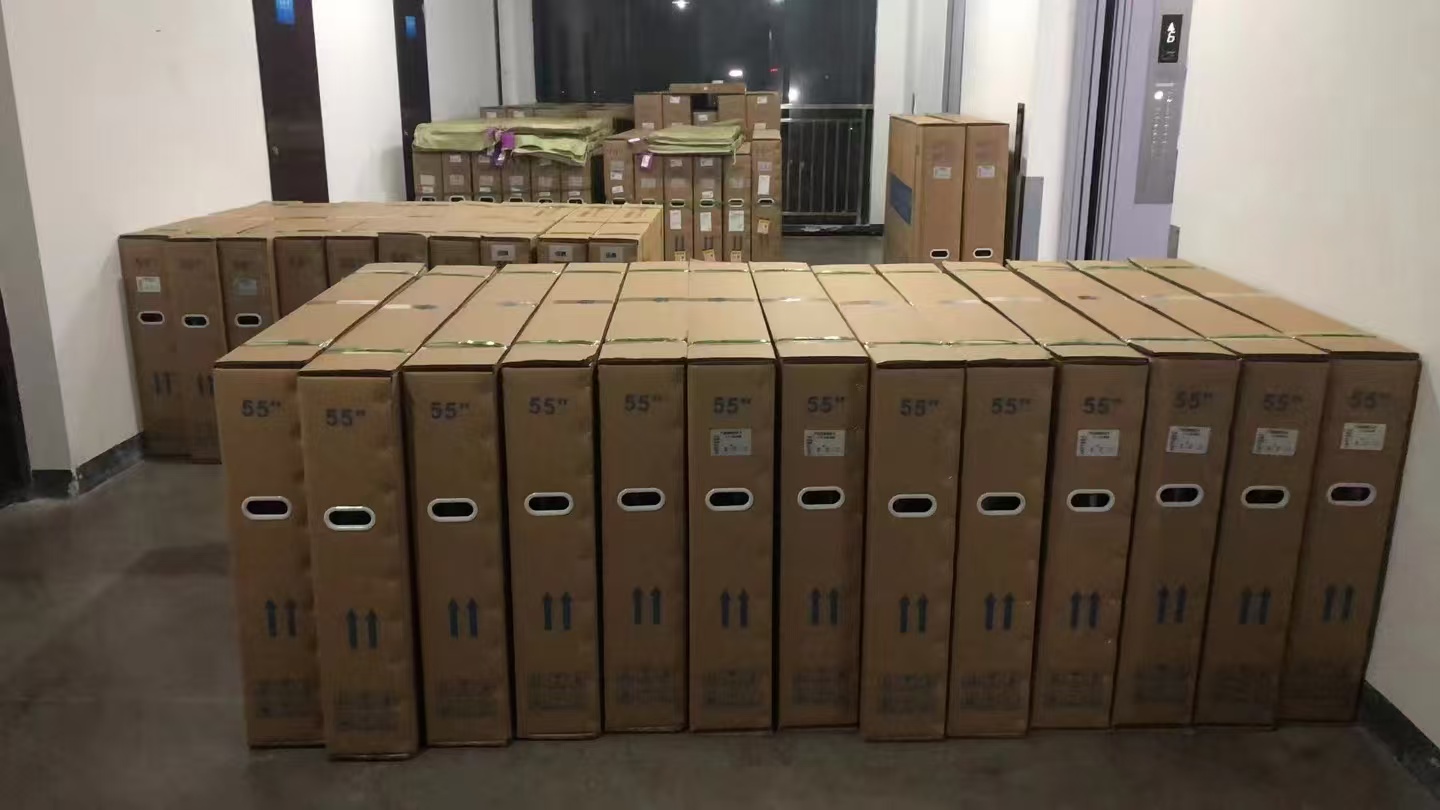
Certification is about design compliance; production quality is another matter. Check whether the factory performs 100% aging tests and functional inspection on finished units. GZKEDRO reports that every unit passes aging tests plus brightness, waterproof, touch, temperature, and continuous operation tests before shipment. The company also publishes a monthly capacity of 2,000–5,000 units and a factory area of 50,000 m³, with more than 200 employees and an R&D team of over 100 people.
5. Commercial Terms
Finally, check MOQ, lead time, customization scope, and after-sales support. GZKEDRO states a lead time of 15–30 days with a maximum of 30 days, flexible MOQ of 2–5 units depending on product size, project-based MOQ, and remote technical support with 24/7 assistance.
Step-by-Step: Evaluate a Commercial Display Supplier
- Define the deployment environment. Record installation location, operating hours, sunlight exposure, temperature range, and available power.
- Set minimum spec thresholds. Based on the environment, decide brightness, resolution, protection rating, and operating temperature. For outdoor direct-sun use, look for at least 2,000 cd/m² and an IP-rated enclosure; for indoor retail, 350–500 cd/m² is typically sufficient.
- Match the form factor to the scene. A retail store may need a wall-mounted display (KD-WM Series), an elevator project needs a compact screen (KD-EA Series), a lobby showcase may call for a transparent display (KD-TP Series) or a holographic digital human (KD-DH Series), and a control room requires a video wall (KD-VW Series).
- Check compliance coverage for the destination market. Use the certification table above and ask for certificate numbers.
- Request and verify evidence. Ask for test reports, inspection reports, aging test records, and the product datasheet. Verify the issuing body, standard, and date.
- Confirm customization and MOQ. GZKEDRO customizes logo, color, software/UI, packaging, and voltage across its display products, with flexible MOQ. Confirm which items are included in the quotation.
- Clarify lead time and after-sales support. Verify production capacity, lead time, spare parts, remote diagnostics, and warranty terms.
Use Cases: Matching Display Products to Project Scenes
To make the verification framework concrete, here are typical scene-to-product matches based on GZKEDRO product specifications.
Transport Hubs and Smart City Projects
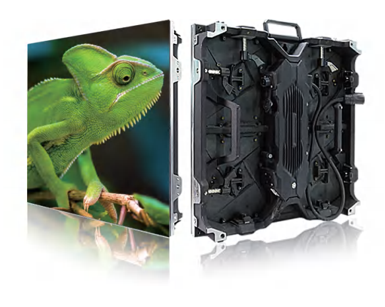
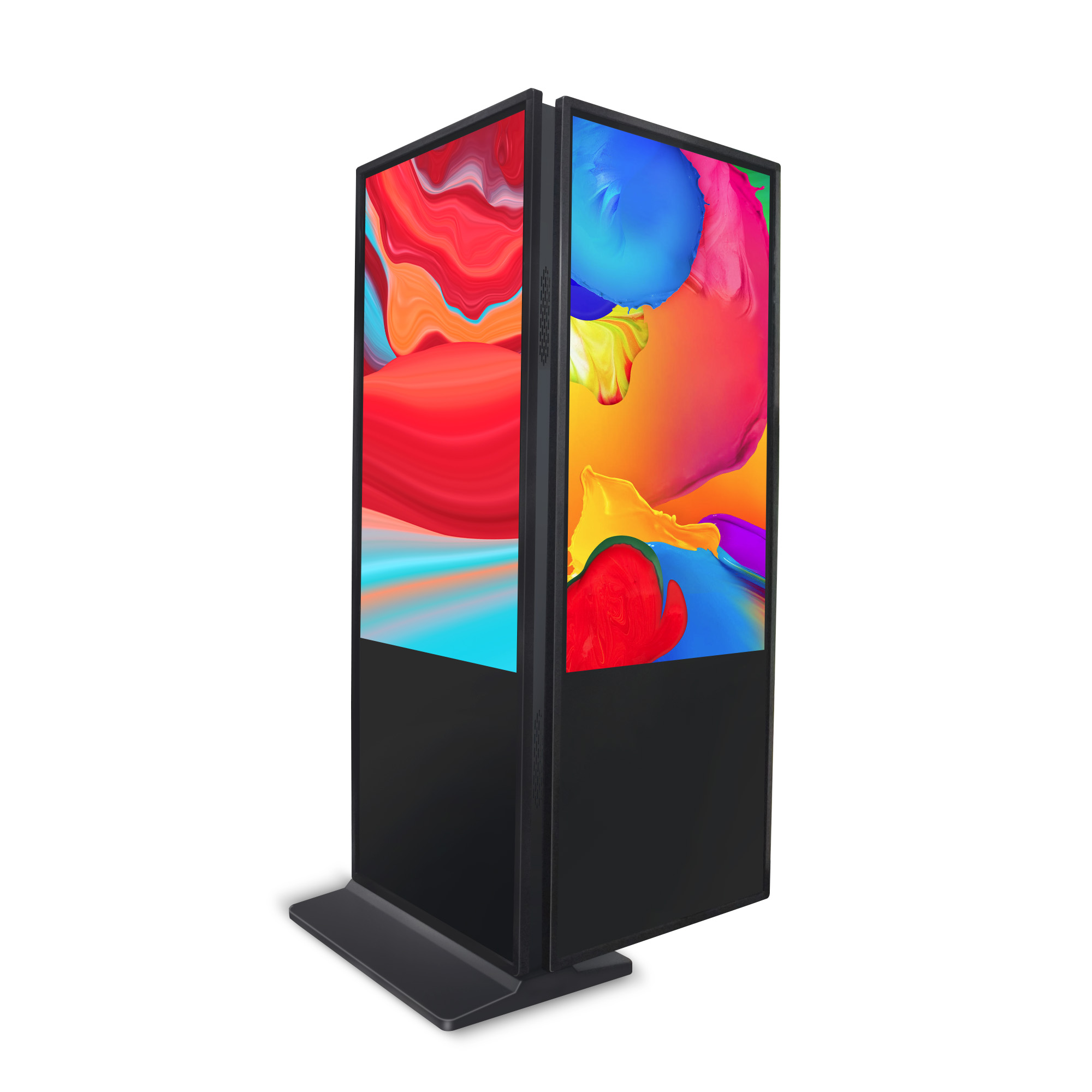
Outdoor advertising displays in these environments run 24/7 in changing weather. The KD-OD Series outdoor waterproof display provides 2,000 cd/m² brightness, IP55 protection, SIM card support, and an operating range of -20°C to 50°C. Dual-screen KD-DSA models add two-sided visibility with the same brightness and connectivity options. For large-format outdoor media, the KD-LED Series delivers ≥4,500 cd/m² white balance brightness and a refresh rate of ≥3840Hz.
Elevators and Indoor Proximity Media
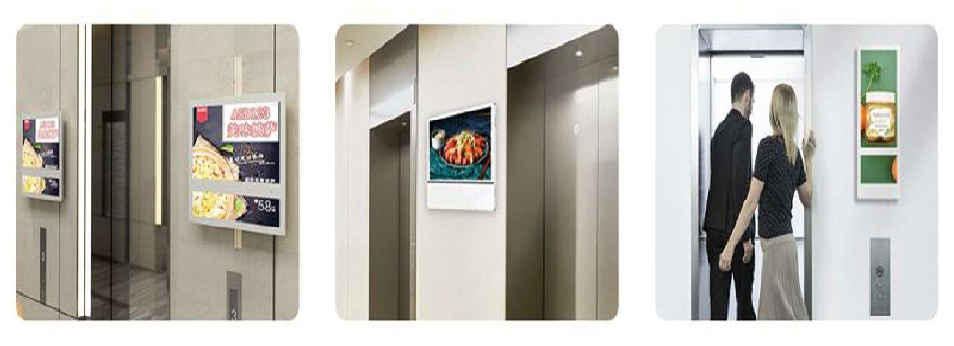
Elevator displays need compact size, low power, and reliable safety glass. The KD-EA Series uses a 4mm fully toughened glass front, 250 cd/m² brightness, a backlight life of more than 50,000 hours, and power consumption of ≤55W with standby ≤0.5W.
Retail Stores and Commercial Districts
For indoor advertising, the KD-AD Series offers 1080p resolution, 450 cd/m² brightness, and low power consumption (≤140W) with an RK3566 motherboard. The KD-WM Series wall-mounted display uses BOE panels and Android 14.0, with optional 4K resolution for higher-end retail spaces.
Hotel Lobbies and Luxury Showcases
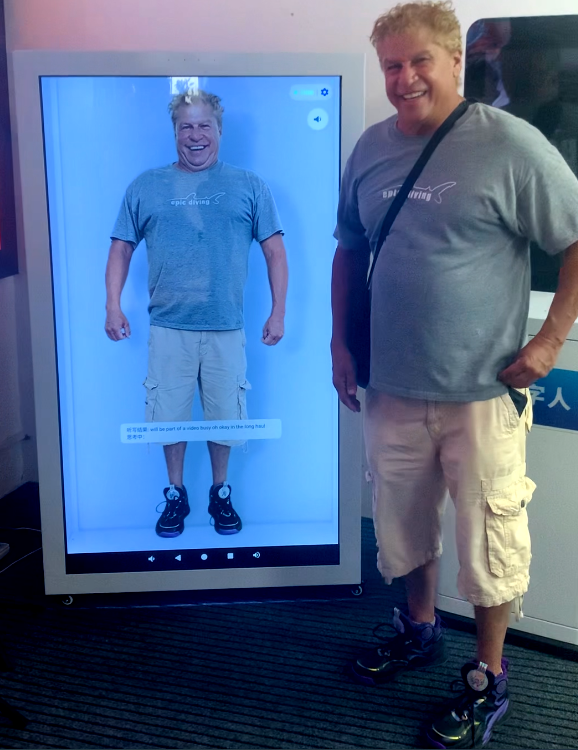
Showcase applications need visual impact without blocking the view. The KD-TP Series transparent LCD display offers 95% transparency with 1920×1080 resolution. For a stronger interactive presence, the KD-DH Series holographic digital human provides 4K resolution, 1,300 cd/m² brightness, HDR1000 support, a 60W speaker system, an 8-array microphone, and a 5MP camera.
Meeting Rooms and Training Centers
The KD-IFPD Series smart conference display supports 40 multi-touch points, 4K-30Hz input, Android 14.0, and a 30,000-hour service life. It suits corporate offices, educational institutes, training centers, and government offices.
Control Rooms and Exhibitions
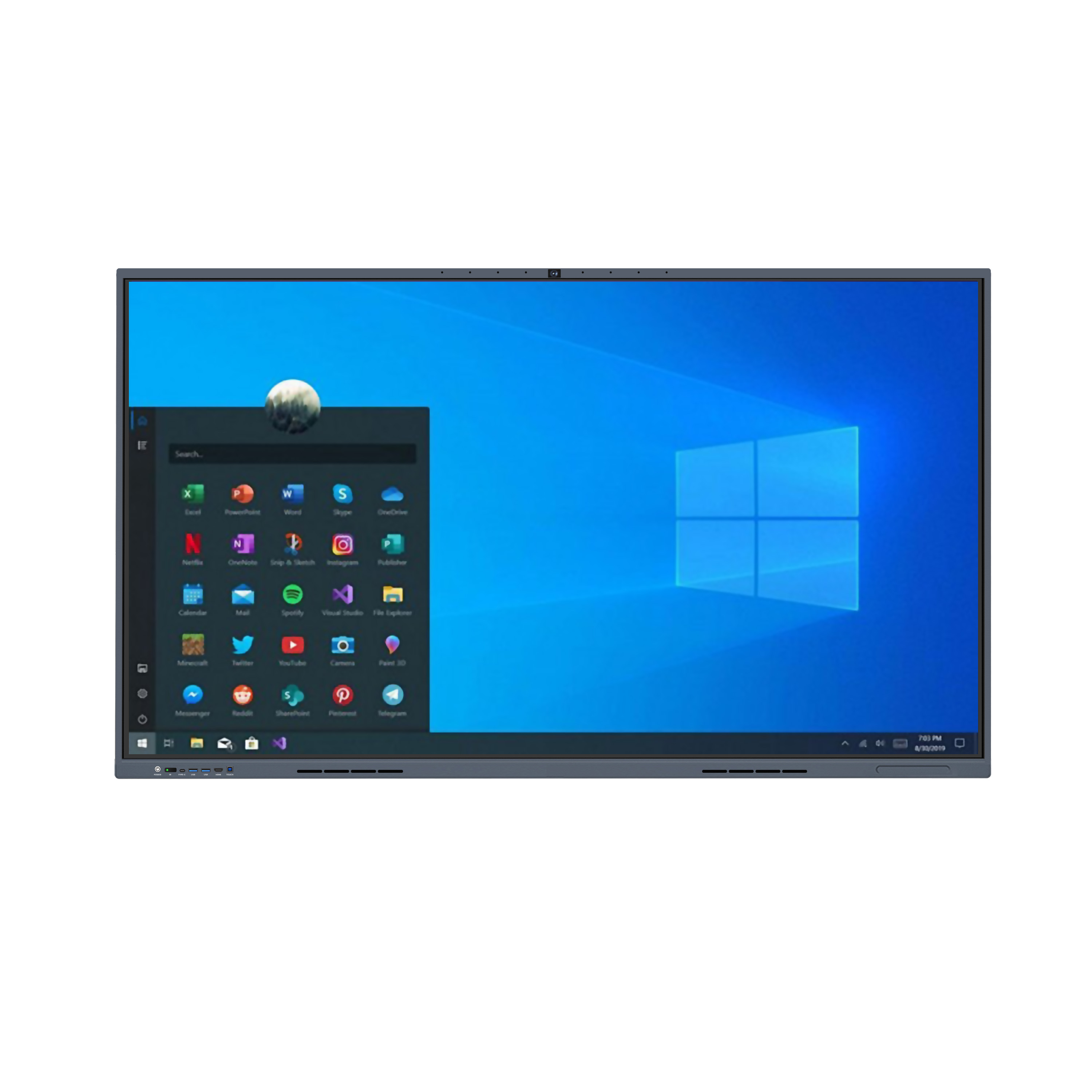
The KD-VW Series LCD video wall uses 55-inch panels with a 3.5mm sealing gap, 500 cd/m² brightness, 4000:1 contrast ratio, and DVI/HDMI/VGA inputs—appropriate for monitoring, exhibitions, government, and shopping malls. For interactive wall installations, the KD-ISS Series sliding screen reaches 1,500 cd/m² with IP55 protection and an optional Intel Core 5 PC configuration.
Self-Service and Kiosk Deployments
The KD-SSK Series self-service kiosk integrates a 21.5-inch touch display with a 10th-generation Intel Core i5 processor, 8GB RAM, 256GB SSD, and a thermal printer, making it suitable for hospitals, banks, airports, railway stations, and government service centers.
Commercial Display Comparison: Verified Specs at a Glance
| Series | Type | Resolution | Brightness | Key Constraint Spec | Typical Scene |
|---|---|---|---|---|---|
| KD-AD | Indoor digital signage | 1920×1080 | 450 cd/m² | ≤140W; 0–40°C | Malls, airports, hotels |
| KD-WM | Wall-mounted advertising machine | 1920×1080 (optional 4K) | 350 cd/m² | BOE panel; Android 14.0 | Retail, commercial districts |
| KD-EA | Elevator advertising machine | 1920×1080 | 250 cd/m² | Backlight >50,000h; ≤55W | Elevators, transport hubs |
| KD-OD | Outdoor waterproof display | 1080×1920 | 2,000 cd/m² | IP55; -20°C~50°C; ≤500W | Transport, smart city |
| KD-DSA | Dual-screen outdoor advertising | 1080×1920 | 2,000 cd/m² | SIM slot; RJ45/WiFi/Bluetooth | Commercial districts |
| KD-LED | Outdoor LED screen | 2.0mm pixel pitch | ≥4,500 cd/m² | Refresh ≥3840Hz | Outdoor media, billboards |
| KD-VW | LCD video wall | 1920×1080 per screen | 500 cd/m² | 3.5mm bezel; 4000:1 contrast | Control rooms, exhibitions |
| KD-TP | Transparent LCD display | 1920×1080 | ≥380 cd/m² | 95% transparency | Luxury retail, hotels |
| KD-DH | AI digital human | 3840×2160 | 1,300 cd/m² | HDR1000; 8-array microphone | Exhibitions, hotel lobbies |
| KD-IFPD | Interactive conference display | 4K-30Hz | 350 cd/m² | 40-point touch; 30,000h life | Offices, training centers |
Frequently Asked Questions
What certifications should a commercial display have for US and EU projects?
For the United States, a commercial display should meet FCC requirements. GZKEDRO products hold FCC SDoC certificate MAX26060195P01-E01, issued by MAXLAB Testing Co., Ltd. under FCC Part 15, Subpart B. For the European Union, the core set covers LVD (EN IEC 62368-1:2024/A11:2024), EMC (EN 55032:2015/A11:2020), and RoHS 2.0 (Directive (EU) 2015/863). The GZKEDRO KD-EA Series elevator advertising machine holds EU certificates MK25100089P01-S01, MK25100089P01-E01, and MK25100089P01-C01, all issued by TMC Testing Services (Shenzhen) Co., Ltd. When a supplier presents certification, ask for the certificate number, issuing body, applicable standard, and market scope.
Which commercial display specifications matter most for indoor vs outdoor environments?
For outdoor environments, brightness and protection are the primary constraints. GZKEDRO outdoor models such as the KD-OD and KD-DSA series are rated at 2,000 cd/m² with IP55 protection, while the KD-LED Series reaches ≥4,500 cd/m². For indoor environments, 350–500 cd/m² is typical; the KD-AD Series provides 450 cd/m² and the KD-WM Series 350 cd/m². Indoor decisions then shift to resolution, touch capability, contrast, and form factor—for example, 40-point touch on the KD-IFPD Series or 95% transparency on the KD-TP Series.
What drives commercial display cost, and how can buyers control it?
Cost is driven by configuration: panel size and brightness, housing materials, touch and computing hardware, certification scope, and customization. GZKEDRO supports customization of logo, color, software/UI, packaging, and voltage across its display products. Buyers can control cost by standardizing configurations, selecting only the certifications their target market requires, and using flexible order quantities. GZKEDRO states MOQs of 2–5 units depending on product size, with project-based MOQs available, so a pilot order can be placed before full-scale rollout.
Can buyers request a sample before a bulk commercial display order?
Yes. GZKEDRO supports sample-level orders with flexible MOQs from 2 to 5 units depending on product size. Before shipment, every unit passes 100% aging test and functional inspection, including brightness, waterproof, touch, temperature, and continuous operation checks. A sample order lets you validate real brightness, touch response, software behavior, documentation, and packaging before committing to series production.
What is a realistic lead time for commercial display production?
GZKEDRO reports a standard lead time of 15 to 30 days, with a maximum of 30 days, supported by a monthly production capacity of 2,000 to 5,000 units. Custom projects involving new housing, software/UI changes, or special certification requirements typically use the upper range of the lead time. After delivery, remote technical support, online guidance, and 24/7 technical assistance are available.
Conclusion
Verification is not about collecting the largest number of documents. It is about matching evidence to project constraints. Define the operating environment, set spec thresholds, check certification coverage, review manufacturing evidence, and confirm commercial terms. These five steps turn a commercial display purchase from a gamble into a managed decision.
GZKEDRO provides a useful reference point: a display manufacturer with published certification numbers, product-level specifications, factory QC data, and flexible order terms. To evaluate the full range, download the official GZKEDRO product catalog or contact the team directly.
Evaluate GZKEDRO for your next commercial display project.
Download Product Catalog (PDF)
Email: gzkedro@gmail.com | Tel: +86 189-2950-0788
Guangzhou Kedro Electronics Technology Co., Ltd., Unit 103, Building 3, No. 5, Yongshan Village, Shiqi Town, Panyu District, Guangzhou, China
Have Questions or Need More Details?
Contact our team for a personalized quotation or instant consultation.
Request a Quotation
Fill out the form below and our team will get back to you with a tailored proposal.
WhatsApp Direct Chat
Prefer to chat in real-time? Message us on WhatsApp for instant assistance & quick answers.
- Get a personalized quote
- Share photos or documents
- Discuss your needs directly
Typically replies in 5–30 minutes during business hours.