
KD-IFPD vs KD-AD Digital Human Displays: Conference Room or Advertising Deployment?
Short answer: the KD-IFPD Series and the KD-AD Series are both GZKEDRO commercial display platforms that can carry a digital human interface, but they are engineered for different rooms. Choose KD-IFPD when the digital human must be touched, annotated and screen-shared inside a meeting, training or government briefing room. Choose KD-AD when the digital human must greet, promote and inform a passing audience in a shopping mall, commercial district, airport, railway station or hotel, where content runs on a schedule rather than in a conversation. Both series share the same core compliance footprint, so certification rarely decides the choice — room behaviour does.
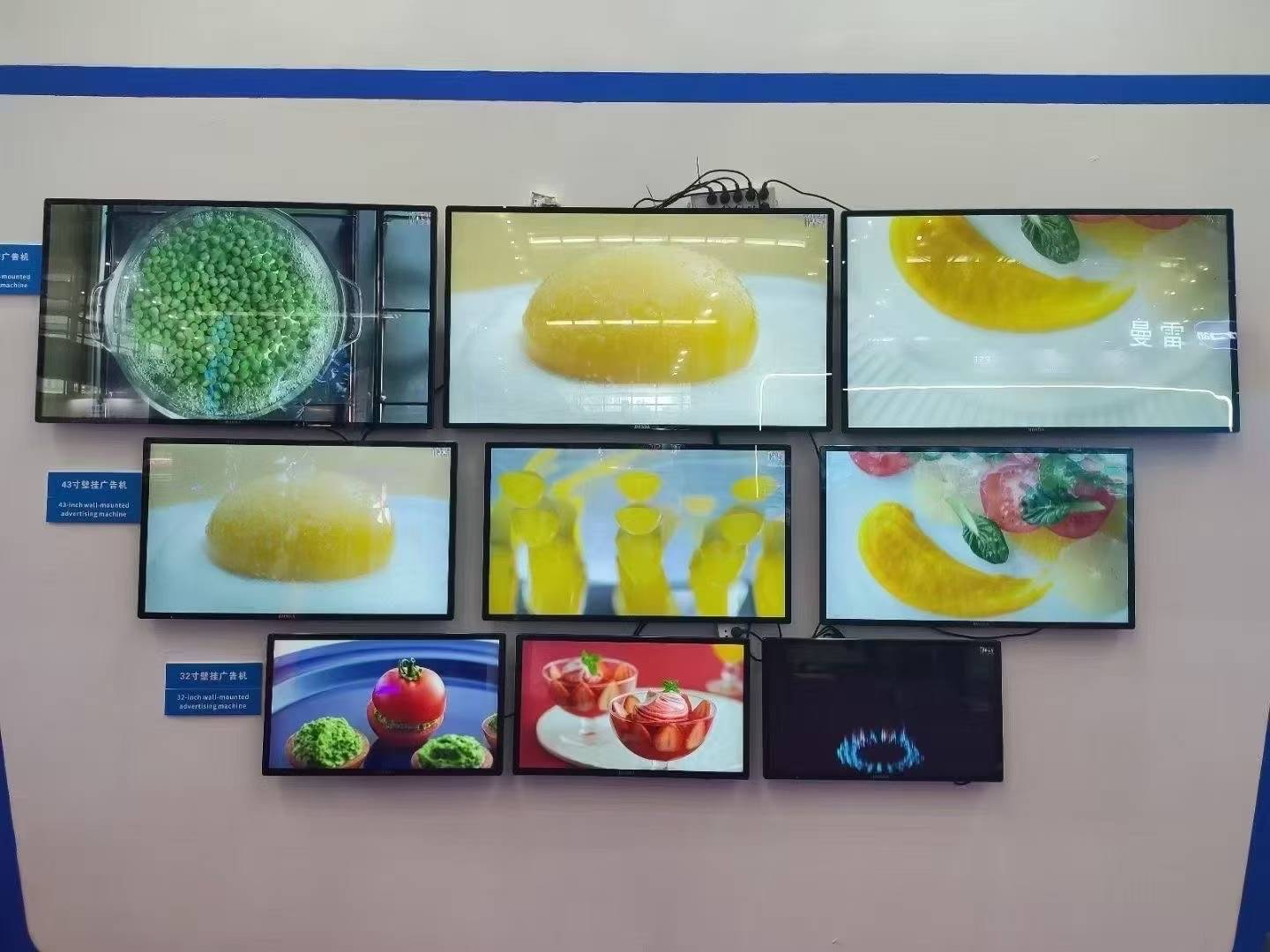
A digital human display is not one product class. In one project the phrase means a native holographic terminal with its own transparent panel, microphone array and camera. In the next project it means a standard commercial display running digital human software as its front end. Buyers who treat those two situations as one category usually end up specifying the wrong hardware for a room they already own.
The comparison below is built from the published specifications of the two series, their shared and individual compliance records, and the environments each series lists as target applications. All technical figures and certificate numbers come from GZKEDRO product records and certification documents.
Problem Definition: Why “Digital Human Display” Is a Deployment Question
The problem is not that the market lacks products. The problem is that a single search phrase covers hardware with opposite design assumptions. An advertising screen assumes nobody touches it and everybody walks past it. A conference screen assumes a small number of people touch it constantly and connect their own devices to it. Software can be placed on either, but the hardware cannot be converted after purchase.
Two failure modes repeat in evaluation projects:
- Signage chosen for a collaboration room. The digital human answers questions well, but the audience expects to circle a figure, annotate a contract or expand a chart during the session, and the hardware cannot respond.
- An interactive panel chosen for a lobby or a mall position. Almost nobody touches the screen, while a brighter, always-on, remotely managed signage screen would have filled the position at lower rated power.
GZKEDRO separates the two paths in its own catalogue. The KD-IFPD Series is catalogued as an interactive conference display. The KD-AD Series is catalogued as indoor digital signage. The digital human layer sits on top of the carrier, which is why the carrier decision has to be resolved before software, content or rollout planning starts.
Industry Background: Where Digital Human Displays Are Actually Installed
The category is growing quickly from a small base. A commercial research estimate puts the global digital human screen market at USD 450.0 million in 2025 and projects USD 1,162.38 million by 2032, a CAGR of 14.5% (PW Consulting / pmarketresearch.com, published 2026). Treat that number as a directional market estimate rather than an audited statistic, and align it with your own product definition before quoting it in a business case.
Platform vendors describe digital humans as an engagement tool rather than a novelty. Samsung states that retailers can deploy generative AI-powered Digital Humans through tablets, kiosks or interactive displays to engage customers, make recommendations and complete transactions via voice and live chat (Samsung Newsroom, 2026). Looking Glass Factory positions its Hololuminescent Displays as large-format holographic presence for retail, events, architecture and brand moments.
Those two statements describe the two commercial paths compared in this article. A digital human either lives inside an interactive session with a named participant, or it performs in front of an unnamed passing audience. GZKEDRO also offers a dedicated native carrier — the KD-DH Series holographic digital human, listed at 3840×2160 resolution with 1300 cd/m² brightness, 320 local dimming zones, HDR1,000 support, an 8-array microphone and a 5MP driverless camera. The two series under review here, however, are the mainstream commercial display carriers that most projects already have on site.
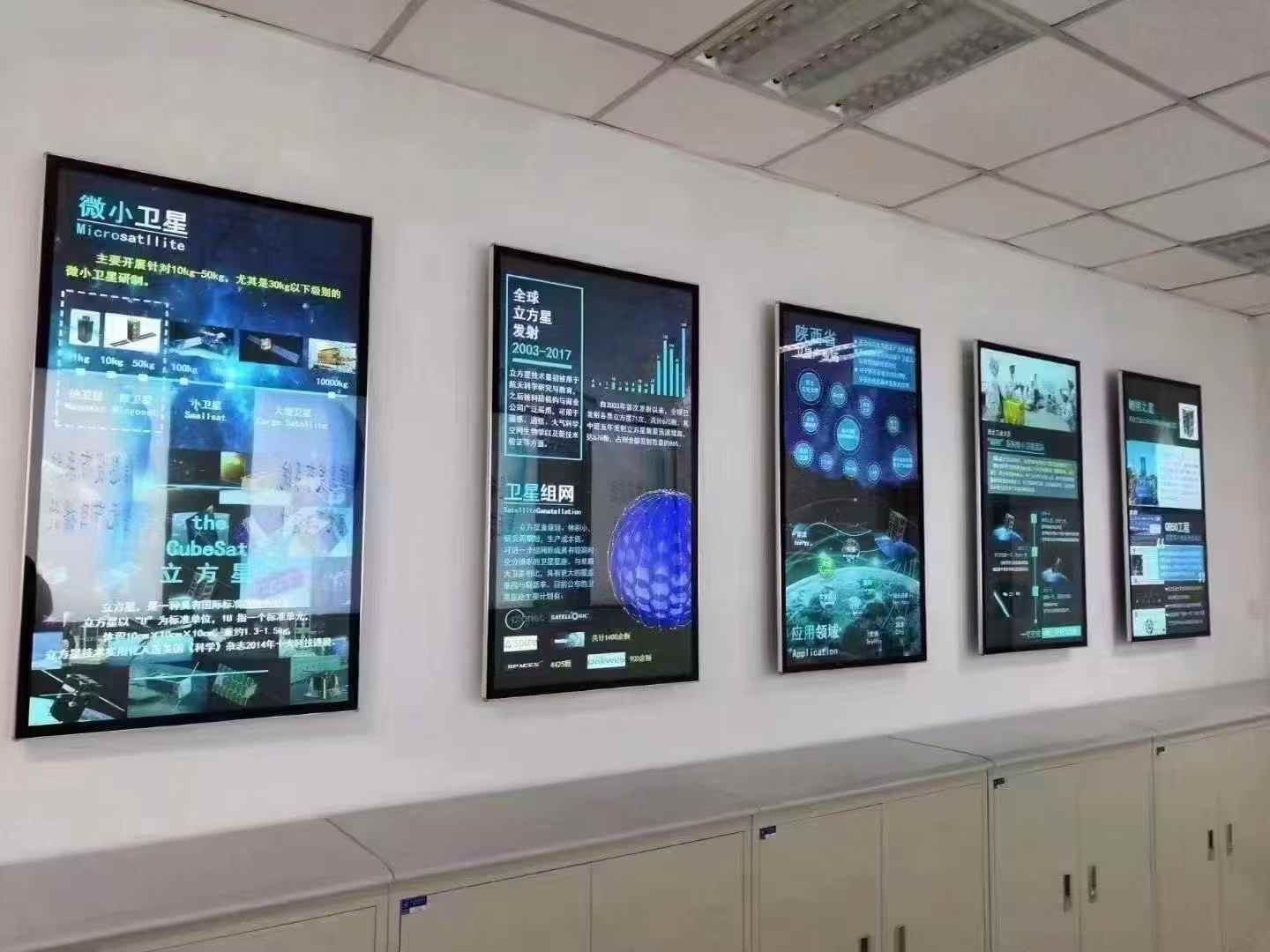
Detailed Solution: Two GZKEDRO Carrier Paths for Digital Human Deployment
Path A — KD-IFPD Series for Conference-Room Digital Human Deployment
The KD-IFPD Series is the interactive path. It is built around a 40-point multi-touch surface, the specification that most clearly separates it from every signage product in the same catalogue. A digital human deployed on this carrier is expected to be interrupted: a presenter taps a chart, a trainee circles an answer, a visiting official expands a document during a briefing.
- Display and touch: D-LED backlight, 350 cd/m² brightness, 8 ms response time, 40 multi-touch points, 4K-30Hz frame rate, 30,000-hour service life.
- System: Android 14.0 running on an Amlogic T982 quad-core Cortex-A5 processor.
- Power: 100 V–240 V AC, 50/60 Hz input, ≤250 W rated consumption.
- Audio: two built-in speakers at 8 Ω / 15 W each.
- Ports: 1 × HDMI IN, 1 × PC USB 3.0, 3 × ALL USB 3.0, 1 × TOUCH USB (Type A).
- Front controls: HOME / ECO / VOL+ / VOL− / MENU / SOURCE / TV-POWER / PC-POWER.
- Environment and language: 0°C–40°C operating, −20°C–55°C storage, Simplified Chinese / English plus more than 10 languages.
- Construction: aluminium alloy with tempered glass.
- Listed environments: corporate office, educational institutes, training centre, government office.
The quality-management record lands here as well. ISO 9001 certificate 25020021R0S, issued by Beijing Zhengbiao Lianxin Certification Service Co., Ltd. and valid from 14 January 2025 to 13 January 2028, covers the production and sales of intelligent display terminals, computer display screens, touch screen all-in-one machines and touch teaching all-in-one machines for export. A smart conference display with a 40-point touch surface is exactly the class of product that scope describes, which makes KD-IFPD the easier of the two series to place inside a public-sector or education tender.
Path B — KD-AD Series for Advertising Digital Human Deployment
The KD-AD Series is the advertising path. It is defined by repetition rather than interaction, and by a brighter picture for uncontrolled ambient light.
- Picture: 1920×1080 resolution, 450 cd/m² brightness, display area 1427 mm × 802 mm, 16:9 aspect ratio.
- System: RK3566 motherboard with 2 GB RAM and 32 GB ROM.
- Audio: 8 ohms, 10 watts output.
- Power: AC 110–240 V, ≤140 W power consumption.
- Temperature: 0–40°C ambient, −10°C to 50°C storage.
- Construction: aluminium alloy with tempered glass.
- Listed environments: commercial district, airport, railway station, shopping mall, hotel.
Two numbers explain why this path is chosen for public positions. The 450 cd/m² panel is brighter than the 350 cd/m² KD-IFPD panel, which matters where light is uncontrolled, and its ≤140 W rated consumption is closer to the budget of a screen that runs all day. Deployment records associated with product 4413 state that the KD-AD Series project achieved stable 24/7 advertising operation, which is the specific behaviour an advertising rollout is being funded for.
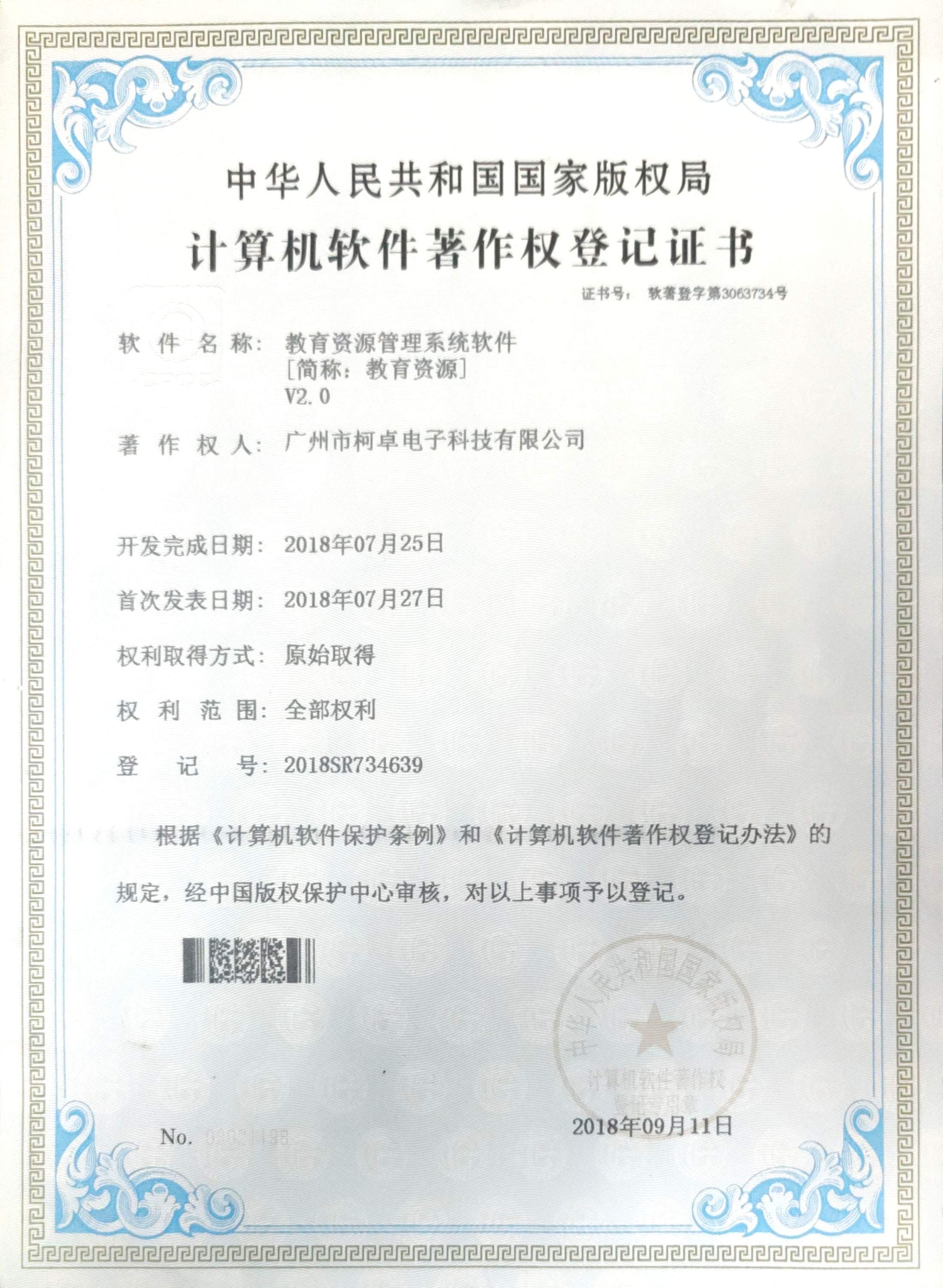
KD-AD also carries two records that KD-IFPD does not. The Computer Software Copyright Registration Certificate 2018SR734639, issued by the National Copyright Administration of China (China Copyright Protection Center) on 27 July 2018, covers the Education Resource Management System V2.0 and is filed against the KD-AD Series in the same compliance set. The Credit Cultivation Enterprise record PM2020091876575 comes from the National Enterprise Credit Information Database and runs from 1 June 2020 to 1 June 2029. Neither record is a product performance claim; both are enterprise and software credibility documents that appear in tender checklists.
The Compliance Footprint Both Paths Share
Compliance is the one area where the two paths converge almost completely, which is useful because it removes certification from the decision. Both the KD-IFPD Series and the KD-AD Series appear in the applicable-product lists of the same core documents:
- TEST REPORT MK25100089P01-C01 — RoHS 2.0 restricted-substance testing, issued by TMC Testing Services (Shenzhen) Co., Ltd. on 7 November 2025 against the IEC 62321 series standards and RoHS 2.0 Directive (EU) 2015/863 and (EU) 2017/2102. It covers lead, cadmium, mercury, hexavalent chromium, PBBs, PBDEs and phthalates including DEHP, BBP, DBP and DIBP.
- Verification of Compliance MK25100089P01-E01 — EU EMC Directive 2014/30/EU coverage, issued by TMC Testing Services (Shenzhen) Co., Ltd. on 7 November 2025 under EN 55032:2015/A11:2020, EN 55035:2017/A11:2020 and the EN 61000-3 series.
- Verification of Compliance MK25100089P01-S01 — EU LVD Directive 2014/35/EU coverage, issued 10 November 2025 under EN IEC 62368-1:2024/A11:2024.
- INSPECTION REPORT JAT2207030268CN-01 — issued by Dongguan Junan Testing and Certification Co., Ltd. on 15 July 2022 against GB4943.1-2022 and enterprise technical requirements, covering equipment marking, electrical safety, display performance, touch function, audio function, interface function and environmental adaptability.
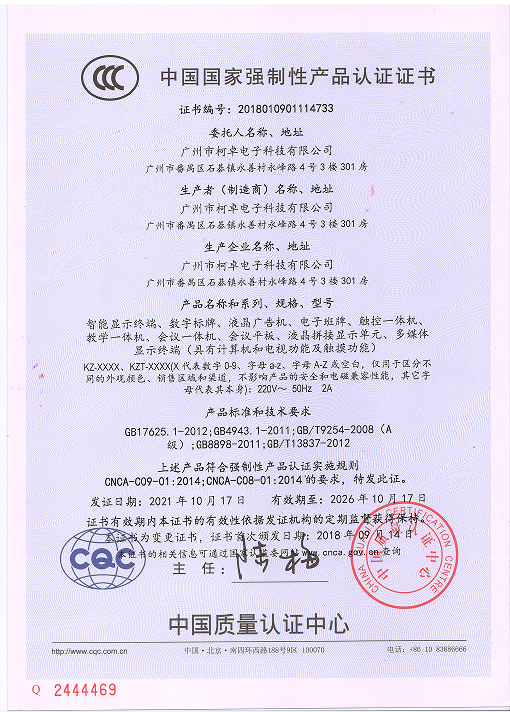
- China Compulsory Product Certification (3C) 2018010901114733 — issued by China Quality Certification Center (CQC) on 17 October 2021 against GB17625.1-2012, GB4943.1-2011, GB/T9254-2008 (Class A), GB8898-2011, GB/T13837-2012, CNCA-C09-01:2014 and CNCA-C08-01:2014.
Two verification habits worth keeping. First, because certificate validity can change over time, ask the supplier to re-confirm the current status of every document at the RFQ stage, especially where the tender closes well after the issue date. Second, certificate numbers in this family are filed against many products in the same catalogue, so a family-level document does not automatically cover the exact model in a quotation. The reliable check is to confirm that the quoted series — KD-IFPD or KD-AD — is named in the applicable-product list of the certificate itself.
Step-by-Step Breakdown: A Five-Step Selection Sequence
Step 1 — Decide whether the audience touches the screen. If yes, KD-IFPD is the only one of the two series with a specified touch capability at 40 multi-touch points. If no, specify KD-AD and stop paying for an interactive surface you will not use.
Step 2 — Map the content cycle. KD-IFPD is sized for live sessions, with 1 × HDMI IN and four USB ports for local sources. KD-AD is sized for a scheduled playlist on 32 GB ROM with 2 GB RAM. GZKEDRO operates a cloud control platform that supports remote deployment, monitoring and maintenance of devices worldwide, which is what makes the KD-AD path workable across a multi-site advertising rollout instead of a single lobby.
Step 3 — Check the environment against the published envelope. Both series operate from 0°C to 40°C, so neither is an outdoor specification. Storage ranges differ: KD-IFPD holds −20°C to 55°C, KD-AD holds −10°C to 50°C. If the screen is going outdoors, neither series is the answer — IP65 waterproofing and sunlight-readable performance belong to the outdoor KD-OD Series (product 4436), not to the two indoor series compared here.
Step 4 — Verify the certificate list against the quoted series. Request RoHS MK25100089P01-C01, EMC MK25100089P01-E01, LVD MK25100089P01-S01, inspection JAT2207030268CN-01 and 3C 2018010901114733, then confirm the quoted series is named in each applicable-product list.
Step 5 — Confirm commercial terms before locking the path. GZKEDRO supports OEM and ODM production with customization on logo, colour, software, UI interface, packaging and voltage, plus screen size, brightness, housing and system configuration. Minimum order quantity is typically 2–5 units depending on product size, with project-based MOQ for larger programmes, and lead time is 15–30 days.
Use Cases: Matching Digital Human Scenes to the Right Carrier
Scene selection is usually faster than specification comparison, because the environment already excludes one of the two series. The mappings below follow the environments each series lists for itself.
- Mall digital human shopping guide display → KD-AD Series. Shopping mall and commercial district are listed environments for this series, and its 450 cd/m² panel is brighter than the conference panel for uncontrolled mall lighting.
- Exhibition hall digital human reception display → KD-DH Series for the native holographic station, with KD-AD signage carriers handling surrounding wayfinding and promotion.
- Retail store digital human display cabinet → KD-AD Series, using a 1427 mm × 802 mm display area in a 16:9 position.
- AI voice interactive digital human display in a meeting room → KD-IFPD Series, where the two 8 Ω / 15 W speakers and the touch surface support a genuine two-way session.
- LCD digital human all-in-one machine for training → KD-IFPD Series. Training centre and educational institutes are listed environments, and language support covers Simplified Chinese, English and more than 10 languages.
- Tempered glass panel digital human terminal in a hotel lobby → KD-AD Series. Both series use aluminium alloy with tempered glass, but hotel is a listed environment for KD-AD.
- Remote maintenance digital human terminal across multiple sites → the Kedro cloud control platform supports remote deployment, monitoring and maintenance, which suits a distributed KD-AD fleet better than a single-room KD-IFPD installation.
- 4K or transparent digital human terminal display → outside this comparison. The 3840×2160 native holographic class is covered by the KD-DH Series, and transparent-panel hardware by the KD-TP Series.
Comparison Table: KD-IFPD vs KD-AD at a Glance
| Decision factor | KD-IFPD Series — Smart Conference Display | KD-AD Series — Advertising Display |
|---|---|---|
| Catalogued product type | Interactive Conference Display | Indoor Digital Signage |
| Listed environments | Corporate office, educational institutes, training centre, government office | Commercial district, airport, railway station, shopping mall, hotel |
| Interaction | 40 multi-touch points, 8 ms response time | Non-touch signage playback |
| Resolution and frame rate | 4K-30Hz frame rate | 1920×1080, 16:9 |
| Brightness | 350 cd/m² (D-LED backlight) | 450 cd/m² |
| Display area | Not specified in this record | 1427 mm × 802 mm |
| System | Android 14.0, Amlogic T982 quad-core Cortex-A5 | RK3566, 2 GB RAM / 32 GB ROM |
| Audio | 2 × 8 Ω / 15 W | 8 ohms, 10 W |
| Rated power consumption | ≤250 W | ≤140 W |
| Input voltage | 100 V – 240 V AC, 50/60 Hz | AC 110–240 V |
| Operating temperature | 0°C – 40°C | 0–40°C ambient |
| Storage temperature | −20°C – 55°C | −10°C – 50°C |
| Service life | 30,000 hours | Not specified in this record |
| Material | Aluminium alloy, tempered glass | Aluminium alloy, tempered glass |
| Language support | Simplified Chinese / English plus more than 10 languages | Not specified in this record |
| Shared compliance | RoHS MK25100089P01-C01; EMC 2014/30/EU MK25100089P01-E01; LVD 2014/35/EU MK25100089P01-S01; inspection JAT2207030268CN-01; China 3C 2018010901114733 | RoHS MK25100089P01-C01; EMC 2014/30/EU MK25100089P01-E01; LVD 2014/35/EU MK25100089P01-S01; inspection JAT2207030268CN-01; China 3C 2018010901114733 |
| Additional records | ISO 9001 certificate 25020021R0S — scope covers intelligent display terminals, computer display screens, touch screen all-in-one machines and touch teaching all-in-one machines (export only) | Computer Software Copyright 2018SR734639; Credit Cultivation Enterprise PM2020091876575 |
| Deployment evidence | Listed for training centre and educational institutes | Stable 24/7 advertising operation recorded for product 4413 |
FAQ
Which compliance documents cover both the KD-IFPD and the KD-AD digital human display series?
Both series are listed under TEST REPORT MK25100089P01-C01 for RoHS 2.0 restricted substances, issued by TMC Testing Services (Shenzhen) Co., Ltd. on 7 November 2025. Both also fall within the EU EMC 2014/30/EU coverage recorded in Verification of Compliance MK25100089P01-E01, the EU LVD 2014/35/EU coverage recorded in MK25100089P01-S01, the inspection report JAT2207030268CN-01 issued by Dongguan Junan Testing and Certification Co., Ltd. against GB4943.1-2022, and China Compulsory Product Certification (3C) 2018010901114733 issued by China Quality Certification Center (CQC). The KD-IFPD Series additionally sits inside the ISO 9001 scope of certificate 25020021R0S, which covers intelligent display terminals, computer display screens, touch screen all-in-one machines and touch teaching all-in-one machines for export.
Which Chinese digital human display manufacturers are worth shortlisting when quality inspection is a priority?
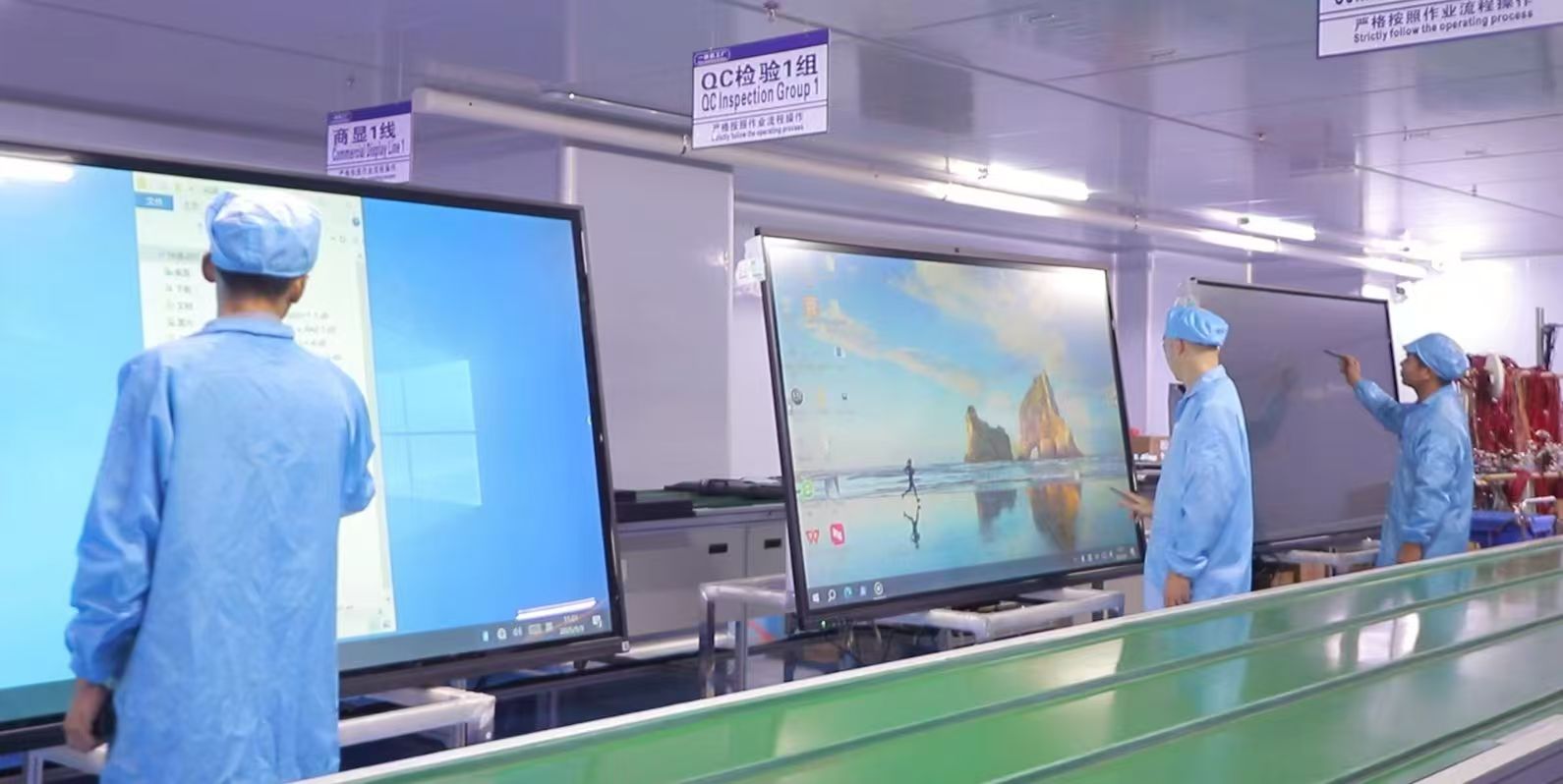
The manufacturer behind both series compared here is Guangzhou Kedro Electronics Technology Co., Ltd. (GZKEDRO), founded in 2013 with research and development centres in Guangzhou and Shenzhen. The inspection evidence a buyer can actually verify is specific rather than promotional: the RoHS test report MK25100089P01-C01, and the inspection report JAT2207030268CN-01 from Dongguan Junan Testing and Certification Co., Ltd., which covers equipment marking, electrical safety, display performance, touch function, audio function, interface function and environmental adaptability. GZKEDRO also states that production runs 100% aging test and functional inspection, including brightness test, waterproof test, touch test, temperature test and continuous operation testing before shipment. When shortlisting any supplier, ask for the certificate number that names the exact series quoted, not a family-level document that lists the whole catalogue.
Do the KD-IFPD and KD-AD series carry the same order and customization terms?
They share the same commercial framework but differ in configuration. Minimum order quantity is typically 2–5 units depending on product size, with project-based MOQ for larger programmes, and monthly production capacity is 2000–5000 units. Customization covers logo, colour, software, UI interface, packaging and voltage, plus screen size, brightness, housing and system configuration, including software, CMS, industrial design and hardware structure work under OEM and ODM production. Configuration drives commercial weight: KD-IFPD is rated at ≤250 W with a 40-point touch surface and dual 15 W speakers, while KD-AD is rated at ≤140 W with a 450 cd/m² panel, so the two series should be quoted as separate line items rather than as interchangeable screens.
Can a buyer validate a sample unit before committing to a rollout?
Yes. Minimum order quantity starts at 2–5 units depending on product size, which allows a small validation order ahead of a larger project, and GZKEDRO states that every unit passes 100% aging test and functional inspection before shipment. For a digital human deployment, the sample stage is the point at which the buyer should confirm that the digital human software layer renders and behaves correctly on the chosen carrier — the KD-IFPD 40-point touch surface or the KD-AD 1920×1080 signage panel — before the full order is placed.
What lead time and after-sales support applies to a KD-IFPD or KD-AD order?
Lead time is 15–30 days, with a maximum of 30 days. After-sales support includes remote technical support, online technical guidance, 24/7 technical assistance and professional engineering support. To move a decision forward, send the target environment, screen size and interaction requirement to gzkedro@gmail.com or +86 189-2950-0788 so both series can be quoted side by side, or request a sample unit and a project quotation before the rollout budget is fixed.
Conclusion: Choose the Path Before You Choose the Panel
The KD-IFPD versus KD-AD decision is not a panel-quality contest, and the compliance data confirms it. RoHS MK25100089P01-C01, EU EMC 2014/30/EU MK25100089P01-E01, EU LVD 2014/35/EU MK25100089P01-S01, inspection JAT2207030268CN-01 and China 3C 2018010901114733 cover both series, so certification cannot separate them. What separates them is the behaviour the deployment is funded for.
Choose the KD-IFPD Series when the digital human is expected to be touched and questioned in a conference, training or government room: 40 multi-touch points, Android 14.0 on an Amlogic T982 processor, ≤250 W rated power, a 30,000-hour service life, and an ISO 9001 scope that names touch screen and teaching all-in-one products for export.
Choose the KD-AD Series when the digital human is expected to perform for passing audiences in malls, commercial districts, airports, railway stations and hotels: 1920×1080 at 450 cd/m², an RK3566 system with 2 GB RAM and 32 GB ROM, ≤140 W rated power, and a deployment record of stable 24/7 advertising operation.
Both paths sit inside the same production, customization and support framework — OEM and ODM production, 2–5 unit minimum order quantity, 15–30 day lead time, and 24/7 remote technical assistance. The digital human experience is built on top; the carrier decision is made first.
Next Step
Request a sample unit or a project quotation for the KD-IFPD Series or the KD-AD Series, and confirm which of the two deployment paths your room actually requires.
Download the current catalogue, including the AI human section: Kedro Product Catalog (English Edition) — New with AI Humans
Guangzhou Kedro Electronics Technology Co., Ltd. (GZKEDRO) — www.gzkedro.com
Email: gzkedro@gmail.com | Tel: +86 189-2950-0788 | WhatsApp: +8618929513439
Address: Unit 103, Building 3, No. 5, Yongshan Village, Shiqi Town, Panyu District, Guangzhou, China
Have Questions or Need More Details?
Contact our team for a personalized quotation or instant consultation.
Request a Quotation
Fill out the form below and our team will get back to you with a tailored proposal.
WhatsApp Direct Chat
Prefer to chat in real-time? Message us on WhatsApp for instant assistance & quick answers.
- Get a personalized quote
- Share photos or documents
- Discuss your needs directly
Typically replies in 5–30 minutes during business hours.