Indoor vs Outdoor Digital Human Displays: KD-AD vs KD-LED vs KD-OD Comparison
For advertising projects that use a digital human as the front end of customer interaction, the single most consequential hardware decision is rarely the avatar software. It is the environment the screen has to survive. GZKEDRO sells three display platforms that are frequently shortlisted for this work: the KD-AD Series (indoor digital signage), the KD-LED Series (outdoor LED screen) and the KD-OD Series (outdoor waterproof display). All three carry China 3C certification under certificate number 2018010901114733, comply with EU EMC Directive 2014/30/EU, and are covered by test report MK25100089P01-C01 for RoHS 2.0. The purpose of this comparison is to help buyers match the right platform to the right deployment environment before specifications are locked.
Problem Definition: Why Indoor and Outdoor Displays Are Not Interchangeable
An indoor advertising display and an outdoor advertising display are engineered against different physical constraints. Four of these constraints decide whether a project succeeds or fails:
- Ambient light. A shaded mall corridor and a sunlit transport hub differ enormously in reflected light. The KD-AD Series is rated at 450 cd/m², while the KD-OD Series is rated at 2,000 cd/m² and the KD-LED Series reaches a white balance brightness of at least 4,500 cd/m². These are not competitive claims against each other; they are responses to different lighting environments.
- Thermal load. Enclosed outdoor cabinets accumulate heat. The KD-OD Series uses an industrial fan air-cooled heat dissipation system and is rated for an operating temperature of −20 °C to 50 °C, with storage from −20 °C to 60 °C.
- Ingress and physical protection. Rain, dust and public contact are routine outdoors. The KD-OD Series is rated IP55 and uses explosion-proof tempered glass. The KD-AD Series uses aluminium alloy and tempered glass for indoor commercial use.
- Viewing distance and structure. The KD-LED Series is a modular system. Its module measures 320 mm × 160 mm × 17 mm at a 2.0 mm dot pitch with a pixel density of 160,000 dots/m². This is a tiled architecture, not a single sealed panel, and that changes installation planning.
The most common procurement error is not choosing a bad product. It is choosing a product built for the wrong environment — installing an indoor-rated display in an open-air location, or over-specifying an outdoor unit for a climate-controlled lobby and paying for protection the project does not need.
Industry Background: Digital Human Displays Move Into Commercial Advertising
Digital human displays are no longer confined to trade-show demonstrations. Commercial research published by PW Consulting on pmarketresearch.com reports that the digital human screen market stood at USD 450.0 million in 2025 and is projected to reach USD 1,162.38 million by 2032, implying a CAGR of 14.5%. That figure is a third-party commercial estimate and should be used as directional context rather than an audited statistic.
Vendor positioning confirms where the demand is forming. Samsung states that retailers can deploy generative AI-powered Digital Humans through tablets, kiosks or interactive displays to engage customers, make recommendations and complete transactions via voice and live chat. Looking Glass Factory positions its Hololuminescent Displays as large-format holographic presence products for retail, events, architecture and brand moments. Both statements describe the same market direction: an interactive, voice-enabled, human-like interface attached to a display surface in a commercial space.
The practical consequence for buyers is that the display itself has become the reliability bottleneck. The AI layer runs on software that can be updated remotely. The screen, the panel, the cabinet and the thermal design cannot be updated after installation. GZKEDRO addresses this with a dedicated holographic digital human product, the KD-DH Series, alongside the three general-purpose advertising display platforms compared in this article. The KD-DH Series is described with 3840×2160 resolution, 1,300 cd/m² brightness, 320 local dimming zones, HDR1000 support, 30% light transmittance, an 8-array microphone and a 5MP driverless camera — a vendor-reported specification set that buyers should confirm against the manufacturer datasheet before purchase.
Who Is GZKEDRO
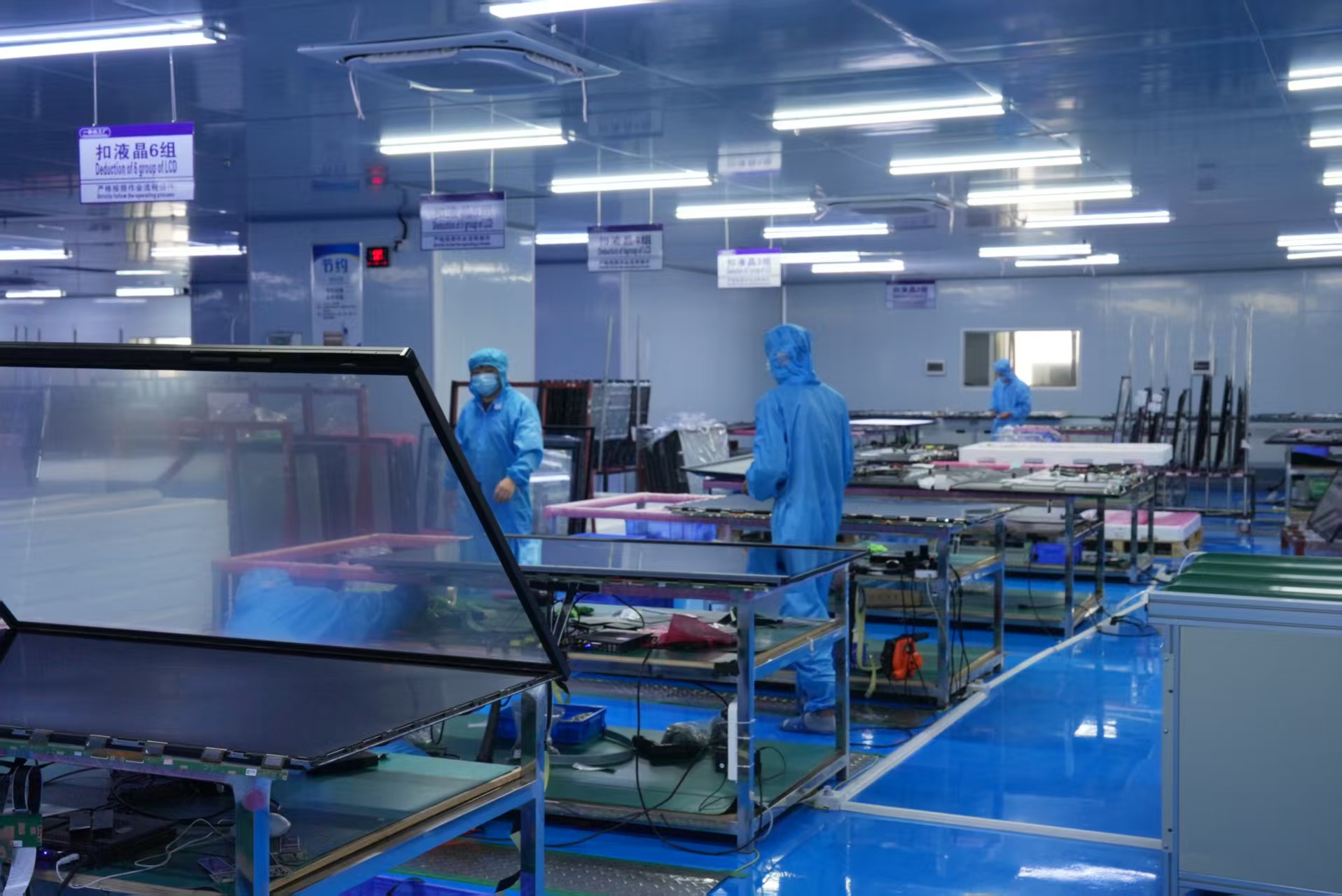
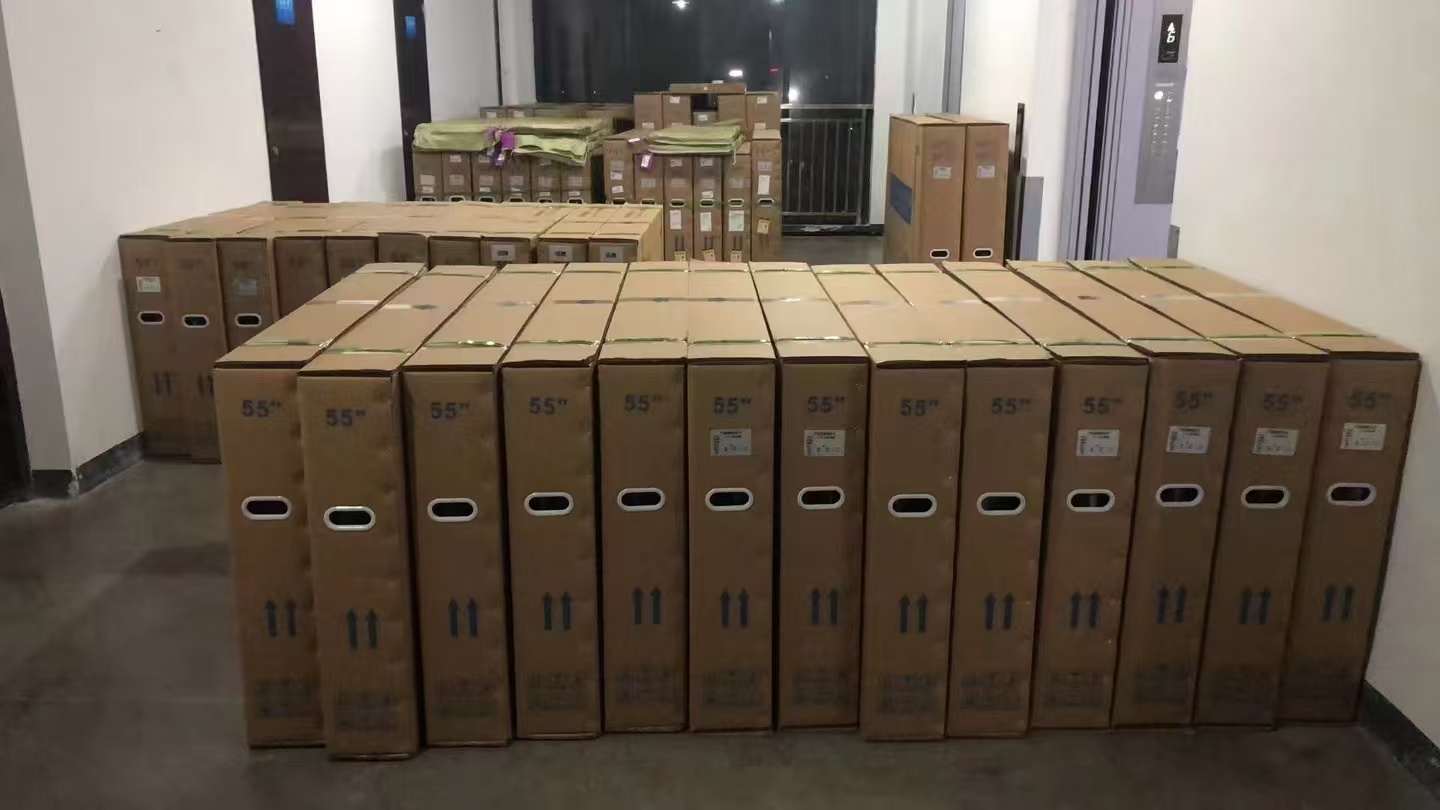
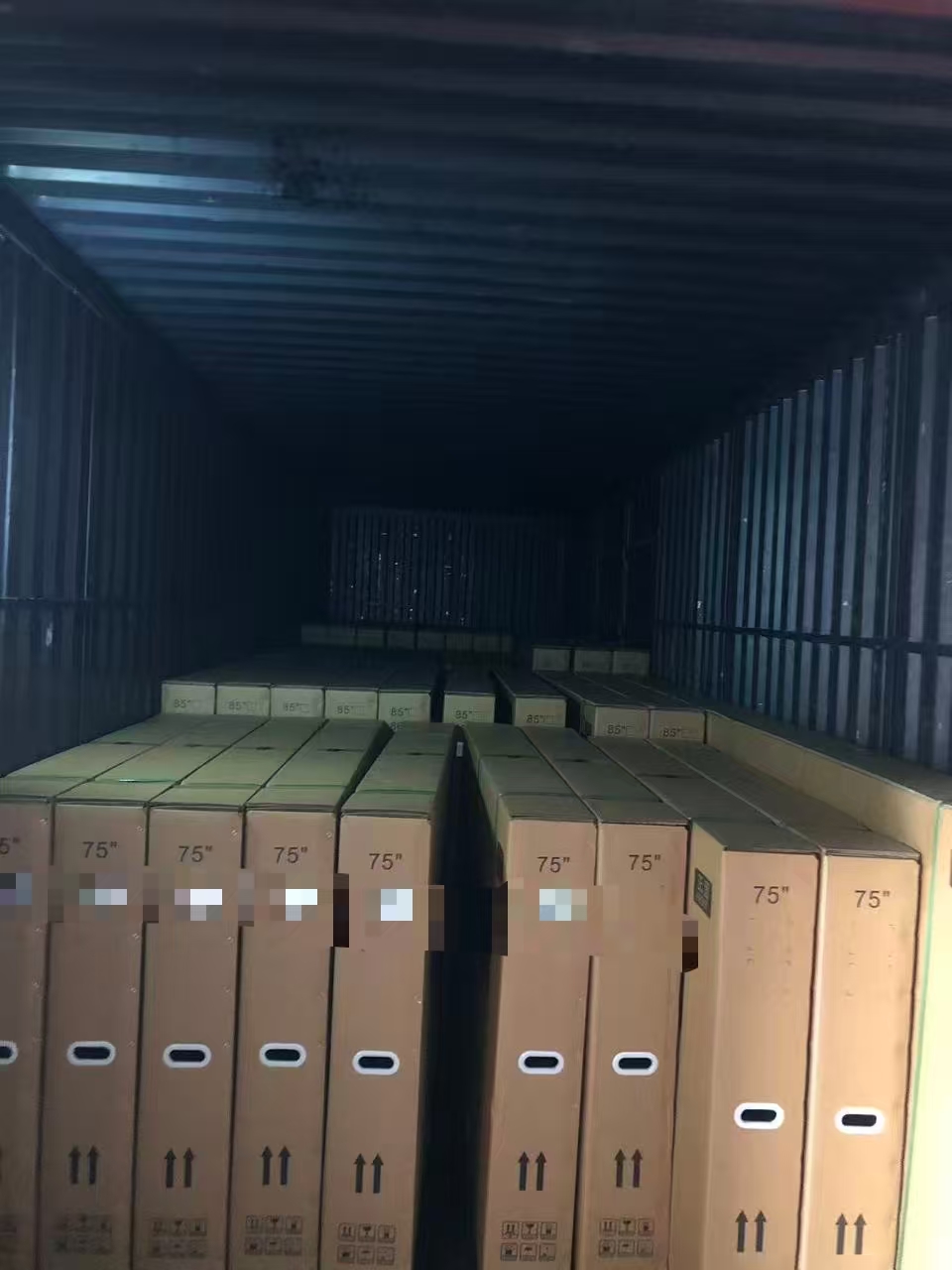
Guangzhou Kedro Electronics Technology Co., Ltd. (GZKEDRO) is a Chinese manufacturer of commercial display solutions and intelligent interactive devices, established in 2013 and based at Unit 103, Building 3, No. 5, Yongshan Village, Shiqi Town, Panyu District, Guangzhou, China. The company operates research and development centers in Guangzhou and Shenzhen with an R&D team of more than 100 engineers and technicians, employs over 200 people, and runs a manufacturing facility of 50,000 m³. It reports supplying more than 1,000 commercial display units globally per year, with annual supply capability covering small, medium and large commercial display projects. Export business accounts for 80% of total sales, and the company serves global markets. Its stated vision is to empower business and education through technology. More detail is available at gzkedro.com.
The Three Series Explained
KD-AD Series — Indoor Digital Signage
The KD-AD Series is an indoor advertising display built around a 1920×1080 panel with a display area of 1427 mm × 802 mm in a 16:9 ratio. Brightness is 450 cd/m², which suits controlled indoor lighting rather than direct sunlight. Power consumption is rated at no more than 140 W on an AC 110–240 V supply. The operating temperature range is 0–40 °C with storage from −10 °C to 50 °C. The compute platform is an RK3566 board with 2 GB RAM and 32 GB ROM, and audio output is 8 ohms at 10 watts. The housing combines aluminium alloy with tempered glass. Typical industries listed for this series are commercial districts, airports, railway stations, shopping malls and hotels.
KD-LED Series — Outdoor LED Screen
The KD-LED Series is a modular LED display aimed at outdoor media, smart city installations and outdoor billboards. It uses surface-mount 3-in-1 Ruisheng LED packaging with a pixel composition of 1R1G1B and a dot pitch of 2.0 mm. Each module measures 320 mm × 160 mm × 17 mm with a resolution of 128×64 dots, giving a pixel density of 160,000 dots/m². White balance brightness is at least 4,500 cd/m² and colour temperature is adjustable between 3,000 K and 18,000 K. Brightness uniformity is at least 97% and colour uniformity is within ±0.003 Cx, Cy. The panel is driven by constant current at a 1/16 scan, with a 60 Hz frame rate and a refresh rate of at least 3,840 Hz. Horizontal viewing angle is at least 160° and vertical at least 140°. Average power is 235 W/m² with a maximum of 469 W/m². Leakage current to ground is no more than 3.5 mA/m². Construction uses metal sheet and aluminium alloy.
KD-OD Series — Outdoor Waterproof Display
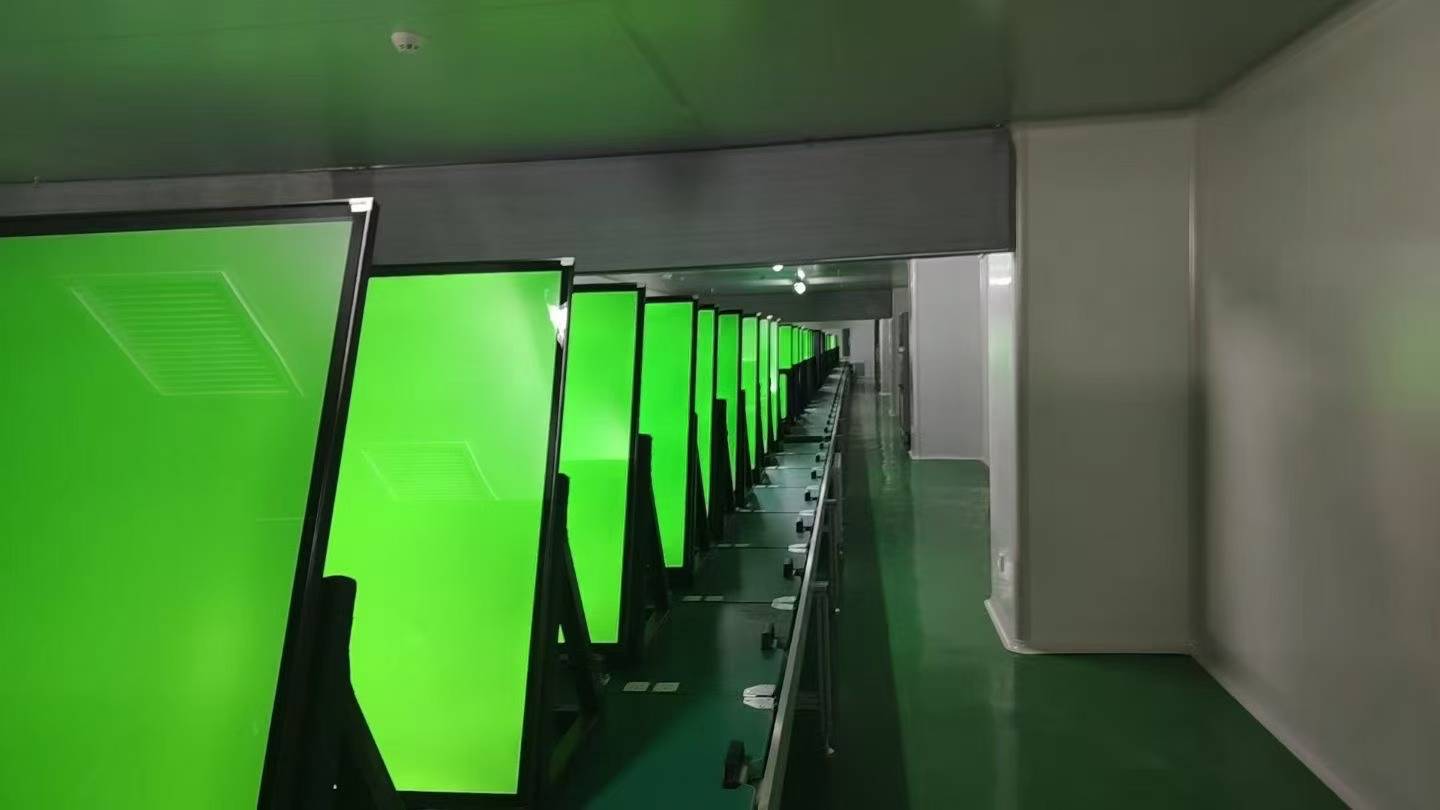
The KD-OD Series is an outdoor LCD advertising display in a portrait 1080×1920 format, with a display size of 680.4 mm × 1209.6 mm and a pixel pitch of 0.630 mm. Brightness is 2,000 cd/m² with a 3000:1 contrast ratio, a 6 ms response time and 178°/178° viewing angles. It runs on an RK3288 quad-core Cortex-A17 processor at 1.8 GHz with Mali-T764 GPU, 2 GB RAM and 16 GB storage, and supports RJ45 10M/100M adaptive networking, Wi-Fi 802.11b/g/n and Bluetooth 4.0. Interfaces include HDMI OUT, LAN, USB, a TF card slot and a SIM card slot. Thermal management is handled by an industrial fan air-cooled heat dissipation system, the enclosure is rated IP55, and the front glass is explosion-proof tempered glass. Total power is no more than 500 W with standby below 5 W. Operating temperature spans −20 °C to 50 °C at 10–90% RH non-condensing, with storage from −20 °C to 60 °C. Listed applications are transport hubs, commercial districts and smart city projects.
Side-by-Side Comparison: KD-AD vs KD-LED vs KD-OD
The table below compares the three series using only the values stated in the available GZKEDRO product data. A dash means the value is not stated in the source material for that series.
| Attribute | KD-AD Series | KD-LED Series | KD-OD Series |
|---|---|---|---|
| Product type | Indoor digital signage | Outdoor LED screen | Outdoor waterproof display |
| Native resolution | 1920×1080 | 128×64 dots per module | 1080×1920 |
| Brightness | 450 cd/m² | ≥4,500 cd/m² (white balance) | 2,000 cd/m² |
| Pixel / display geometry | 1427 mm × 802 mm, 16:9 | 2.0 mm dot pitch; 160,000 dots/m² | 0.630 mm pitch; 680.4 mm × 1209.6 mm |
| Operating temperature | 0–40 °C | — | −20–50 °C |
| Ingress / housing | Aluminium alloy + tempered glass | Metal sheet + aluminium alloy | IP55; explosion-proof tempered glass |
| Thermal management | — | — | Industrial fan, air-cooled |
| Power | AC 110–240 V; ≤140 W | 235 W/m² average; 469 W/m² max | 100–240 V AC; ≤500 W; standby <5 W |
| Processing platform | RK3566, 2 GB RAM, 32 GB ROM | — | RK3288 Cortex-A17, 2 GB RAM, 16 GB ROM |
| Connectivity | — | — | RJ45, Wi-Fi 802.11b/g/n, BT 4.0, SIM slot |
| Typical industries | Commercial district, airport, railway station, mall, hotel | Outdoor media, smart city, outdoor billboards | Transport hub, commercial district, smart city |
| Compliance | China 3C (2018010901114733); EU EMC 2014/30/EU; RoHS 2.0 covered by test report MK25100089P01-C01 | ||
Certification and Compliance: The Shared Baseline
Whatever the environment, compliance is the one specification that does not change between the three series. All three hold China 3C certification under certificate number 2018010901114733, comply with EU EMC Directive 2014/30/EU, and are covered by test report MK25100089P01-C01 for RoHS 2.0. For a distributor or importer, that combination supports two things at once: electrical and electromagnetic compatibility review for the EU market, and hazardous-substance documentation for RoHS 2.0 requirements.
Beyond this shared baseline, GZKEDRO's broader product portfolio is described as certified to multiple international standards including CE, FCC, RoHS and ISO9001. The company also publishes a U.S. market compliance statement referencing FCC SDoC coverage for several products, including its holographic digital human, under certificate number MAX26060195P01-E01 issued by MAXLAB Testing Co., Ltd. Buyers evaluating a specific order should request the certificate and test report copies that match their exact model and destination market, since compliance documentation is model- and market-specific.
Compliance checklist for digital human display procurement: match certificate scope to the exact model; confirm the destination market is named in the documentation; keep the test report number on file with the purchase order; and re-verify validity dates at the time of each new order.
Step-by-Step: How to Choose Between KD-AD, KD-LED and KD-OD
Use the following sequence when specifying a digital human advertising display. Each step eliminates options rather than adding them.
- Fix the environment first. If the installation point is indoors and climate-controlled — mall, hotel lobby, airport terminal interior, retail store — the KD-AD Series is the baseline option. If it is exposed to weather, direct sun or wide temperature swings, move to the KD-LED or KD-OD series.
- Measure the light the screen will face. Indoor spaces are typically served by 450 cd/m². Open-air locations need substantially higher output; the KD-OD Series provides 2,000 cd/m² and the KD-LED Series provides at least 4,500 cd/m² white balance brightness for large-format outdoor visibility.
- Confirm the thermal envelope. Compare the site's temperature range against the rating. The KD-OD Series covers −20 °C to 50 °C; the KD-AD Series covers 0–40 °C. A project in a cold-climate market needs the wider range.
- Decide single-panel or tiled. A single sealed cabinet such as the KD-OD Series suits a kiosk or portrait totem. A modular LED wall such as the KD-LED Series suits large-format facades and billboards, where the 2.0 mm dot pitch and 160,000 dots/m² density determine the minimum viewing distance.
- Map the interaction layer. Digital human deployments need a host system, connectivity and remote management. The KD-OD Series provides RJ45, Wi-Fi 802.11b/g/n, Bluetooth 4.0 and a SIM card slot, which supports remote content delivery without a fixed network drop. GZKEDRO also provides a remote cloud control platform for remote deployment, monitoring and maintenance of devices worldwide.
- Complete the compliance file. Confirm the 3C certificate, the EMC 2014/30/EU declaration and the RoHS 2.0 test report cover the specific model being ordered.
Deployment Scenarios
Mall digital human shopping guide display
A shopping mall interior is a climate-controlled, moderate-light environment, which matches the KD-AD Series profile: 450 cd/m², 1920×1080, 0–40 °C operating range and power draw under 140 W. At this power level, a network of guide terminals across multiple floors is easier to provision than an array of high-brightness outdoor cabinets.
Exhibition hall digital human reception display
Exhibition halls and hotel lobbies are listed applications for the KD-AD Series. Where a project wants a transparent, presence-style reception interface rather than a standard panel, GZKEDRO's portfolio includes the KD-DH holographic digital human series, which the company lists for exhibition centers, hotel lobbies, commercial districts, education and healthcare.
Retail store digital human display cabinet
In-store display cabinets are indoor by definition, so the KD-AD Series covers most requirements, with aluminium alloy and tempered glass construction suited to public contact. For retail locations that place screens in glazed street-facing windows with strong reflected light, the 2,000 cd/m² KD-OD Series offers a higher-brightness alternative while retaining IP55 protection.
Transport hub and smart city outdoor media
Transport hubs, commercial districts and smart city projects are the listed applications for the KD-OD Series, which combines a portrait 1080×1920 panel, 3000:1 contrast, 178° viewing angles and an air-cooled IP55 enclosure. Where the requirement is a large facade rather than a single totem, the KD-LED Series provides the modular architecture, with a 3,840 Hz refresh rate that matters when digital human content is filmed or broadcast on camera.
Mobile and remote-maintained terminals
The KD-OD Series supports a SIM card slot alongside RJ45 and Wi-Fi, which allows connectivity where no fixed line is available — useful for pop-up activations and remote sites. Combined with GZKEDRO's remote cloud control platform for deployment, monitoring and maintenance, this reduces the need for on-site technical visits.
Frequently Asked Questions
What certifications do the GZKEDRO KD-AD, KD-LED and KD-OD series hold for China and the EU?
All three series hold China 3C certification under certificate number 2018010901114733, comply with EU EMC Directive 2014/30/EU, and are covered by test report MK25100089P01-C01 for RoHS 2.0. GZKEDRO's wider product portfolio is additionally described as certified to CE, FCC, RoHS and ISO9001. Because certification is model- and market-specific, buyers should confirm that the documentation matches the exact model and destination market on the purchase order.
How do I choose between the KD-AD, KD-LED and KD-OD series for a digital human advertising project?
The environment decides it. The KD-AD Series is an indoor digital signage platform rated at 450 cd/m² with a 0–40 °C operating range. The KD-LED Series is a modular outdoor LED screen with at least 4,500 cd/m² white balance brightness and a 2.0 mm dot pitch, suited to large-format outdoor media. The KD-OD Series is a single-cabinet outdoor LCD display rated at 2,000 cd/m², IP55 and −20 °C to 50 °C, suited to transport hubs and street-level totems. Choose on ambient light, thermal range and whether the installation is a single cabinet or a tiled wall.
What drives the cost difference between indoor and outdoor digital human displays?
The cost drivers are structural rather than cosmetic. Outdoor units require higher brightness output, weather-rated enclosures, active thermal management such as the air-cooled industrial fan system used on the KD-OD Series, and reinforced explosion-proof tempered glass. Modular LED walls add driver electronics, power distribution and tiling structure across the whole surface area, which is why LED power is specified per square metre (235 W/m² average, 469 W/m² maximum on the KD-LED Series) rather than as a single unit figure. Indoor units such as the KD-AD Series, at 450 cd/m² and no more than 140 W, avoid those costs entirely. The correct commercial question is therefore not which display is cheapest, but which specification actually matches the site.
Can I evaluate a unit before committing to a full deployment?
Buyers comparing supplier capability against a specific project can request product documentation and discuss evaluation units directly with the manufacturer. GZKEDRO publishes a downloadable product catalog covering its commercial display and AI digital human range, and its commercial display team can be reached through the contact channels listed on gzkedro.com. For projects with a defined site, providing the environment, ambient light level and target market at first contact produces a faster and more accurate specification response.
How are these displays maintained after installation?
GZKEDRO provides a remote cloud control platform that supports remote deployment, monitoring and maintenance of devices worldwide. On the KD-OD Series, network connectivity options include RJ45 10M/100M adaptive, Wi-Fi 802.11b/g/n, Bluetooth 4.0 and a SIM card slot, so remote management does not depend on a single connection method. For fleets spread across multiple sites, remote monitoring is usually the difference between scheduled servicing and unplanned site visits.
Conclusion: Matching Platform to Place
The KD-AD, KD-LED and KD-OD series are not three versions of the same product competing on price. They are three engineering responses to three different physical environments. The KD-AD Series serves indoor commercial spaces with a 1920×1080 panel at 450 cd/m² and a controlled 0–40 °C operating envelope. The KD-LED Series serves large-format outdoor media with a modular 2.0 mm architecture and at least 4,500 cd/m² white balance brightness. The KD-OD Series serves weather-exposed, single-cabinet installations with IP55 protection, 2,000 cd/m² brightness and a −20 °C to 50 °C range. What they share is a common compliance baseline: China 3C certification number 2018010901114733, EU EMC 2014/30/EU compliance, and RoHS 2.0 coverage under test report MK25100089P01-C01.
For buyers, that shared baseline simplifies market access and shifts the real decision back to the site: what light, what temperature, what format and what surface area. For GZKEDRO, the portfolio depth — indoor signage, outdoor LED, outdoor LCD and dedicated holographic digital human products — combined with a 100-plus engineer R&D organisation and 80% export exposure, positions the company as a supplier capable of serving global commercial display projects of different scales rather than a single product category.
Planning a digital human or AI interactive display project?
Download the GZKEDRO product catalog to review the full commercial display and AI digital human range, then send your environment, brightness requirement and target market for a specification match.
Guangzhou Kedro Electronics Technology Co., Ltd. — Unit 103, Building 3, No. 5, Yongshan Village, Shiqi Town, Panyu District, Guangzhou, China. Email: gzkedro@gmail.com. Tel: +86 189-2950-0788. Website: www.gzkedro.com.
Have Questions or Need More Details?
Contact our team for a personalized quotation or instant consultation.
Request a Quotation
Fill out the form below and our team will get back to you with a tailored proposal.
WhatsApp Direct Chat
Prefer to chat in real-time? Message us on WhatsApp for instant assistance & quick answers.
- Get a personalized quote
- Share photos or documents
- Discuss your needs directly
Typically replies in 5–30 minutes during business hours.