Commercial Display Compliance Guide: Certifications, Standards & Regional Requirements
Commercial Display Compliance Guide: Certifications, Standards & Regional Requirements
Short answer: commercial display compliance is not one document. It is a set of four evidence categories — electrical safety, electromagnetic compatibility (EMC), environmental and chemical compliance, and outdoor protection — and each category is judged against the rules of the market where the screen will actually be installed. The fastest way to screen a supplier is to read four items on the datasheet and certificate pack: the certificate's stated market scope, the standard number with its revision year, the certificate's applicable model list, and the specification values that indicate regional fit, such as input voltage, IP rating, and operating temperature.
Why Compliance Problems Appear After the Order, Not Before
Sourcing a commercial display usually starts with brightness, resolution, and price. Compliance enters the conversation late — typically when a tender document, a customs broker, or a site electrical inspector asks for a certificate that cannot be produced for the exact model being shipped.
Three failure patterns repeat across indoor digital signage, outdoor displays, video walls, and interactive screens.
- A valid certificate that does not cover your market. A verification of compliance against the EU Low Voltage Directive does not say anything about China's compulsory product certification system, nor about the United States market. Certificates are market-bound documents, not universal passports.
- A valid certificate that does not cover your model. Certification and test reports are issued against a defined product scope. A certificate that names one series does not automatically extend to a different housing, a different power supply module, or a changed system board.
- A specification that implies compliance without proving it. "Waterproof" in marketing copy and a defined IP code on a datasheet are two different levels of evidence. Only a stated IP rating — for example IP55 — can be matched against a project requirement and checked.
The practical consequence is that compliance should be treated as a specification discipline, not as a paperwork step at the end of the purchase. The rest of this guide shows how to do that using verifiable certificate data and product specifications.
Industry Background: Growth Segments and Fragmented Rules
The commercial display category continues to expand, which means more suppliers, more configurations, and more regulatory surface area to check.
- The global commercial display market was valued at USD 53.6 billion in 2024 and is projected to reach USD 60.3 billion in 2026, according to Grand View Research (Commercial Display Market Size & Share Report, 2025–2030).
- A separate commercial research forecast estimates the global commercial display market at USD 57.78 billion in 2025, growing to USD 107.79 billion by 2034 at a CAGR of 7.30% (Fortune Business Insights). Different publishers use different segment definitions, so these figures should be read as directional context rather than as a single consensus number.
- The holographic display segment is growing faster than the category average: USD 5.14 billion in 2026 at a CAGR of 17.82% toward USD 11.66 billion by 2031 (SNS Insider).
- The adjacent interactive display market was estimated at USD 54.54 billion in 2025, projected to reach USD 125.48 billion by 2034 at a CAGR of 9.70% (Fortune Business Insights). Interactive display and commercial display are adjacent but distinct market definitions and their revenue figures should not be merged.
On the regulatory side, the landscape is deliberately fragmented. UL Solutions states that UL 970, the Standard for Retail Fixtures and Merchandise Displays, covers commercial displays as well as retail fixtures, showcases, and temporary displays — a useful signal that in the United States, a commercial display can be evaluated as both an electrical product and a retail fixture. In the EU, the same screen may be assessed under the Low Voltage Directive, the EMC Directive, and RoHS. In China, the compulsory certification route applies to defined product categories.
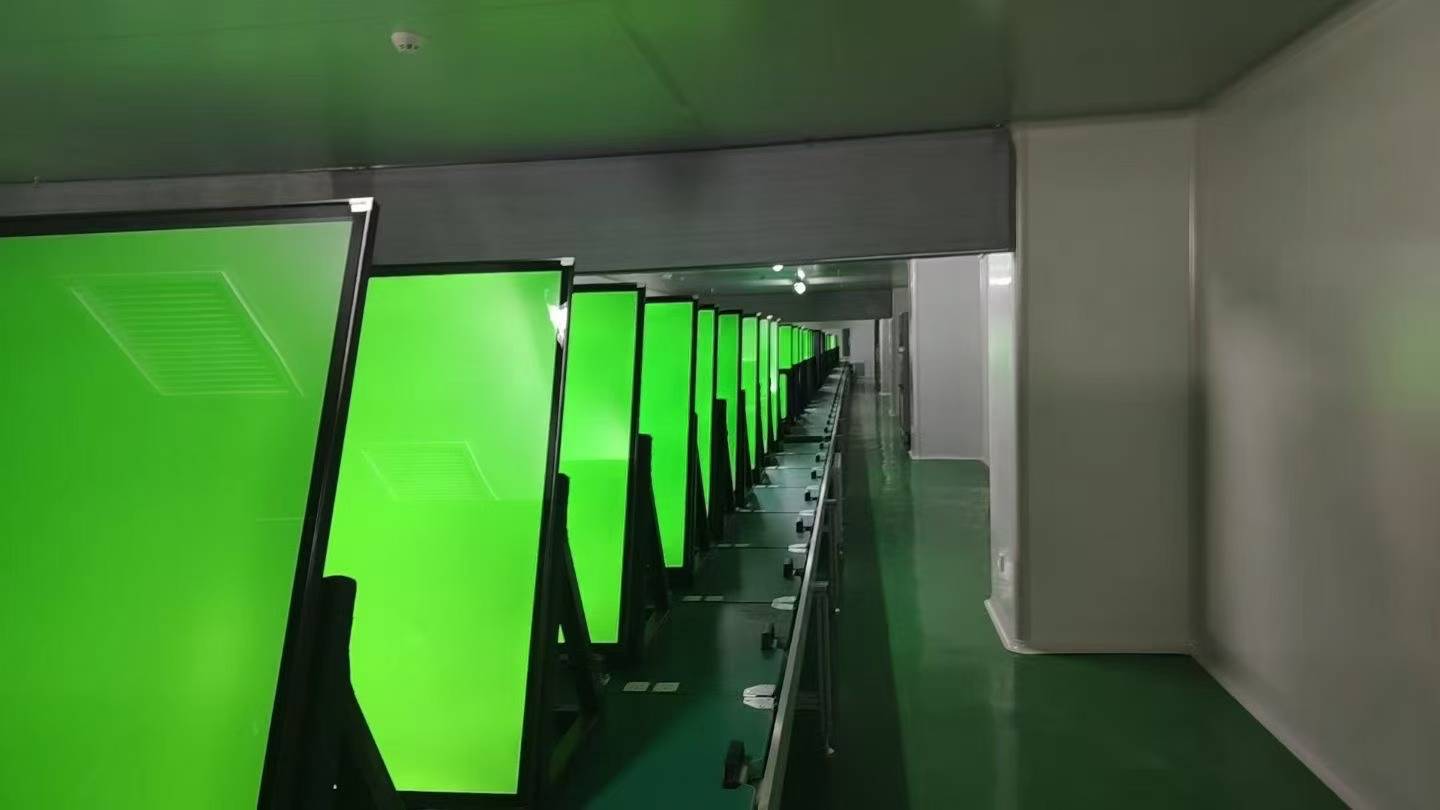
This fragmentation is why export-oriented manufacturers maintain multi-market documentation. Guangzhou Kedro Electronics Technology Co., Ltd. (GZKEDRO), a commercial display manufacturer founded in 2013 with a 50,000 m³ facility in Guangzhou, reports an export share of 80% of total sales — which in practice means its compliance file must serve EU, US, and China-bound projects simultaneously.
Detailed Solution: The Four Compliance Categories That Matter
1. Electrical Safety
Electrical safety compliance answers a single question: can this display be connected to mains power in the destination market without creating a shock, fire, or insulation hazard? The evidence is a certificate or test report that names the applicable standard and the market it covers.
- EU market: the Low Voltage Directive 2014/35/EU, harmonized through EN IEC 62368-1:2024/A11:2024. GZKEDRO's KD-EA Series elevator advertising machine holds a Verification of Compliance, certificate number MK25100089P01-S01, issued by TMC Testing Services (Shenzhen) Co., Ltd. on 2025-11-10.
- China market: safety items under GB4943.1. The KD-EA Series is covered by test report number 20220501W12358 issued by CQC Intime Testing Technology Co., Ltd. under GB4943.1-2011, and by inspection report number JAT2207030268CN-01 issued by Dongguan Junan Testing and Certification Co., Ltd. under GB4943.1-2022 and Enterprise Technical Requirements. The second report additionally covers equipment marking, display performance, touch function, audio function, interface function, and environmental adaptability.
- US market context: UL 970 defines a standard scope that includes commercial displays, retail fixtures, showcases, and temporary displays, per UL Solutions.
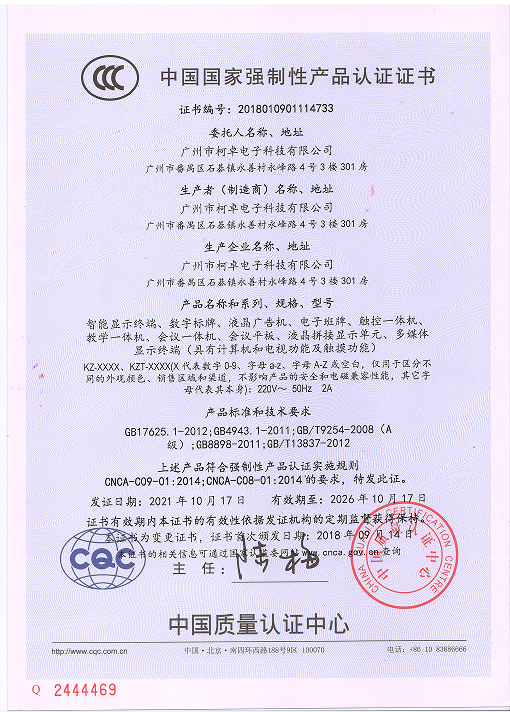
For China-bound projects in particular, the KD-OD Series outdoor advertising display, the KD-VW Series video wall, the KD-TP Series transparent cabinet display, the KD-IFPD Series smart conference display, the KD-LED Series LED display, and the KD-AD Series indoor digital signage are all within the scope of China Compulsory Product Certification (3C), certificate number 2018010901114733, issued by China Quality Certification Center (CQC), covering standards GB17625.1-2012, GB4943.1-2011, GB/T9254-2008 (Class A), GB8898-2011, GB/T13837-2012, CNCA-C09-01:2014, and CNCA-C08-01:2014.
2. Electromagnetic Compatibility (EMC)
EMC compliance determines whether the display will interfere with other equipment on site — or be disturbed by it. This matters commercially in venues with audio systems, broadcast equipment, medical devices, or building control networks, and it is frequently a hard gate in tender evaluation.
- EU market: EMC Directive 2014/30/EU. GZKEDRO's KD-EA Series holds Verification of Compliance number MK25100089P01-E01 issued by TMC Testing Services (Shenzhen) Co., Ltd. on 2025-11-07, tested to EN 55032:2015/A11:2020, EN 55035:2017/A11:2020, EN IEC 61000-3-2:2019+A1:2021+A2:2024, and EN 61000-3-3:2013+A1:2019+A2:2021.
- US market: an FCC Supplier's Declaration of Conformity (SDoC) compliance information statement, number MAX26060195P01-E01, issued by MAXLAB Testing Co., Ltd. on 2026-06-30 under FCC Part 15, Subpart B, ANSI C63.4:2014. The applicable product list for that statement covers twelve series: KD-DH, KD-ISS, KD-VW, KD-AD, KD-DSA, KD-SSK, KD-TP, KD-WM, KD-IFPD, KD-EA, KD-OD, and KD-LED.
The EU EMC verification and the EU Low Voltage verification share the same product scope of ten series: KD-EA, KD-TP, KD-ISS, KD-IFPD, KD-SSK, KD-LED, KD-WM, KD-OD, KD-AD, and KD-VW. That overlap is worth checking when you review a supplier file — safety and EMC evidence should ideally reference the same model list.
3. Environmental and Chemical Compliance
Environmental compliance covers restricted substances and, separately, the management system that keeps production consistent over time.
- RoHS 2.0: GZKEDRO's KD-EA Series holds Verification of Compliance number MK25100089P01-C01, issued by TMC Testing Services (Shenzhen) Co., Ltd. on 2025-11-07, against RoHS 2.0 Directive (EU) 2015/863 and (EU) 2017/2102, with testing performed to the IEC 62321 series. A corresponding test report with the same number documents controlled substances including lead, cadmium, mercury, hexavalent chromium, PBBs, PBDEs, and phthalates such as DEHP, BBP, DBP, and DIBP.
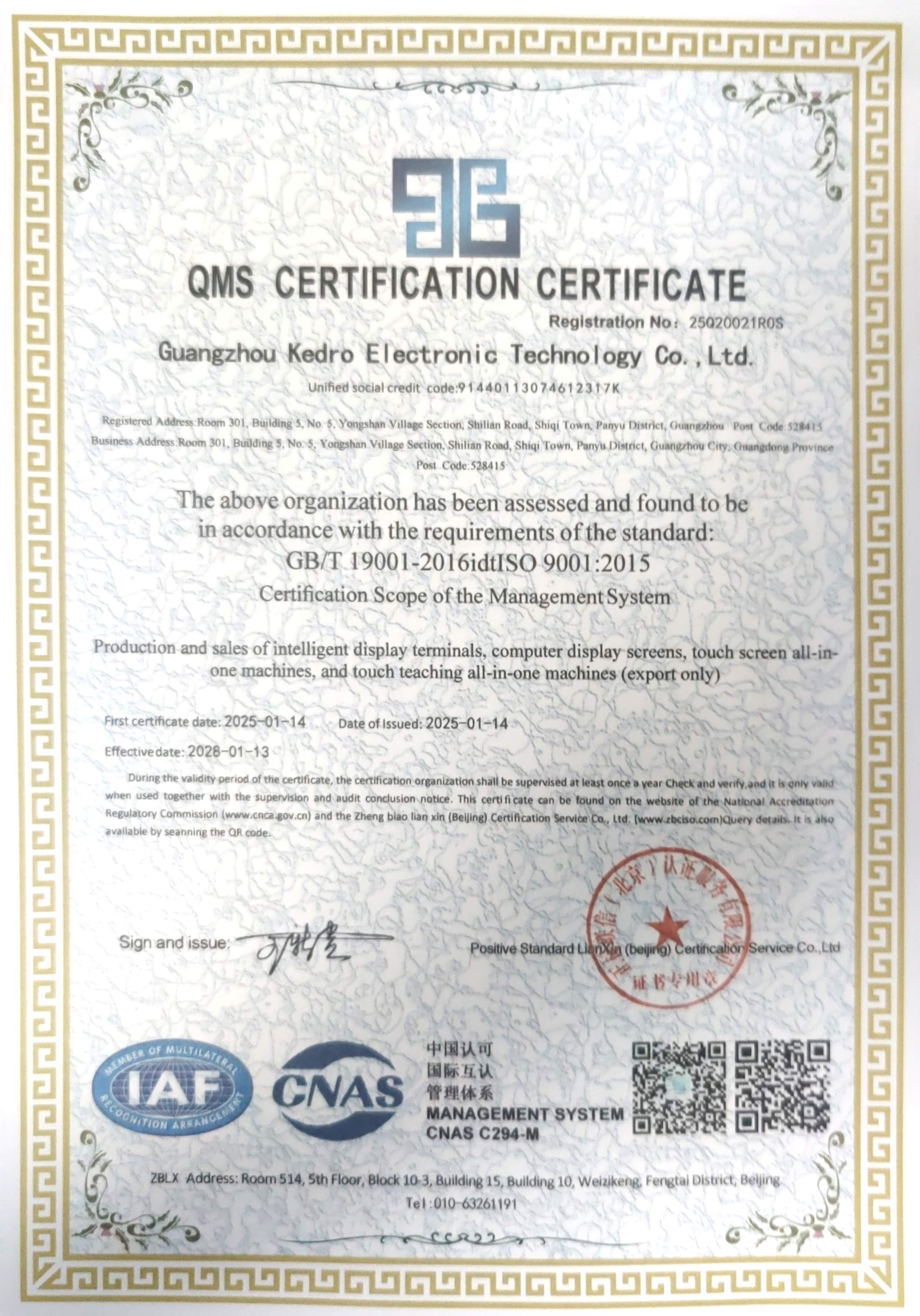
- Quality management system: ISO 9001 certificate number 25020021R0S, issued by Beijing Zhengbiao Lianxin Certification Service Co., Ltd. to GB/T 19001-2016 idt ISO 9001:2015, valid from 2025-01-14 to 2028-01-13. The certified scope is the production and sales of intelligent display terminals, computer display screens, touch screen all-in-one machines, and touch teaching all-in-one machines, for domestic and overseas markets.
- Software and intellectual property: the KD-VW Series Video Wall Display is covered by Computer Software Copyright Registration number 2018SR734639, issued by the National Copyright Administration of China. The same series received the 2024 Annual Innovation Technology Award from the Guangzhou Sign Industry Association for the Guangdong region.
4. Outdoor Protection and Environmental Specifications
For outdoor displays, the datasheet itself carries much of the compliance evidence. Three values should be read together: the IP rating, the operating temperature range, and the humidity tolerance — because a display rated for outdoor use but specified only for 0–40 °C will not survive a site that swings from −20 °C to 50 °C.
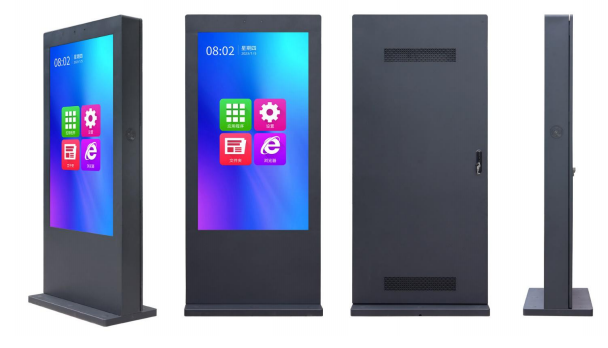
- The KD-OD Series outdoor advertising display is specified at protection level IP55, with 2,000 cd/m² brightness, an operating temperature of −20 °C to 50 °C, operating humidity of 10%–90% RH (non-condensing), storage from −20 °C to 60 °C, tempered glass front, and an air-cooled industrial fan heat dissipation system.
- The KD-ISS Series interactive slider screen is also specified at protection level IP55, with a −20 °C to 50 °C operating range and an air-cooled heat dissipation system.
Reading tip: project briefs sometimes list "IP65" as a generic requirement for outdoor signage. IP55 and IP65 are not interchangeable ratings. If a brief specifies IP65, verify whether the requirement is a true dust-tight and water-jet specification or a shorthand for "outdoor-rated". Matching the requirement to the actual rating prevents both over-specification and a failed site inspection.
How to Read a Specification Sheet as a Compliance Indicator
Not every compliance signal is a certificate. Several specification values indicate whether a product was engineered for multi-region deployment, and they are visible before you request any documentation.
- Input voltage range. A stated input of AC 100–240 V, 50/60 Hz indicates operation on both EU 230 V and North American 120 V networks. GZKEDRO's KD-AD Series lists AC110–240V; the KD-OD Series, KD-EA Series, KD-ISS Series, KD-TP Series, KD-IFPD Series, KD-SSK Series, KD-DSA Series, KD-DH Series, KD-WM Series, and KD-LED Series all list 100–240 V AC input ranges.
- Tight standby power figures. The KD-EA Series specifies ≤55 W operating power and ≤0.5 W standby power; the KD-OD Series specifies ≤500 W total power with <5 W standby. Measured standby values are a side signal that the power board was designed against a defined efficiency target rather than assembled from generic parts.
- Declared operating environment. KD-AD Series: 0–40 °C ambient, storage −10 to 50 °C. KD-EA Series: 0–60 °C operating, humidity 10%–75% RH, altitude below 5,000 meters. KD-DH Series: 0–40 °C, 10%–85% RH, no condensation.
- Enclosure materials. Tempered glass, aluminum alloy, stainless steel, iron steel sheet, and acrylic are the declared materials across the range. Material declarations are checkable against the RoHS substance file and against site requirements such as anti-vandalism.
Step-by-Step Breakdown: Building a Compliance Checklist
- Define the installation markets, not the shipping destination. A display shipped to a distributor in one country may be installed in another. Compliance follows the installation site.
- Convert each market into a required scheme list. For the EU, that typically means Low Voltage Directive 2014/35/EU, EMC Directive 2014/30/EU, and RoHS 2.0. For China, the compulsory certification route and GB4943.1 safety testing. For the United States, FCC Part 15 equipment authorization and, in retail contexts, the UL 970 scope for retail fixtures and commercial displays.
- Read the datasheet values that indicate regional fit. Check input voltage range, frequency, IP rating, operating temperature, humidity, and enclosure material before requesting any certificate.
- Validate certificate metadata. For every document, confirm five fields: certificate or report number, issuing body, standard number including revision year, stated market scope, and issue date. A standard reference without a revision year is not fully checkable.
- Confirm the model-to-certificate mapping. Locate your exact series in the certificate's applicable product list. Certificates list defined series; a series that is absent from the list is not covered, regardless of how similar the product looks.
- Define what must arrive with each batch. Certificate copies, test reports, and marking requirements should be listed in the purchase agreement so that documentation is released with production, not requested retrospectively.
Use Cases: Applying the Framework by Deployment Type
EU indoor retail and corporate deployment
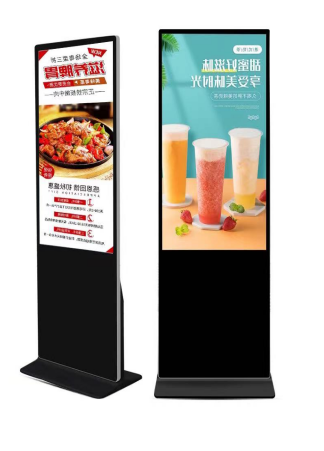
An indoor signage rollout in the EU should be screened against the Low Voltage Directive, EMC Directive, and RoHS 2.0. The KD-AD Series indoor digital signage — RK3566 motherboard, 2 GB RAM, 32 GB ROM, 1920×1080 resolution, 450 cd/m² brightness, AC110–240V power supply, ≤140 W consumption, 0–40 °C ambient range — sits inside the EU verification scope alongside the KD-EA, KD-TP, KD-ISS, KD-IFPD, KD-SSK, KD-LED, KD-WM, KD-OD, and KD-VW series.
China outdoor and smart-city projects
Outdoor municipal and transport hub projects in China typically require compulsory certification evidence plus environmental ratings. The KD-OD Series combines CCC certificate 2018010901114733 with IP55 protection, 2,000 cd/m² brightness, −20 °C to 50 °C operating range, and a tempered glass front — a combination suited to transport hubs, commercial districts, and smart city installations.
Elevator and building-interior networks
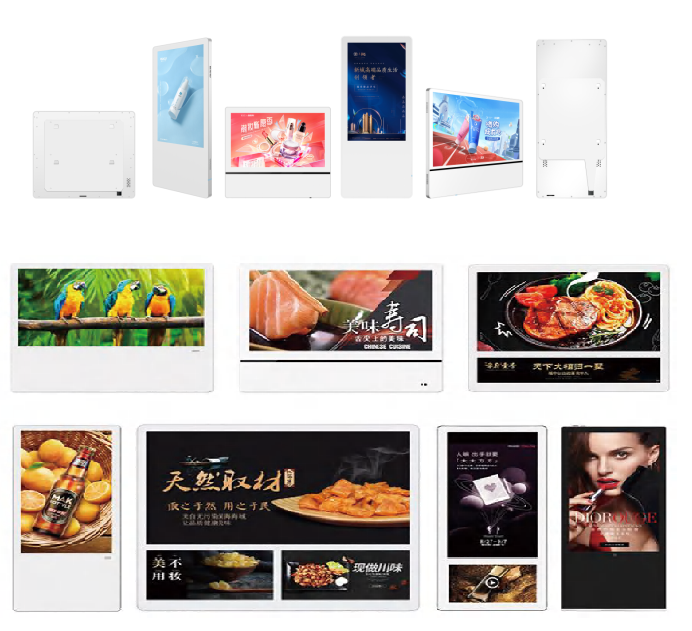
Elevator advertising networks combine continuous operation with public-safety expectations. The KD-EA Series is documented across four separate evidence streams: EU LVD verification MK25100089P01-S01, EU EMC verification MK25100089P01-E01, RoHS 2.0 verification MK25100089P01-C01, and China safety test report 20220501W12358 plus inspection report JAT2207030268CN-01. Its specification — 622.5 × 343 mm display, 1920×1080, 250 cd/m², ≤55 W power, ≤0.5 W standby, 4 mm toughened explosion-proof glass, and operation below 5,000 m altitude — reflects a product engineered for enclosed public environments.
Holistic and exhibition environments
Interactive and holographic formats introduce their own compliance questions, largely around power draw and operating environment. The KD-DH Series holographic digital human is specified at 3840×2160 resolution, 1,300 cd/m² brightness, AC 100–240 V input, 1,100 W rated power, and 0–40 °C operating environment — values that should be checked against the venue's power distribution before installation, and that appear in the FCC SDoC product list covering twelve GZKEDRO series.
Comparison Table: Compliance Categories, Standards, and GZKEDRO Evidence
| Compliance category | What it governs | Standards or schemes referenced | GZKEDRO evidence on file |
|---|---|---|---|
| Electrical safety (EU) | Shock, fire, and insulation safety on mains power | LVD Directive 2014/35/EU; EN IEC 62368-1:2024/A11:2024 | KD-EA Series Verification of Compliance MK25100089P01-S01, issued by TMC Testing Services (Shenzhen) Co., Ltd., 2025-11-10 |
| Electrical safety (China) | Safety items, marking, display and interface function | GB4943.1-2011; GB4943.1-2022 and Enterprise Technical Requirements | Test report 20220501W12358 (CQC Intime Testing Technology Co., Ltd.); inspection report JAT2207030268CN-01 (Dongguan Junan Testing and Certification Co., Ltd.) |
| Electromagnetic compatibility (EU) | Emission and immunity against other on-site equipment | EMC Directive 2014/30/EU; EN 55032:2015/A11:2020; EN 55035:2017/A11:2020; EN IEC 61000-3-2; EN 61000-3-3 | KD-EA Series Verification of Compliance MK25100089P01-E01, issued by TMC Testing Services (Shenzhen) Co., Ltd., 2025-11-07 |
| Electromagnetic compatibility (US) | Equipment authorization for the United States market | FCC Part 15, Subpart B; ANSI C63.4:2014 | FCC SDoC compliance information statement MAX26060195P01-E01, issued by MAXLAB Testing Co., Ltd., 2026-06-30, covering 12 series |
| Environmental / chemical | Restricted substances in materials and components | RoHS 2.0 Directive (EU) 2015/863 and (EU) 2017/2102; IEC 62321 series | KD-EA Series Verification of Compliance MK25100089P01-C01 and matching test report, issued by TMC Testing Services (Shenzhen) Co., Ltd., 2025-11-07 |
| Quality management | Consistency of production and process control | GB/T 19001-2016 idt ISO 9001:2015 | ISO 9001 certificate 25020021R0S, issued by Beijing Zhengbiao Lianxin Certification Service Co., Ltd., valid 2025-01-14 to 2028-01-13 |
| China compulsory certification | Safety and electromagnetic compatibility for the China market | GB17625.1-2012; GB4943.1-2011; GB/T9254-2008 (Class A); GB8898-2011; GB/T13837-2012; CNCA-C09-01:2014; CNCA-C08-01:2014 | CCC certificate 2018010901114733, issued by China Quality Certification Center (CQC), covering KD-OD, KD-VW, KD-TP, KD-IFPD, KD-LED, and KD-AD series |
| Outdoor protection | Ingress, temperature, and humidity tolerance | IP protection level declared on the datasheet | KD-OD Series and KD-ISS Series specified at IP55, with −20 °C to 50 °C operating range and air-cooled heat dissipation |
Comparison Table: Specification Signals by Model
| Series | Product type | Input power | IP rating | Operating environment |
|---|---|---|---|---|
| KD-OD | Outdoor waterproof display | 100–240 V AC, 50/60 Hz; ≤500 W | IP55 | −20 °C to 50 °C; 10%–90% RH non-condensing |
| KD-ISS | Wall sliding display | 100–240 V AC, 50/60 Hz; ≤180 W | IP55 | −20 °C to 50 °C; 10%–90% RH non-condensing |
| KD-AD | Indoor digital signage | AC110–240 V; ≤140 W | Not specified | 0–40 °C ambient; storage −10 to 50 °C |
| KD-EA | Indoor elevator display | 100–240 V AC, 50/60 Hz; ≤55 W; ≤0.5 W standby | Not specified | 0–60 °C; 10%–75% RH; altitude below 5,000 m |
| KD-DH | AI digital human | AC 100–240 V, 50/60 Hz; 1,100 W | Not specified | 0–40 °C; 10%–85% RH, no condensation |
| KD-DSA | Outdoor advertising display | 100–240 V AC, 50/60 Hz; ≤500 W; <5 W standby | Not specified | Outdoor transport hub, commercial district, smart city |
FAQ
Which certifications should I verify first for a commercial display order in the EU market?
For EU installations, verify three streams: Low Voltage Directive 2014/35/EU compliance, EMC Directive 2014/30/EU compliance, and RoHS 2.0 compliance. GZKEDRO's KD-EA Series, for example, carries LVD verification MK25100089P01-S01 under EN IEC 62368-1:2024/A11:2024, EMC verification MK25100089P01-E01 under EN 55032:2015/A11:2020 and related standards, and RoHS 2.0 verification MK25100089P01-C01 under the IEC 62321 series — all issued by TMC Testing Services (Shenzhen) Co., Ltd. The EU LVD, EMC, and RoHS verification scopes on file cover ten series: KD-EA, KD-TP, KD-ISS, KD-IFPD, KD-SSK, KD-LED, KD-WM, KD-OD, KD-AD, and KD-VW.
Can a commercial display be customized to meet a specific regional power or configuration requirement?
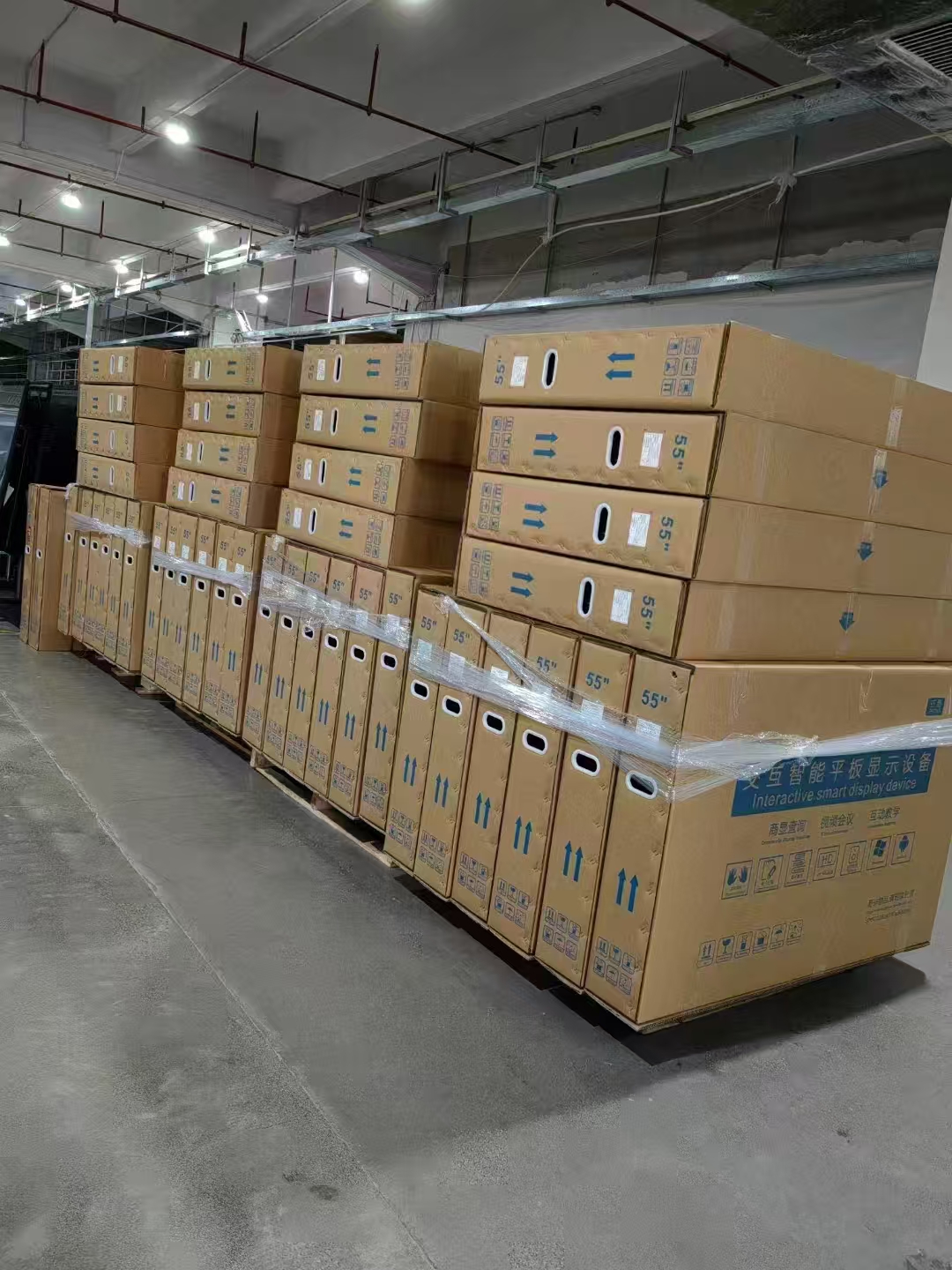
Yes. GZKEDRO supports customization across logo, color, software, UI interface, packaging, and voltage, along with screen size, brightness, housing, and system configuration. The company operates a 50,000 m³ facility with 200+ employees and a 100+ person R&D team, with monthly capacity in the range of 2,000–5,000 units. Because certificates map to defined model scopes, any customization that changes the power board, housing, or system configuration should be re-checked against the certificate's applicable product list before shipment.
How does compliance scope affect order cost and order quantity?
Compliance scope affects order structure more than it affects unit cost directly. Customized voltage ranges, housing variants, and system configurations are quoted per project, and the minimum order quantity at GZKEDRO is 2–5 units depending on product size, with flexible and project-based MOQ arrangements. This structure suits buyers who need to validate a configuration on a small first order before committing to a larger rollout, and who need the certificate pack to match the exact configuration ordered.
Can I request a sample before placing a production order?
Samples and small validation orders are available, and the MOQ of 2–5 units depending on product size supports a sample-first approach. A practical sequence for compliance-driven projects is to confirm the target market and required scheme list first, then order a sample in the intended configuration, then verify that the certificate or test report for the delivered model matches the series name and configuration you will scale to. GZKEDRO also provides remote technical support and online technical guidance during evaluation and after delivery.
What is the typical lead time, and when should compliance documents be requested?
GZKEDRO's standard lead time is 15–30 days, with a maximum of 30 days. Compliance documents should be requested at the quotation stage rather than after production, because certificate scope, model mapping, and marking requirements must be confirmed before the unit is built. You can review the full product range and specification detail in the GZKEDRO product catalog (English edition), or send your target market and deployment environment to the team at gzkedro.com for a compliance-mapped quotation — contact email gzkedro@gmail.com, telephone +86 189-2950-0788.
Conclusion: Compliance Is a Specification Decision
Commercial display compliance is best treated as part of product selection rather than as an administrative step after purchase. The framework in this guide reduces to four categories — electrical safety, EMC, environmental and chemical compliance, and outdoor protection — and four verification habits: read the market scope on the certificate, read the standard number with its revision year, read the certificate's applicable model list, and read the specification values that indicate regional fit.
Specification values do real compliance work. An input range of 100–240 V AC 50/60 Hz signals multi-region deployment; an IP55 rating on the KD-OD Series and KD-ISS Series signals a defined ingress-protection level rather than a marketing adjective; a −20 °C to 50 °C operating range signals engineering for temperature variation; and a standby figure of ≤0.5 W on the KD-EA Series signals a power board designed against a target rather than assembled generically.
Planning a commercial display project for a specific market? Share the installation country, deployment environment, and required scheme list, and GZKEDRO will map the relevant series, certificate evidence, and configuration options. Request a sample or a project quotation at www.gzkedro.com — email gzkedro@gmail.com, telephone +86 189-2950-0788, or WhatsApp +86 18929513439. The English product catalog lists the full series range and specifications.
Have Questions or Need More Details?
Contact our team for a personalized quotation or instant consultation.
Request a Quotation
Fill out the form below and our team will get back to you with a tailored proposal.
WhatsApp Direct Chat
Prefer to chat in real-time? Message us on WhatsApp for instant assistance & quick answers.
- Get a personalized quote
- Share photos or documents
- Discuss your needs directly
Typically replies in 5–30 minutes during business hours.