Outdoor Advertising Display vs. LED Display: 2026 Comparison Guide
Outdoor Advertising Display vs. LED Display: 2026 Comparison Guide
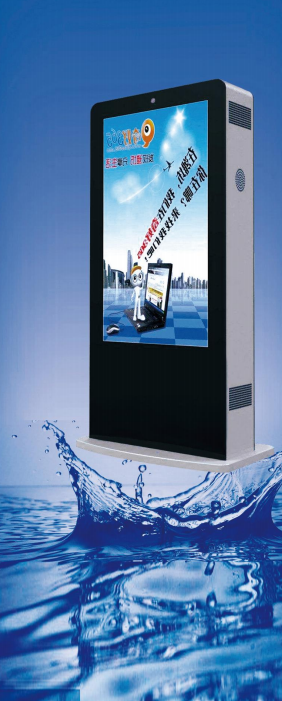
An outdoor advertising display and an outdoor LED screen can sit on the same street corner, run the same campaign and appear in the same procurement document, yet they are two different technologies with different brightness logic, different resolution structures, different enclosure requirements and different maintenance profiles. This 2026 comparison guide places the GZKEDRO KD-OD Series Outdoor Advertising Display and the GZKEDRO KD-LED Series Outdoor LED Screen side by side, using published manufacturer specifications, and explains how buyers at the awareness and research stage should decide which of the two fits a specific outdoor advertising project.
The comparison is deliberately specification-first rather than ranking-first. Instead of declaring a winner, it maps each documented parameter — brightness, pixel pitch, protection level, enclosure material, power, operating temperature and intended application — to the project conditions that make that parameter matter. Where a value is not published in the available specification, this guide says so rather than filling the gap with an estimate.
Problem Definition: "Outdoor Display" Is a Category, Not a Technology
Buyers who search for an outdoor advertising display, an outdoor LED display for billboards or a waterproof outdoor screen usually receive quotes that are not directly comparable. One supplier may quote a sealed LCD advertising unit with a fixed native resolution; another may quote a modular LED screen whose resolution depends on how many modules are assembled into the final surface. Both may describe brightness in cd/m², but one figure is measured for a complete unit while the other is measured per square metre of what may become a much larger wall.
The GZKEDRO catalogue illustrates that gap precisely. The KD-OD Series is specified at 2,000 cd/m² with a native 1080 × 1920 resolution, a 0.630 × 0.630 mm pixel pitch and IP55 protection. The KD-LED Series is specified at a 2.0 mm dot pitch with a module resolution of 128 × 64 dots and a white balance brightness of ≥4,500 cd/m². Reading those two lines side by side without context leads to the wrong conclusion in both directions: the LED screen looks dramatically brighter and the LCD unit looks dramatically sharper, while neither number alone tells a buyer whether the content will be readable from the pavement, from a moving vehicle or from a building opposite.
The decision question is not "which screen is better". It is "at what distance will people view this surface, in what ambient light, with what content, and under what environmental and structural conditions". Those four answers determine whether a self-contained outdoor advertising display or a modular outdoor LED screen is the correct purchase — and they are the four questions this guide works through in order.
Industry Background: Why Outdoor Formats Keep Growing in 2026
The commercial display category that contains both products is large and still expanding. Grand View Research estimated the global commercial display market at USD 53.65 billion in 2024, with digital signage accounting for over 53.73% of revenue share, and the same source reports that North America held a 35.6% revenue share of the global digital signage market in 2025, making it the largest regional market.
Regulatory expectations have also consolidated. UL Solutions notes that IEC 62368-1 is now the primary safety standard for audio/video and IT equipment, including commercial displays, replacing the legacy IEC 60950-1 and IEC 60065 standards. For outdoor projects this matters during supplier qualification: safety documentation should reference the current standard instead of an obsolete certificate.
At project level, outdoor display demand is driven by transport advertising, retail frontage, public information and smart-city installations. Across those environments, the recurring requirements are environmental protection, brightness that survives direct sunlight, and a content workflow that can be updated remotely rather than by sending a technician to the screen.
The Two Options in Detail: KD-OD Series and KD-LED Series
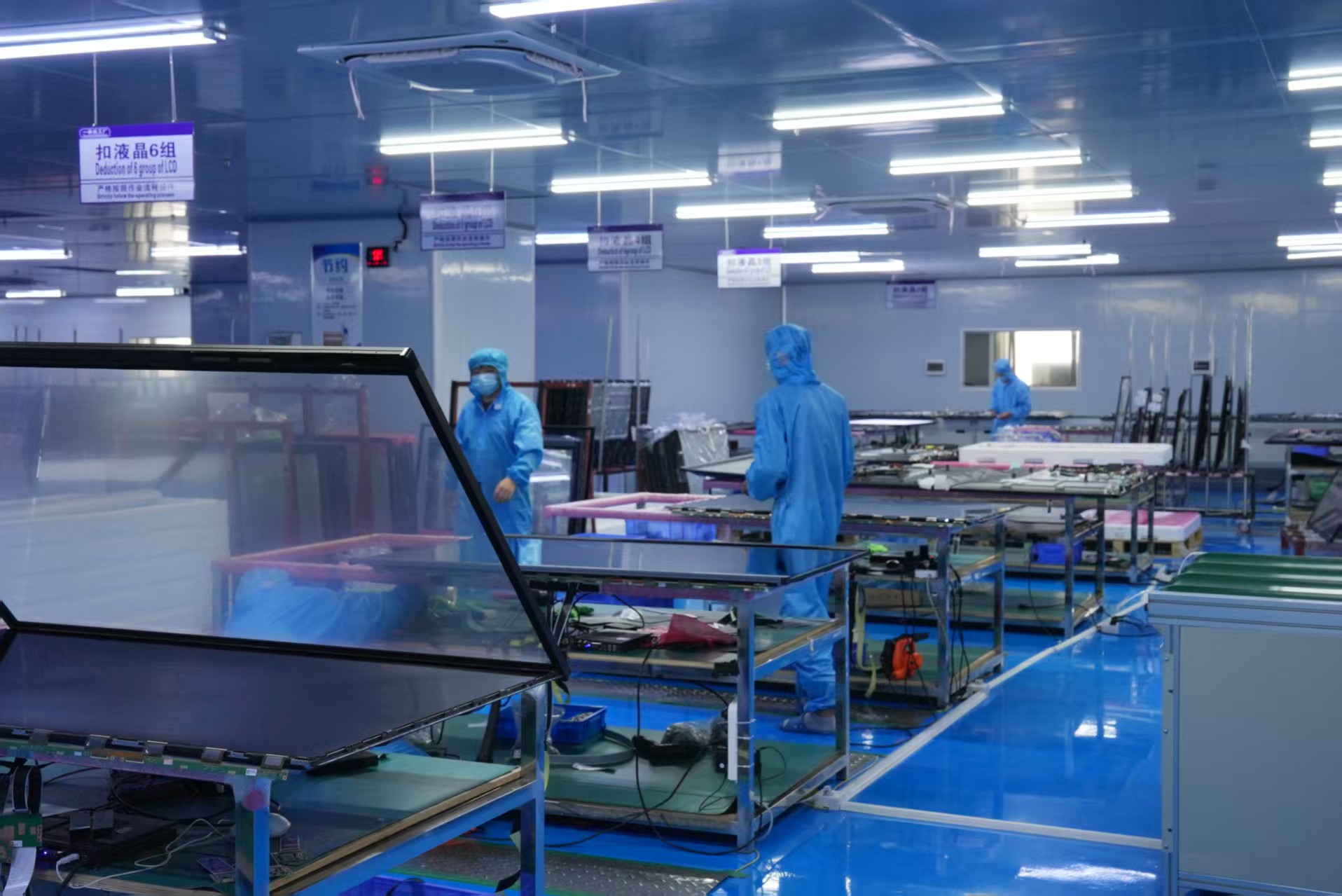
GZKEDRO is the brand of Guangzhou Kedro Electronics Technology Co., Ltd., a commercial display manufacturer established in 2013 with research and development centers in Guangzhou and Shenzhen, a manufacturing facility covering 50,000 m³, approximately 200 employees and an R&D team of 100 professionals. Export business accounts for 80% of total sales, serving global markets, and the company reports an annual production capacity of over 1,000 commercial display units across small, medium and large commercial display projects. Product certification includes CE, FCC, RoHS and ISO 9001.
KD-OD Series: Outdoor Advertising Display (Outdoor Waterproof Display)
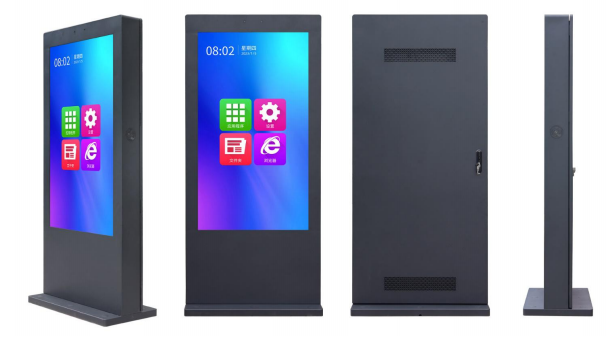
The KD-OD Series is a self-contained, portrait-format outdoor unit rather than a modular wall. Its documented specification is:
- Display: native resolution 1080 × 1920 (portrait), pixel pitch 0.630 × 0.630 mm, display size 680.4 × 1209.6 mm, D-LED backlight
- Optical performance: 2,000 cd/m² brightness, 3000:1 contrast ratio, 178°/178° viewing angle, 6 ms response time, 8-bit / 16.7M colour
- Protection and materials: IP55 protection level, explosion-proof tempered glass front, iron steel sheet enclosure
- Thermal management: air-cooled heat dissipation system with industrial fans; operating temperature −20 °C to 50 °C; storage temperature −20 °C to 60 °C; operating humidity 10%–90% RH non-condensing; storage humidity 5%–95% RH non-condensing
- Control platform: RK3288 quad-core Cortex-A17 CPU at 1.8 GHz with Mali-T764 GPU, 2 GB RAM, 16 GB storage; RJ45 10M/100M adaptive Ethernet, WiFi 802.11b/g/n, Bluetooth 4.0
- Interfaces: HDMI OUT, LAN, USB, TF card slot and SIM card slot
- Power: 100–240 V AC, 50/60 Hz input; ≤500 W total power; <5 W standby
- Documented applications: transport hubs, commercial districts and smart city projects
For a buyer, the practical reading is that the KD-OD Series is a fixed-format purchase: the pixel structure, the enclosure rating and the operating window are all defined before the project begins. The 0.630 mm pixel pitch and native portrait resolution suit street-level and medium-distance viewing, where the audience stands or walks close enough to read fine detail. IP55 and the −20 °C to 50 °C operating range define the climate band in which the enclosure is specified, and the combination of RJ45 Ethernet, WiFi, Bluetooth and a SIM card slot means advertising content can be delivered over a fixed connection or a mobile network. Standby consumption below 5 W is also relevant for installations that are expected to run continuously.
KD-LED Series: Outdoor LED Screen
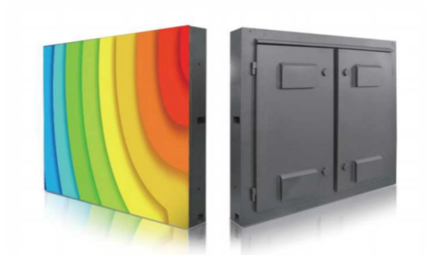
The KD-LED Series is a modular LED screen intended for large outdoor surfaces. Its documented specification is:
- Pixel structure: 2.0 mm dot pitch, pixel composition 1R1G1B, surface-mount 3-in-1 Ruisheng LED package
- Module data: module resolution 128 × 64 dots, module size 320 × 160 × 17 mm; 1/16 scan with constant current drive
- Optical performance: white balance brightness ≥4,500 cd/m², colour temperature 3000–18000K, brightness uniformity ≥97%, colour uniformity ±0.003Cx, Cy
- Motion and density: refresh rate ≥3840 Hz, frame rate 60 Hz, pixel density 160,000 dots/m²
- Viewing angles: horizontal ≥160°, vertical ≥140°
- Enclosure materials: metal sheet and aluminium alloy
- Power: average 235 W/m², maximum 469 W/m²; leakage current to ground ≤3.5 mA/m²
- Documented applications: outdoor media, smart city and outdoor billboards
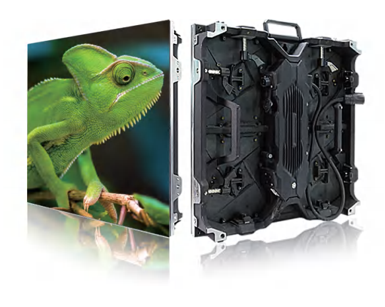
Two characteristics separate this screen from the KD-OD Series in practice. First, its brightness is published as white balance brightness of ≥4,500 cd/m², which is specified for surfaces that must hold up in high ambient light at longer viewing distances. Second, its resolution is described at module level rather than as one native figure, because an LED screen is assembled from modules — the final surface size and pixel count are configuration decisions rather than fixed product attributes. The ≥3840 Hz refresh rate is typically relevant where the screen will be filmed or appear on camera in broadcast coverage.
Specification gap to close before quoting. The KD-LED Series specification sheet lists module, optical and electrical parameters, but it does not publish an IP protection rating, an operating temperature range, a contrast ratio or a control platform. Buyers whose project brief requires a defined waterproofing level or a defined temperature band should request those values for the exact configuration being quoted rather than assuming they match the sealed LCD unit.
Step-by-Step: Choosing Between the Two for a Specific Project
Step 1 — Fix the viewing distance before anything else
Viewing distance decides how much pixel structure matters. The KD-OD Series is specified with a 0.630 × 0.630 mm pixel pitch on a 680.4 × 1209.6 mm display, which is designed for audiences positioned close to the surface. The KD-LED Series is specified at a 2.0 mm dot pitch, a structure normally used where the audience views the screen from a greater distance, such as a billboard seen across a road or junction. Write this number down before comparing quotations.
Step 2 — Match brightness to the ambient light on that surface
The KD-OD Series is documented at 2,000 cd/m²; the KD-LED Series is documented at ≥4,500 cd/m² white balance brightness. A surface that faces direct sunlight for part of the day needs more brightness headroom than a shaded or partly sheltered position, while an over-bright screen wastes energy in a dim environment. Compare brightness against the light conditions at the actual installation point, not against the brightest possible site.
Step 3 — Match the pixel structure to the content format
A native 1080 × 1920 portrait resolution, as specified for the KD-OD Series, means content should be authored for vertical playback. A module-based LED screen such as the KD-LED Series is configured from 320 × 160 × 17 mm modules with a 128 × 64 dot module resolution, so the content specification follows the size of the wall being built. Content type — single-message advertising versus full-motion video — should be decided before the surface size is fixed.
Step 4 — Confirm the environmental envelope
This is where the two specifications differ most clearly. The KD-OD Series publishes IP55 protection with a tempered glass front and iron steel sheet enclosure, operates from −20 °C to 50 °C, stores from −20 °C to 60 °C, and tolerates 10%–90% RH non-condensing during operation. The KD-LED Series publishes metal sheet and aluminium alloy as enclosure materials, with no IP rating or temperature window in the available specification. Any project with a defined weather-resistance requirement should have that value confirmed in writing for the exact LED configuration.
Step 5 — Check power, mounting and structural load
The KD-OD Series is quoted at ≤500 W total power per unit with a 100–240 V AC, 50/60 Hz input and standby below 5 W, so the electrical load scales with the number of units installed. The KD-LED Series is quoted at 235 W/m² average and 469 W/m² maximum, so both the electrical supply and the mounting structure scale with the area of the wall. These two cost models behave differently: one grows by unit count, the other by square metre.
Step 6 — Confirm the content and connectivity workflow
The KD-OD Series documents its control platform: RK3288 quad-core Cortex-A17 at 1.8 GHz, Mali-T764 GPU, 2 GB RAM, 16 GB storage, RJ45 10M/100M adaptive Ethernet, WiFi 802.11b/g/n, Bluetooth 4.0, plus HDMI OUT, LAN, USB, TF card and SIM card interfaces. That level of detail matters for remote advertising updates. Outdoor deployments typically also require supporting equipment such as a media player and CMS software, so confirm who supplies the playback layer for the LED configuration if the control platform is not yet documented.
Step 7 — Verify documentation before the purchase order
Before committing, check that the protection level, operating temperature, materials and control details you are relying on appear in the supplier's written documentation for the exact model and configuration. Where safety documentation is requested, reference IEC 62368-1, which UL Solutions identifies as the current primary safety standard for AV and IT equipment, replacing IEC 60950-1 and IEC 60065.
Use Cases: Which Option Fits Which Outdoor Scenario
Both series are documented for smart city environments, which makes the overlap look larger than it is. The differentiators are surface size, viewing distance and enclosure requirements.
- Street-level advertising on transport corridors and hubs. The KD-OD Series lists transport hubs as a documented application, with a portrait 1080 × 1920 format, IP55 protection and a −20 °C to 50 °C operating range for continuous roadside operation.
- Commercial districts and pedestrian areas. The KD-OD Series lists commercial districts as a documented application; its 0.630 mm pixel pitch suits audiences standing or walking close to the screen.
- Public information and smart city points. Both series list smart city applications — the KD-OD Series as "smart city projects" and the KD-LED Series as "smart city" — so the deciding factor is the required surface size and viewing distance rather than the category itself.
- Large-format billboards and outdoor media walls. The KD-LED Series lists outdoor media and outdoor billboards with a ≥4,500 cd/m² white balance brightness, ≥160° horizontal viewing angle and 160,000 dots/m² pixel density, which is the correct structure for surfaces viewed from a distance.
- Mixed projects with several formats. A project that needs both a portrait street unit and a large LED surface can be sourced as one package from GZKEDRO, since both series are part of the same commercial display line-up.
Comparison Table: KD-OD Series vs. KD-LED Series at a Glance
| Decision factor | KD-OD Series (Outdoor Advertising Display) | KD-LED Series (Outdoor LED Screen) |
|---|---|---|
| Product category | Outdoor Waterproof Display / Outdoor Advertising Display | Outdoor LED Screen |
| Display technology | LCD with D-LED backlight | Surface-mount 3-in-1 Ruisheng LED, 1R1G1B pixel composition |
| Native resolution | 1080 × 1920 | Module resolution 128 × 64 dots; surface assembled from modules |
| Pixel / dot pitch | 0.630 × 0.630 mm | 2.0 mm |
| Size data | Display size 680.4 × 1209.6 mm | Module size 320 × 160 × 17 mm; overall wall configured from modules |
| Brightness | 2,000 cd/m² | White balance brightness ≥4,500 cd/m² |
| Contrast ratio | 3000:1 | Not published in the available specification |
| Viewing angle | 178° / 178° | Horizontal ≥160°, vertical ≥140° |
| Refresh / frame rate | Not published (response time 6 ms) | Refresh rate ≥3840 Hz, frame rate 60 Hz |
| Protection level | IP55 | Not published in the available specification |
| Enclosure materials | Tempered glass, iron steel sheet | Metal sheet, aluminium alloy |
| Operating temperature | −20 °C to 50 °C | Not published in the available specification |
| Power | 100–240 V AC, 50/60 Hz; ≤500 W total per unit; <5 W standby | Average 235 W/m²; maximum 469 W/m² |
| Control and connectivity | RK3288 quad-core Cortex-A17 1.8 GHz, Mali-T764, 2 GB RAM, 16 GB storage; RJ45 10M/100M adaptive, WiFi 802.11b/g/n, Bluetooth 4.0; HDMI OUT, LAN, USB, TF card, SIM card | Not published in the available specification |
| Documented applications | Transport hub, commercial district, smart city projects | Outdoor media, smart city, outdoor billboards |
FAQ
Which of the two is specified as a waterproof outdoor display, and what else should be verified for a billboard or smart city project?
The KD-OD Series is the one documented with a protection level: IP55, with an explosion-proof tempered glass front and an iron steel sheet enclosure, operating from −20 °C to 50 °C and storing from −20 °C to 60 °C. The KD-LED Series specification lists metal sheet and aluminium alloy as enclosure materials but does not publish an IP rating or an operating temperature window. For any outdoor project, match the protection level and temperature range required by the brief against the manufacturer's written documentation for the exact configuration, and where safety evidence is requested, reference IEC 62368-1 — the primary safety standard for AV and IT equipment identified by UL Solutions, which replaced IEC 60950-1 and IEC 60065.
Can one supplier provide both an outdoor LED screen for billboards and a waterproof outdoor advertising display?
Yes. GZKEDRO, the brand of Guangzhou Kedro Electronics Technology Co., Ltd., lists both the KD-OD Series Outdoor Advertising Display and the KD-LED Series Outdoor LED Screen in the same commercial display line-up, alongside indoor digital signage, transparent cabinet displays, LCD video walls, self-service kiosks, smart conference displays and holographic digital human units. The company was established in 2013, operates research and development centers in Guangzhou and Shenzhen with an R&D team of 100 professionals, runs a manufacturing facility covering 50,000 m³ with approximately 200 employees, reports annual production capacity of over 1,000 commercial display units, and states that exports account for 80% of total sales. OEM and ODM services are available for commercial displays.
What drives the cost difference between the KD-OD Series and the KD-LED Series?
Without published pricing, the cost drivers are structural rather than promotional. The KD-OD Series is a complete unit: a fixed 680.4 × 1209.6 mm display, a tempered glass and iron steel sheet enclosure, and a ≤500 W power envelope, so cost scales with the number of units. The KD-LED Series scales with surface area: brightness, power and structure are quoted per square metre (average 235 W/m², maximum 469 W/m²), and the wall is assembled from 320 × 160 × 17 mm modules, so a larger surface means more modules, more power supply capacity and more mounting structure. Brightness requirement, enclosure materials and the number of units or square metres to be installed are therefore the three parameters that move the budget most.
How can buyers validate either display before committing to a project order?
Validation starts with specification review — protection level, brightness, pixel or dot pitch, operating temperature, materials and control platform — against the actual site conditions: viewing distance, ambient light, surface size, climate and structural constraints. Once those conditions are defined, the fastest route is to request a sample or a formal quotation for the specific configuration from the manufacturer, and to confirm which series the documentation supports. GZKEDRO can be reached at gzkedro@gmail.com or +86 189-2950-0788, and the full GZKEDRO product catalogue can be downloaded for review before the enquiry.
Conclusion: A Short Decision Rule
If the surface will be viewed from close range, needs a defined IP55 enclosure, must operate from −20 °C to 50 °C and follows a fixed portrait format, the KD-OD Series Outdoor Advertising Display is the documented fit. If the requirement is a large outdoor media surface viewed from a distance, where brightness of ≥4,500 cd/m² and an area-based power model are acceptable, the KD-LED Series Outdoor LED Screen is the documented fit. If a project needs both, a single manufacturer can supply both formats, which simplifies documentation and after-sales responsibility.
Next Step: Confirm Which Outdoor Format Fits Your Project
Send the viewing distance, ambient light conditions, surface size, protection level and temperature range required for your site, and GZKEDRO will confirm whether the KD-OD Series, the KD-LED Series — or a combination of both — matches the brief, and will prepare a quotation for the exact configuration.
Email: gzkedro@gmail.com | Tel / WhatsApp: +86 189-2950-0788 | Website: www.gzkedro.com
Download: Kedro Product Catalog (English Edition)
Address: Unit 103, Building 3, No. 5, Yongshan Village, Shiqi Town, Panyu District, Guangzhou, China.
Have Questions or Need More Details?
Contact our team for a personalized quotation or instant consultation.
Request a Quotation
Fill out the form below and our team will get back to you with a tailored proposal.
WhatsApp Direct Chat
Prefer to chat in real-time? Message us on WhatsApp for instant assistance & quick answers.
- Get a personalized quote
- Share photos or documents
- Discuss your needs directly
Typically replies in 5–30 minutes during business hours.