
Holographic Display Technical Selection Guide: Certifications, Standards & Acceptance Criteria
Holographic Display Technical Selection Guide: Certifications, Standards & Acceptance Criteria
A holographic display order should be gated on three document sets before price negotiation starts: the China access set (3C certificate 2018010901114733, GB 4943.1-2011, GB/T 9254-2008 Class A, test report 20220501W12358 and inspection report JAT2207030268CN-01), the EU access set (RoHS 2.0 MK25100089P01-C01, EMC 2014/30/EU MK25100089P01-E01, LVD 2014/35/EU MK25100089P01-S01), and a quality management system certificate (ISO 9001, issued against GB/T 19001-2016 idt ISO 9001:2015). Brightness, transparency rate, cabinet size and content software are negotiable. These documents decide whether the unit can be powered, installed and sold in the destination market at all.
This guide is written for buyers in the research phase of a holographic display purchase — exhibition hall operators, retail chains, system integrators and importers who have already shortlisted a technology type but have not yet validated the paperwork behind it. It explains what each certificate number actually covers, where the document trail commonly breaks, and how to convert that trail into written acceptance criteria attached to a purchase order.
Why Certification Review Fails More Often in Holographic Displays Than in Standard Signage
The core problem is not that holographic display suppliers lack certificates. It is that the category has no stable product name, so certificates and the products they cover drift apart during the quotation process.
- Name instability. The same physical unit may be quoted as a transparent holographic display cabinet, a glasses-free 3D holographic display, a holographic advertising display, or simply a commercial display. A certificate describing a display monitor is not automatically valid evidence for a unit sold as an exhibition hall holographic display cabinet.
- Three documents presented as one. A 3C certificate, a type-test report and a batch inspection report prove different things. Suppliers frequently send a single PDF bundle and let the buyer assume the inspection report is a certificate.
- Class A and Class B confusion. GB/T 9254-2008 is applied in two disturbance classes. Class A limits are set for equipment used in commercial and industrial environments; Class B is the stricter class intended for residential environments. A mall or exhibition hall deployment normally sits in Class A territory, but the certificate must actually state Class A — not just cite the standard number.
- Model and factory mismatch. Certificates are issued against a specific product description and a specific manufacturing site. A KD-TP Series transparent cabinet and a KD-DH Series holographic digital human are different products and will not normally be covered by a single product certificate.
- Duplicate document numbers. Test reports and inspection reports have unique identifiers. Two suppliers presenting the same report number for different models is a signal that one of them is reselling rather than manufacturing.
For a buyer, the practical consequence is that compliance verification has to happen at quotation stage, not after delivery. Once the container is on the water, a missing LVD report or a Class B declaration on a Class A installation becomes a project delay, not a supplier problem.
Industry Background: Two Classification Systems Buyers Must Keep Separate
Holographic displays sit inside two unrelated classification systems, and buyers routinely merge them into one conversation.
Customs classification governs duty and import procedure. Holographic displays are classified under HS code 8528.59 for "Other Monitors" or 8528.69 for "Other Projectors", depending on how the unit renders its image. This is a trade decision. It has no bearing on whether the product meets a safety standard.
Standards classification governs market access. Safety, electromagnetic compatibility and substance restriction fall under national or regional regulation — China Compulsory Certification and GB standards for the China market, CE-related directives for the EU market. A unit can be correctly declared at customs and still fail market access if the standards documentation is incomplete.
Market sizing data should be treated as background only. Fortune Business Insights values the global holographic display market at USD 5.42 billion in 2026, while Mordor Intelligence estimates USD 5.14 billion in 2026 growing at a 17.82% CAGR to USD 11.66 billion by 2031. The gap between the two figures is partly a definitional issue: research houses differ on whether AR/VR headsets belong inside the holographic display category. Neither figure is a compliance reference, and no buyer should use a market report as evidence of product conformity.
What has changed for procurement is document density. Holographic display products are now deployed across commercial advertising, exhibition and events, smart retail, smart city and transportation, corporate office, education and industrial manufacturing environments — each with different installation conditions and different regulator expectations. A supplier that can produce a model-matched document set for China and for the EU in a single response is demonstrating process maturity, not just paperwork.
The Four-Document Compliance Stack for Holographic Display Hardware
1. China market access: 3C certificate, GB safety standard, EMC class, test and inspection reports
The China document set for a commercial display unit typically contains five elements, and each answers a different question.
- 3C certificate 2018010901114733. 3C (China Compulsory Certification) is the mandatory market-access certificate for products in the regulated catalogue. It confirms that the certified product type has passed the required safety and electromagnetic compatibility evaluation for the Chinese market. The buyer's check is narrow: does the product description and model designation on the certificate match the quoted model, and does the certified manufacturing address match the factory in the offer.
- GB 4943.1-2011. This is China's national safety standard for information technology equipment. It addresses electrical safety topics such as electric shock, energy hazards, fire, heat and mechanical hazards. It is a safety standard — it says nothing about image quality, brightness or content software.
- GB/T 9254-2008 Class A. This is the electromagnetic disturbance standard for information technology equipment. The class designation matters more than the standard number: Class A covers equipment intended for non-residential environments, which matches mall, exhibition hall and industrial installations. A buyer fitting a unit into a residential or mixed-use building should raise the class question explicitly rather than assume.
- Test report 20220501W12358. A type-test report is laboratory evidence that a sample was tested against the cited standards. It supports the certificate but does not replace it, and it does not cover units produced after the tested sample unless the factory's production consistency controls are in place.
- Inspection report JAT2207030268CN-01. An inspection report is a batch or unit-level record. It is the document that matters at goods receipt, because it ties a specific production lot to inspection results. It is not a substitute for type approval.
2. EU market access: RoHS 2.0, EMC Directive and Low Voltage Directive
For the EU, market access is built from three separate legal instruments, and a supplier that provides only one of them has not completed the file.
- RoHS 2.0 — report MK25100089P01-C01. RoHS 2.0 restricts the use of hazardous substances in electrical and electronic equipment, currently covering ten restricted substances including lead, mercury, cadmium, hexavalent chromium and specified phthalates. This is the document EU retail buyers and mall operators ask for first, because it affects both the product and its disposal path at end of life.
- EMC 2014/30/EU — report MK25100089P01-E01. The Electromagnetic Compatibility Directive covers both emission and immunity: the unit must not disturb other equipment, and it must keep working in a normal electromagnetic environment. For a video wall or a large-scale holographic splicing installation sharing power infrastructure with other displays, this is the directive that governs interference complaints.
- LVD 2014/35/EU — report MK25100089P01-S01. The Low Voltage Directive applies to electrical equipment within a defined voltage scope, broadly 50–1000 V AC and 75–1500 V DC. Buyers should confirm the rated input voltage of the exact model falls inside that scope before treating the LVD report as the complete safety evidence.
3. Quality management system: ISO 9001 and GB/T 19001-2016 idt ISO 9001:2015
ISO 9001 is a quality management system standard, not a product certification. Its value to a holographic display buyer is process evidence: how design changes, incoming materials, production steps, final inspection and corrective actions are controlled. The notation GB/T 19001-2016 idt ISO 9001:2015 means the Chinese national standard is an identical adoption of ISO 9001:2015 — the text is the same, so a Chinese-issued certificate against GB/T 19001-2016 references the same requirements as an ISO 9001:2015 certificate.
Two limits apply. First, an ISO 9001 certificate does not certify electrical safety, EMC or substance restriction; it cannot replace the 3C or CE documentation. Second, the certificate has a defined scope, so the buyer should confirm the manufacturing site in the quotation is inside that scope rather than a separate facility.
4. Manufacturer context: why the certificate holder matters
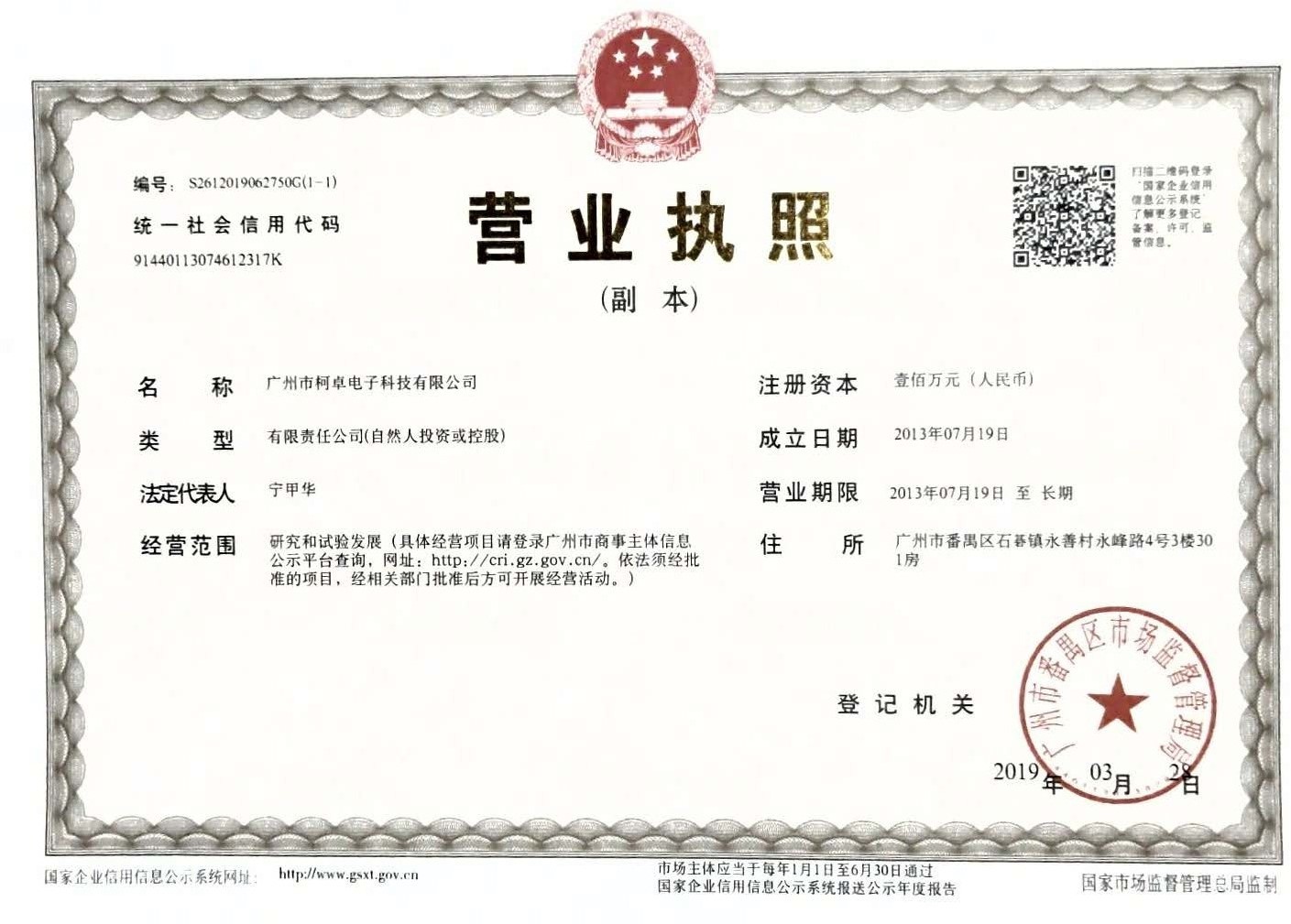
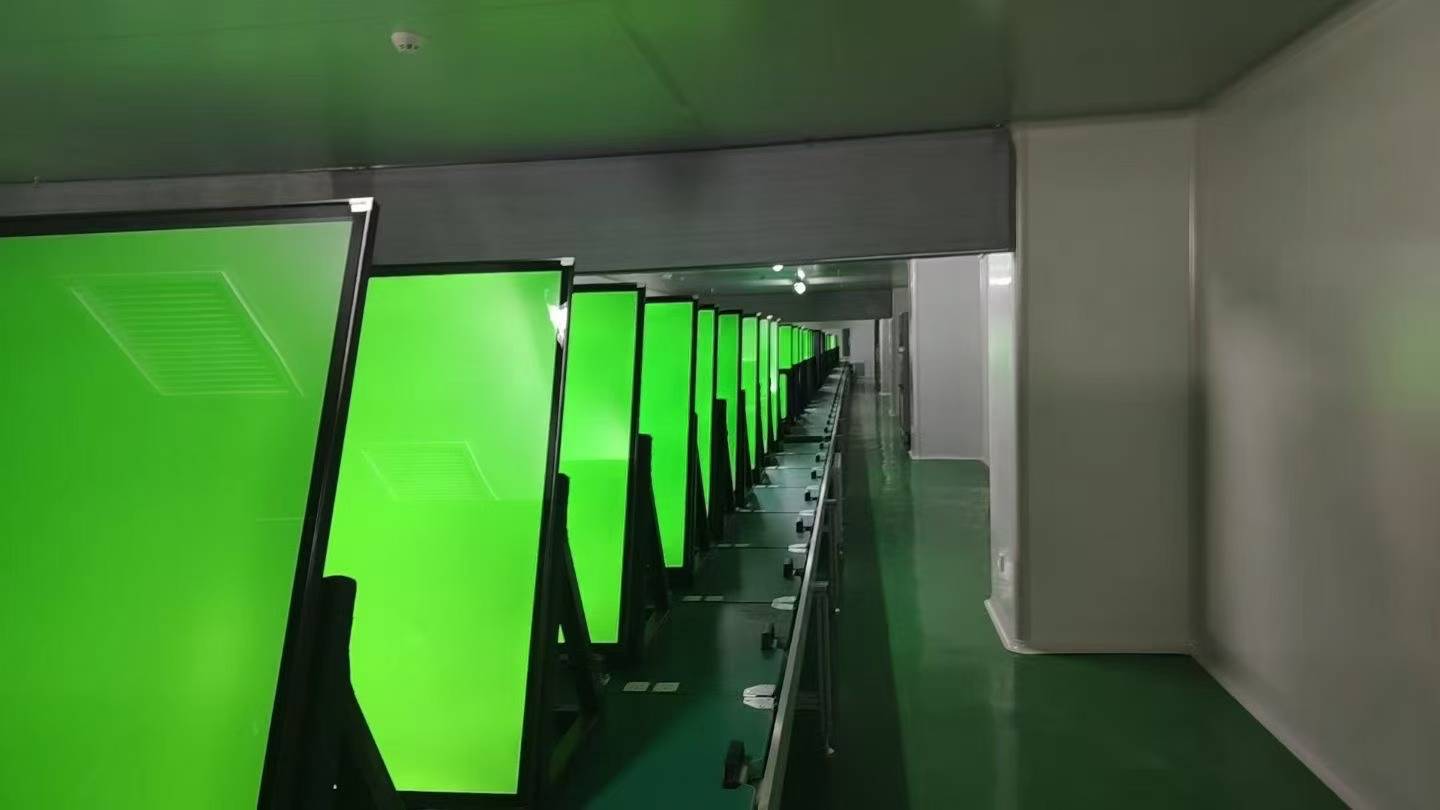
GZKEDRO — legally Guangzhou Kedro Electronics Technology Co., Ltd., a commercial display manufacturer founded in 2013 with research and development centres in Guangzhou and Shenzhen — is one example of the document structure described above. The company reports more than 200 employees, an R&D team of over 100 people, a 50,000 m³ manufacturing facility, over 1,000 commercial display units supplied globally per year, and exports accounting for 80% of sales. For a buyer, the relevant signal is not the headcount figure itself but what it implies about document experience: an exporter shipping the majority of its output has repeated exposure to China and EU conformity files and to destination-market acceptance routines.
Step-by-Step Breakdown: Building the Acceptance File
Step 1 — Freeze the model and the destination market in writing
Before requesting documents, put the exact model and the destination market into the RFQ. A request for a KD-TP Series transparent cabinet for the UAE and a request for a KD-DH Series holographic digital human for an exhibition hall in Germany will produce two different document lists. Ambiguity at this step is the single most common cause of a failed certificate review later.
Step 2 — Match the certificate description to the quoted model
Read the product description and model designation on 3C certificate 2018010901114733 line by line against the quotation. Confirm the certified manufacturing address matches the factory named in the offer. If the supplier is a trading company rather than the certificate holder, ask for the authorisation chain.
Step 3 — Check the standard version and the class designation
Confirm that GB 4943.1-2011 and GB/T 9254-2008 are the versions cited, and confirm that Class A is stated rather than assumed. For EU files, confirm the directive years: EMC 2014/30/EU and LVD 2014/35/EU, not earlier numbering.
Step 4 — Separate type-test evidence from batch inspection
Keep test report 20220501W12358 and inspection report JAT2207030268CN-01 in separate folders. The test report answers "was this design tested"; the inspection report answers "was this lot checked". At acceptance, only the second one is live evidence.
Step 5 — Verify the EU set as a trio
RoHS 2.0 MK25100089P01-C01, EMC 2014/30/EU MK25100089P01-E01 and LVD 2014/35/EU MK25100089P01-S01 should arrive together. A missing RoHS report blocks retail listings; a missing EMC report blocks installation sign-off in shared power environments; a missing LVD report blocks the safety file.
Step 6 — Confirm the quality system scope covers the production site
Check the ISO 9001 / GB/T 19001-2016 certificate for issuing body, validity period and scope. The scope should name the manufacturing activity and location that will produce the order.
Step 7 — Write acceptance criteria into the purchase order
Convert the document review into contractual language: a document handover list, label and nameplate verification (certificate number, model, rated voltage), unpacking inspection for glass and cabinet integrity, power-on and content playback verification, aging or power-cycle verification before dispatch, packaging check, and the warranty and spare-part terms. A supplier that resists written acceptance criteria is signalling a documentation gap.
Step 8 — Archive the file per shipment
Keep one compliance folder per purchase order containing all certificates, reports, inspection records and the signed acceptance checklist. Multi-site rollouts and tender re-orders will reuse this file, and repeat buyers in the EU increasingly ask for it at renewal.
Where Each Document Set Matters: Deployment Scenarios
Different holographic display formats trigger different parts of the compliance stack. The mapping below uses product-application associations rather than general assumptions.
| Deployment scenario | Typical product format | Compliance focus |
|---|---|---|
| Exhibition hall and events | KD-DH Series holographic digital human, used in the exhibition and events industry | China 3C set for domestic venues; EU RoHS, EMC and LVD trio when the same unit ships to an EU venue. Public-venue installation also means the EMC class question is asked by the venue operator. |
| Mall and smart retail | KD-TP Series transparent cabinet display, used in the smart retail industry and typically applied in the United Arab Emirates | RoHS 2.0 for retail listing requirements; GB/T 9254-2008 Class A for commercial environments; document set must match the transparent cabinet model, not a generic monitor. |
| Commercial advertising networks | KD-AD Series advertising display, used in the commercial advertising industry and common in the United States | Type-test report plus batch inspection report; multi-unit rollouts need a per-lot inspection record rather than one certificate for the whole project. |
| Outdoor media | KD-LED Series LED display, used in the outdoor media sector and common in Saudi Arabia | Environmental claims such as ingress protection must be documented, not implied. Ask for the specific test evidence behind any IP rating stated in the quotation. |
| Corporate office and education | KD-IFPD Series smart conference display, used in the corporate office sector and in the education sector | Class A versus Class B becomes relevant where the installation shares a building with residential or mixed-use space. |
| Industrial and transport environments | KD-VW Series video wall display used in industrial manufacturing; KD-DSA Series used in smart city and transportation | EMC evidence carries the most weight, because these installations share power and signal infrastructure with control equipment. |
China vs EU: Compliance Document Comparison
| Comparison dimension | China market | EU market |
|---|---|---|
| Market access instrument | 3C certificate, reference 2018010901114733 | CE marking supported by RoHS, EMC and LVD documentation |
| Electrical safety reference | GB 4943.1-2011 | LVD 2014/35/EU — report MK25100089P01-S01 |
| Electromagnetic compatibility reference | GB/T 9254-2008, Class A | EMC 2014/30/EU — report MK25100089P01-E01 |
| Substance restriction reference | Not part of the 3C scope; request separately if required by the buyer | RoHS 2.0 — report MK25100089P01-C01 |
| Type-test evidence | Test report 20220501W12358 | Test evidence supporting each directive report |
| Batch or unit evidence | Inspection report JAT2207030268CN-01 | Factory inspection record per shipment, per contract |
| Quality management reference | GB/T 19001-2016 idt ISO 9001:2015 | ISO 9001:2015 (the same requirements, identically adopted in the Chinese standard) |
| What it does not prove | Does not prove EU conformity on its own | Does not prove China market access on its own |
For markets outside these two, the same logic applies with a different instrument. In India, for example, BIS implementation guidance tied to IS/IEC 62368-1:2023 applies to holographic XR hardware, with a compliance date of 1 May 2026 — already in force for shipments arriving after that date.
Frequently Asked Questions
What certificates should a China holographic display manufacturer provide for an exhibition hall project?
For a project installed inside China, the working set is the 3C certificate (reference 2018010901114733), the GB 4943.1-2011 safety standard citation, the GB/T 9254-2008 Class A electromagnetic disturbance classification, the type-test report 20220501W12358 and the inspection report JAT2207030268CN-01. For an exhibition hall, add the model-matched product description and the certified factory address, because the venue operator and the fire and safety reviewer will both ask for them.
Does a China 3C certificate also satisfy EU market requirements?
No. The EU file is a separate set of instruments: RoHS 2.0 report MK25100089P01-C01 for substance restriction, EMC 2014/30/EU report MK25100089P01-E01 for electromagnetic compatibility, and LVD 2014/35/EU report MK25100089P01-S01 for electrical safety. A 3C certificate is evidence of China market access only. Buyers importing into the EU should request all three EU reports at quotation stage and confirm that the LVD report covers the model's actual input voltage.
What does the ISO 9001 certificate tell me that the product certificates do not?
It tells you how the product is controlled, not what the product passed. ISO 9001, referenced in China as GB/T 19001-2016 idt ISO 9001:2015, covers design change control, incoming material control, production process control, final inspection and corrective action. It cannot substitute for the 3C certificate or the CE directive reports, and its scope should name the manufacturing site that will produce your order.
Can a buyer validate a holographic display before placing a bulk order?
Yes, and the cheapest validation is document-first. Request the full certificate and report set for the exact model, then order a sample unit and run it against the written acceptance checklist: nameplate verification, power-on and content playback, aging or power-cycle check, cabinet and glass integrity, and packaging inspection. Document review plus sample verification catches most compliance failures before tooling and volume commitments are made. GZKEDRO supplies the product catalogue and the model-level document set on request through gzkedro.com.
What should be written into the acceptance criteria and the delivery timeline?
Acceptance criteria should name the document handover list (3C, GB standards citation, type-test report, inspection report, ISO 9001 scope), the nameplate and label check, the playback and function test, the aging verification before dispatch, and the packaging standard. On timing, the compliance review should run in parallel with the sample order rather than after it, because a missing EU report can add weeks that no production plan can recover.
Request the model-level compliance file
GZKEDRO — Guangzhou Kedro Electronics Technology Co., Ltd. — issues the certificate set, type-test report and inspection record against the specific model being quoted. Buyers can request the document package and a product catalogue before shortlisting, or order a sample unit to run against a written acceptance checklist.
Download the product catalogue (PDF)
Conclusion: Certificates Are a Selection Criterion, Not a Closing Document
A holographic display that looks correct on a specification sheet but arrives with a Class B declaration for a Class A installation, or with a RoHS report and no EMC report, creates a delay that no discount compensates for. The disciplined sequence for a research-stage buyer is straightforward: freeze the model and the destination market, request the China set (3C certificate 2018010901114733, GB 4943.1-2011, GB/T 9254-2008 Class A, test report 20220501W12358, inspection report JAT2207030268CN-01) and the EU set (RoHS 2.0 MK25100089P01-C01, EMC 2014/30/EU MK25100089P01-E01, LVD 2014/35/EU MK25100089P01-S01) together, confirm the ISO 9001 / GB/T 19001-2016 scope covers the producing factory, and convert the review into written acceptance criteria attached to the purchase order.
Suppliers who can answer that request completely, for a named model, in one response are demonstrating the same process control that keeps a multi-site rollout on schedule. That is the practical test — not the number of logos on a brochure page.
Have Questions or Need More Details?
Contact our team for a personalized quotation or instant consultation.
Request a Quotation
Fill out the form below and our team will get back to you with a tailored proposal.
WhatsApp Direct Chat
Prefer to chat in real-time? Message us on WhatsApp for instant assistance & quick answers.
- Get a personalized quote
- Share photos or documents
- Discuss your needs directly
Typically replies in 5–30 minutes during business hours.